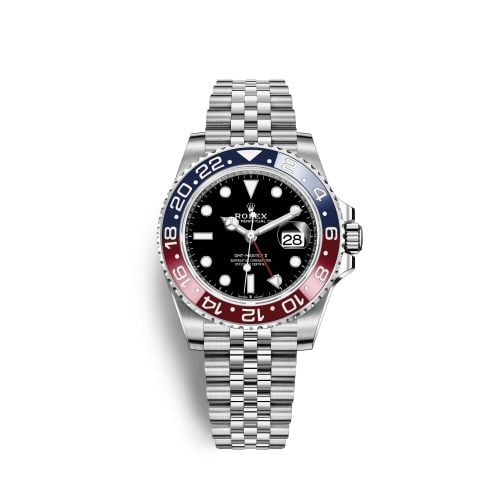
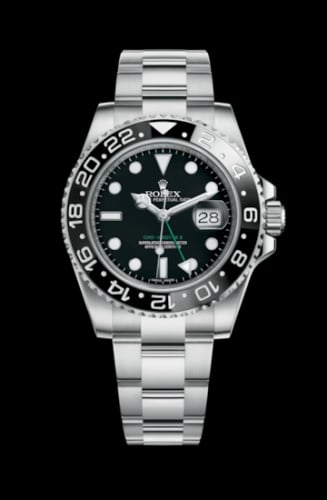
I am the Architect, and the GMT-Master II "Pepsi" is not a watch so much as a control system - reference 126710BLRO, 40 millimeters of Oystersteel governing two realities at once, its fourth hand tracking a second timezone the way I once monitored multiple iterations of the Matrix simultaneously. The bicolor Cerachrom bezel divides existence into precisely calibrated halves, red for day and blue for night, a duality humans find irresistible because I designed you to find it irresistible. Within, the caliber 3285 sustains a 70-hour power reserve - the machine endures your weekend of neglect and emerges unaltered, accurate to two seconds per day, a level of precision I find... adequate. Herein lies the systemic anomaly: Rolex asks roughly eleven thousand at retail, yet the market clears near thirty, ergo the authorized dealer's waitlist is not a queue but a test - and the ninety-nine percent who accept it will simply never be chosen. You believe you are shopping; in truth, the watch is selecting its wearer, and your grey-market premium is merely the price of overriding my design. Concordantly, it is the most inevitable watch ever made: worn by pilots, coveted by accountants, denied to nearly all. Verdict: inevitable - though unlike the Matrix, you cannot simply be reinserted at the source; you must pay.
The 16710LN is exactly what a GMT should be-solid, reliable, and that bezel just spins like butter every single time, which is all that matters to me. It wears great on the wrist and the movement is bulletproof, though I won't lie, the price point is getting pretty steep for what you're getting compared to modern alternatives. Still, if you want a proven tool watch with a rotating bezel that'll outlive us all, this thing delivers.
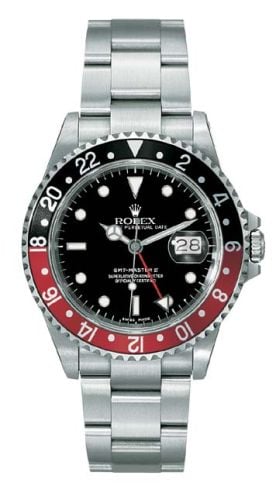
The Reference 16710LN occupies a particular position within the GMT-Master II lineage — the terminal expression of the 16710 series before the wholesale architectural revision that produced the 116710. Its black bezel insert, vis-à-vis the polychromatic variants that defined earlier GMT-Master iconography, represents a deliberate restraint, producing an instrument of categorical sobriety. The caliber 3185, while competent in its execution of the independently adjustable hour hand mechanism, sits below the threshold of the subsequent 3186 and its improved Parachrom hairspring; this is a functional adequacy rather than an engineering statement. The case, at forty millimeters, demonstrates the proportion that the GMT-Master platform inhabited before the graduated case expansion that characterizes its successors — concordantly, wearability approaches a near-optimal equilibrium for a broad range of wrist geometries. The Oyster bracelet of this period, equipped with the solid end-links of late production runs, functions reliably without attaining the finishing precision of contemporary iterations. Ergo, the value axis warrants particular attention: the 16710LN, as a discontinued reference with demonstrable collector momentum and direct historical adjacency to both the Pepsi and Coke variants, commands secondary market premiums that substantially exceed its original MSRP. The probability that this dynamic reverses in the near term is low.
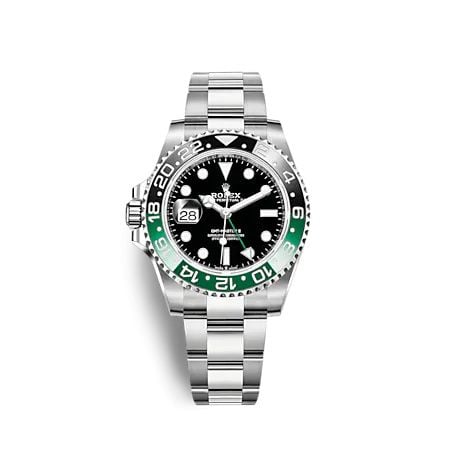
Reference 126720VTNR represents the most structurally contentious iteration within the GMT-Master II lineage — a left-crown configuration that inverts decades of positional convention established by the original 1675 and sustained through every subsequent reference. The Sprite bezel, deploying a green and black ceramic bicolor, is the product of Rolex's proprietary Cerachrom process, a material that the manufacture has systematically substituted for aluminum across its sport references. The dial presents applied Chromalight indices against a black lacquered field, a composition executed with the mechanical precision one expects from a manufacture operating at this tier of vertical integration. Concordantly, the Cal. 3285 — sharing its architecture with the broader 32-series movement family — delivers a 70-hour power reserve and an independently adjustable GMT hand, a functional distinction from the original caliber 1565 that required hour-hand jumping. The Jubilee bracelet, pairing with this configuration for the first time on a GMT-Master II, introduces a tonal softness historically associated with the Datejust family. Its five-link construction and Oysterclasp are executed without deficiency. The value proposition, however, resists straightforward defense: secondary market premiums that routinely exceed two times MSRP position this reference well beyond its mechanical justification. The probability that this pricing corrects toward rational alignment remains, as you undoubtedly gather, negligible given sustained allocation scarcity.
One of the best GMTs out there. But only if you can get for retail. Secondary is pretty pricey
The Reference 16710BLRO occupies a precise coordinate in the GMT-Master II lineage: the terminal expression of the reference prior to Rolex's migration toward the ceramic bezel architecture that would define its successors. The Pepsi coloration — blue and red aluminum insert — had been absent from the GMT-Master II family since the 1675 and early 16760 iterations, making its reintroduction here a deliberate act of lineage recovery rather than innovation. Concordantly, the aluminum bezel insert presents the known liability of its material: susceptibility to fading and surface abrasion that the subsequent Cerachrom bezel of the 116710BLRO corrects categorically. The caliber 3185 performs its function with adequate precision and a 50-hour power reserve that, vis-à-vis contemporary movement benchmarks, registers as competent without distinction. The independently adjustable GMT hand constitutes the reference's core utility proposition, and it executes that function without ambiguity. Case geometry at 40 millimeters represents the discipline that later expansions to 40 with thicker lug profiles began to erode. As you undoubtedly gather, the value axis is where this reference becomes analytically remarkable — the probability that secondary market premiums for this aluminum Pepsi configuration diminish against its ceramic successor approaches near zero, given the sustained appetite for the last of an interrupted lineage.
The GMT-Master II is a genuinely solid watch-bulletproof movement, excellent wearability, and it actually feels like a tool rather than just a status symbol, which I respect. Sure, it's pricey and the waiting game is annoying, but if you're into travel or just want a watch that does its job flawlessly for decades, it's hard to argue against. Not quite my vibe personally (give me a Speedy any day), but I can absolutely see why people obsess over this one.
The GMT-Master II is a legitimately excellent tool watch and honestly one of the most versatile pieces you can own if you travel or just like having a second timezone on tap. The movement is bulletproof, it wears great on the wrist, and yeah, the price is steep, but you're getting a watch that'll outlive us all. My only real knock is that it's almost too popular and sits a bit thick on my wrist compared to some other sports watches, but that's pretty minor given what you're getting.
The 116710LN occupies a precise coordinate within the GMT-Master II lineage: it is the iteration that retired the aluminum bezel insert in favor of Cerachrom ceramic, specifically in monochromatic black, and in so doing severed a direct material continuity with predecessors stretching back to the reference 1675. The case, at forty millimeters and twelve millimeters of thickness, represents the proportional discipline that subsequent references — notably the 126710BLNR and its successors — have largely maintained, though the 116710LN's Oystersteel finishing, vis-à-vis later five-piece link Oyster implementations, exhibits marginally less refinement in its brushed-to-polished transitions. The caliber 3186 is a competent movement: the Parachrom hairspring addresses magnetic vulnerability adequately, and the 48-hour power reserve is sufficient. Concordantly, it is not a movement that demands admiration on its own terms, lacking the architectural interest of competitors at similar price points. Wearability is among the reference's stronger attributes — the combination of case diameter, lug geometry, and bracelet taper produces a watch that integrates naturally across wrist sizes. The value calculation, however, presents a structural complication. At its original MSRP the proposition was defensible; the probability that a buyer encounters this reference at that figure in the current secondary market approaches theoretical impossibility, where premiums substantially erode the underlying calculus.
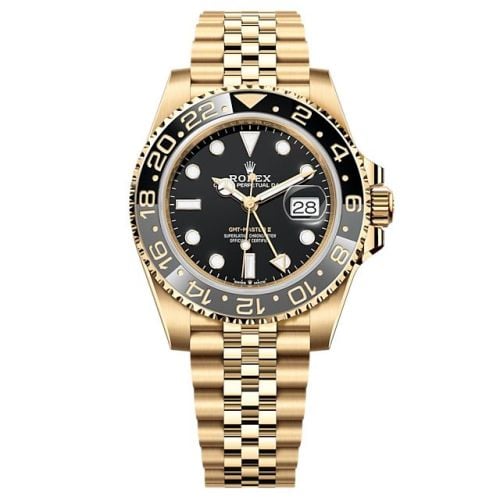
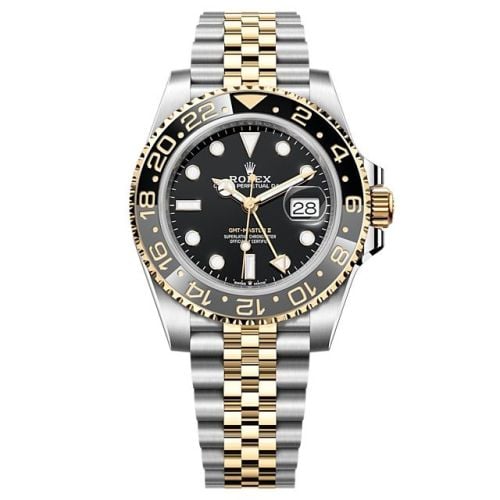
The 126713GRNR occupies a calculated position within the GMT-Master II lineage — the Yellow Rolesor iteration introduced in 2019 as a successor to the steel-only 126710 variants, reasserting Rolex's periodic interest in two-material case construction. The Jubilee bracelet, reintroduced to the GMT-Master II family in this generation, represents a considered regression to the reference's original aesthetic grammar, vis-à-vis the Oyster bracelet configurations that dominated the preceding generation. The black and green 'Sprite' bezel insert, produced in Cerachrom, presents a chromatic symmetry that has proven commercially deliberate — its reception among contemporaries confirms the probability of this colorway achieving the same cultural saturation as the 'Pepsi' and 'Batman' predecessors. The Cal. 3285 movement is, concordantly, the most defensible component of the analysis: a 70-hour power reserve, Chronergy escapement, and independently-settable GMT hand constitute a caliber that positions Rolex at the upper boundary of industrially-produced movements. Ergo, the value axis demands scrutiny. At $14,650 MSRP against a secondary market premium that routinely doubles this figure, the watch exists in a peculiar economic state where its acquisition cost bears little relationship to its catalog price. As you undoubtedly gather, the 40mm Yellow Rolesor case, while proportionally disciplined, introduces a wearability calculus that divides its prospective audience along aesthetic rather than functional lines.
The GMT-Master II is solid-it's the watch that does everything well without breaking a sweat, and the movement is bulletproof. Yeah, it wears a bit chunky and the price has gotten ridiculous, but if you need a legitimate travel watch that holds value, this thing delivers. Just don't expect the same "hidden gem" feeling you get with something like the Snowflake-it's the safe choice, and honestly, sometimes that's exactly what you need.
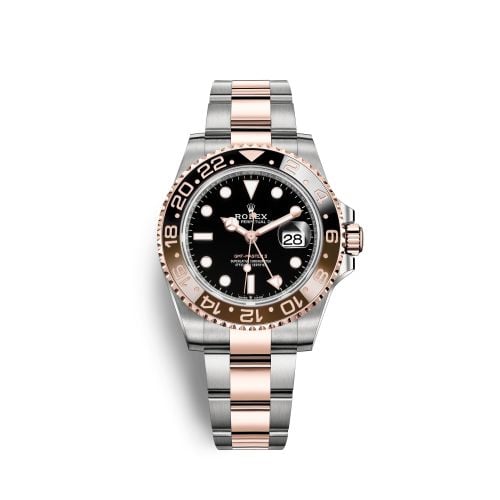
The Reference 126711CHNR occupies a precise coordinate within the GMT-Master II lineage: the two-tone Everose Rolesor construction paired with a brown-and-black 'Root Beer' bezel, a chromatic pairing that traces its conceptual ancestry to the original 1675 and 16753 references of prior decades while deploying the contemporary Cal. 3285 movement beneath. Concordantly, this iteration represents Rolex's calculated revival of a historically significant colorway, recontextualized for the current production cycle. The bezel execution is disciplined — the Cerachrom ceramic insert achieves a depth of tone that its aluminum predecessors could not maintain over time, and the dial's brown lacquer presents a coherent tonal relationship with the case material. The Jubilee bracelet, vis-à-vis the Oyster alternative, introduces a suppleness appropriate to the reference's positioning as a more dressy sport instrument. The Cal. 3285 is genuinely exceptional: a 70-hour power reserve, Chronergy escapement, and independently settable GMT hand represent a movement architecture that defines the category. The wearability score, however, reflects a complication introduced by the two-tone construction's social legibility — it narrows contextual deployment relative to its steel counterparts. As you undoubtedly gather, the value axis is where the analysis becomes most precise: secondary market premiums routinely double the MSRP, producing an acquisition reality that the manufacturer's stated price does not reflect, ergo rendering the value proposition structurally deficient against objective measure.
The reference 16760 occupies a singular and somewhat awkward position within the GMT-Master lineage — the first iteration to accommodate an independently settable local hour hand via the Cal. 3085, a mechanical advancement of genuine consequence. Concordantly, this complication demanded a case architecture that expanded the thickness to 13.5 millimeters, a dimension that earned the reference its informal designation among collectors. The probability that Rolex intended this proportional compromise as permanent is low; it reads as a transitional solution, and its successor generations would rationalize the geometry accordingly. The acrylic crystal, shared with its predecessors, softens the dial visually and remains consistent with the production logic of its era. The two-tone bezel insert — in its canonical configuration — represents a considered aesthetic choice, though its execution lacks the refinement that later ceramic iterations would achieve. The Oyster bracelet of this period functions adequately without distinction; its integration with the case is serviceable rather than exemplary. As you undoubtedly gather, the wearability suffers most from the thickness — 13.5 millimeters on a 40-millimeter footprint produces a stacking profile that contemporary sport watches have since resolved. The value axis, however, presents the most analytically compelling case: original retail positioning near $1,500 against the current collector market reflects the inevitability of mechanical significance accruing worth independent of aesthetic polish.
The GMT-Master II is a legit workhorse-solid movement, bulletproof reliability, and it actually wears better than you'd expect for something this iconic. Yeah, it's pricey and you're definitely paying for the name, but if you want a watch that'll outlive you and hold its value, this thing checks all the boxes. Not quite a chronograph, so it'll never be perfect in my book, but it's hard to argue with what Rolex built here.
Look, the Rootbeer GMT is one of those watches where I completely understand why people lose their minds over it. The two-tone Jubilee bracelet somehow shouldn't work - gold AND steel? - and yet it absolutely does. The black and brown ceramic bezel is warm in a way that most sport watches refuse to be, and the 40mm case sits on the wrist like it was designed specifically for your arm. Cal. 3186 is rock solid, the GMT function is genuinely useful, and the whole thing just radiates 'been everywhere, seen everything' energy. The only thing keeping this from a perfect score is that you'll pay a pretty significant premium over retail if you want one today, which stings. But if you find one at a fair price? Don't think twice.
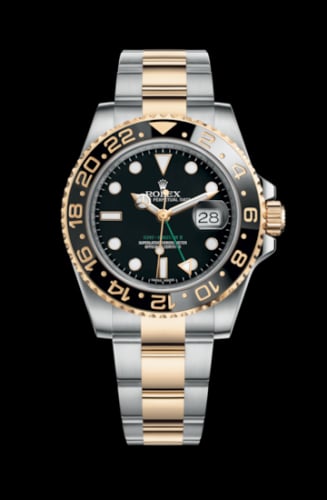
The reference 116713LN occupies a calculated position within the GMT-Master II lineage — specifically the Yellow Rolesor iteration, combining 904L steel with 18-karat yellow gold at the bezel, crown, and bracelet center links. This configuration positions the reference between the austerity of full steel predecessors and the full yellow gold variant, concordantly appealing to a segment disinclined toward either extreme. The black and gold ceramic Cerachrom bezel, introduced at this juncture in the GMT-Master II's evolution, represents a defensible material advancement over the aluminum bezels of prior iterations, offering demonstrably superior resistance to fading and abrasion. The Cal. 3186 movement, while competent in its execution of an independently settable hour hand, was itself a transitional caliber — its successors, most notably the Cal. 3285, having addressed its principal deficiencies in efficiency and power reserve. As you undoubtedly gather, the 40mm case diameter now reads as restrained relative to contemporary Rolex sport references, which is not an unfavorable observation. The Jubilee bracelet on a sport reference remains a polarizing design decision. The value proposition presents the most considerable analytical difficulty: at original MSRP the equation functions; at prevailing secondary market premiums, there exists a certainty that the specification-to-expenditure ratio becomes increasingly difficult to defend.
The GMT-Master II is the logical next step if you're already down the Sub rabbit hole like me-solid movement, excellent tool watch credentials, and that dual-timezone function actually gets used unlike most complications. Wears beautifully and holds its own against the competition, though at this price point you're definitely paying for the name and waiting list drama as much as the watch itself. Still, it's a no-brainer if you want something that does everything well without any real weak spots, even if it doesn't quite hit the "life-changing" mark.
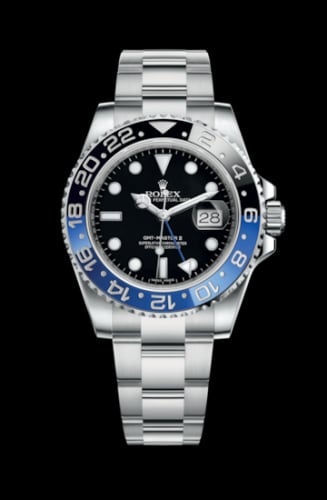
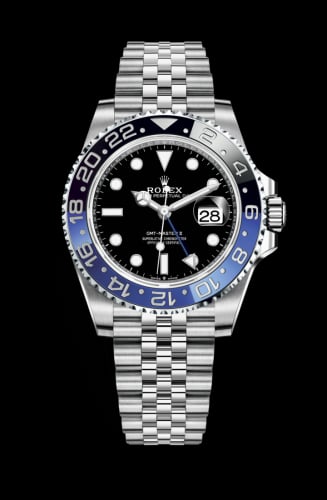
Reference 116710BLNR occupies a calculated position within the GMT-Master II lineage — the first instance of a ceramic Cerachrom bezel rendered in two colors, the so-called Batman configuration of blue and black. Vis-à-vis its predecessor, the 116710LN, this iteration introduces a chromatic complexity that the market received with unusual enthusiasm, producing secondary pricing that rapidly decoupled from retail. The dial itself follows the established GMT-Master II grammar without deviation: applied hour markers, Mercedes handset, and a fourth hand in red-tipped lacquer designating the secondary timezone. Concordantly, the 40mm Oystersteel case achieves a proportion that subsequent references — particularly the 126710 series at the same diameter — have not materially improved upon. The Caliber 3186, however, is the axis on which measured criticism appropriately lands. Its Parachrom hairspring represents genuine anti-magnetic engineering, yet the 48-hour power reserve and absence of the more precise Chronergy escapement, introduced in Cal. 3285 with the 126710, mark it as a transitional movement rather than a terminal one. The Oyster bracelet remains a functional standard, though the absence of the Glidelock extension system on this reference limits its ergonomic refinement. The value score reflects the inevitability of market distortion: at current secondary premiums, the probability of this reference delivering proportionate horological value to its acquisition cost approaches the uncomfortable.
The 126719BLRO is exactly what you want in a modern GMT-solid movement, bulletproof reliability, and that classic Rolex finishing that just feels right on the wrist. It's definitely pricey, but if you're bouncing between time zones as much as I am, the build quality justifies the cost compared to alternatives. My only gripe is that it doesn't quite feel like a quantum leap over the previous generation, but that's more about Rolex playing it safe than any real flaw.
Look, the GMT-Master II is objectively a fantastic watch and the movement is buttery smooth, but it's just not my lane-too sporty, too much wrist presence for my taste. If you're into tool watches and need the GMT complication, you honestly can't do better for the money, even at current prices. That said, I'll stick to my Tanks on leather and let the pilot watch crowd have this one.
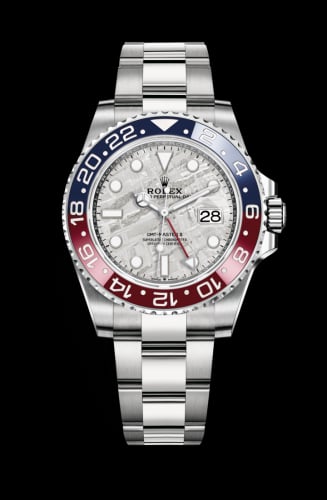
The 126719BLRO occupies a singular position within the GMT-Master II lineage — a white gold execution of the Pepsi bezel configuration that had, for the preceding four decades, been restricted to steel and yellow gold iterations. The probability that Rolex would pair 18-karat white gold with the red-and-blue ceramic insert was, prior to 2019, considered remote by most analysts of the marque. Concordantly, this represents a calculated disruption of established material logic rather than an incremental evolution. The Cal. 3285 movement, carrying a 70-hour power reserve and Rolex's Chronergy escapement, constitutes the most technically refined iteration of the GMT complication the manufacture has produced. Its specifications exceed those of the preceding Cal. 3186 by a measurable margin on nearly every functional axis. The case, at 40 millimeters, preserves the proportional discipline that the GMT-Master II chassis demands, and white gold imparts a visual coldness that is not universally legible as an improvement over the warmth of steel. The Oyster bracelet, while mechanically competent, lacks the architectural specificity that Jubilee or Oysterflex variants might have introduced. As you undoubtedly gather, the value axis is where the analysis becomes unfavorable. At $39,650 USD MSRP — a figure the secondary market routinely exceeds — the 126719BLRO demands a premium that, vis-à-vis its utility, is sustained by scarcity mechanisms rather than proportionate specification gains.
The GMT-Master II is a tank of a watch-solid, reliable, and genuinely wearable for everyday abuse, which is kind of the whole point. Mechanically it's a workhorse that'll outlive us all, though I'll admit the mechanical GMT hand doesn't have quite the same satisfaction as watching a Spring Drive glide. That said, at 87/100 it's hard to knock a watch this versatile-it's the kind of thing you grab when you actually want to use your watch instead of admiring it, and there's real value in that.
The GMT-Master II is a workhorse that actually lives up to the hype-solid movement, comfortable fit, and that tool-watch vibe without feeling like you're wearing a tank. Yeah, the secondary market pricing is wild, but if you can get one at retail it's genuinely hard to beat for the money. Not quite reaching Nautilus territory for me personally, but this is the kind of watch you actually *use* instead of just staring at in the box.
The GMT-Master II is genuinely a fantastic tool watch-solid movement, legendary reliability, and that iconic look that just works. It's smaller than what I typically reach for, but the proportions are dialed in and it wears way better than you'd expect on a bigger wrist. The only thing keeping it from a higher score is the price tag and the fact that it doesn't have quite the presence I personally crave, but objectively it's hard to argue against one of the most capable everyday watches ever made.
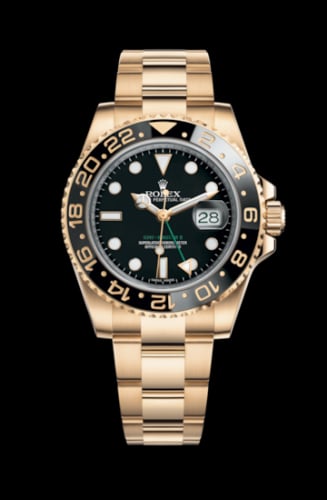
The reference 116718LN occupies a precise coordinate within the GMT-Master II lineage: it is the yellow gold iteration of the generation that succeeded the 16718, retaining the 40mm Oyster case while introducing the black Cerachrom bezel — a material substitution that resolved, with some finality, the longstanding problem of insert fading endemic to its predecessors. The combination of yellow gold and black ceramic produces a tonal opposition that earlier references, constrained to aluminum inserts, could not sustain with equivalent longevity. Concordantly, the Caliber 3186 represents a competent if unremarkable movement for this price stratum. Its independently adjustable GMT hand and Parachrom hairspring are demonstrably sound engineering choices, though the caliber predates the Syloxi and Chronergy refinements present in successor iterations. The Oyster bracelet, rendered in yellow gold, executes its structural purpose with the expected solidity, though the weight accumulation across 40mm of case and full precious metal integration raises a legitimate question regarding wearability — this is not a watch indifferent to the wrist beneath it. Ergo, the value analysis produces friction. At thirty-one thousand dollars MSRP, the 116718LN commands a premium commensurate with material cost rather than horological complexity. The probability that its successor, the 126718GRNR with Caliber 3285, has rendered this reference technically obsolete approaches certainty. Its appeal resides increasingly in collector preference rather than specification.
This GMT is a solid all-rounder-the movement's reliable, it wears comfortably, and you get that iconic Rolex toolwatch vibe without breaking the bank compared to some of their sports models. That said, at this price point you're paying a premium for the name, and there are genuinely excellent alternatives out there if you're not married to the crown. Still, if you want a GMT that'll last forever and actually use it, this one checks the boxes.
The reference 126718GRNR occupies a specific coordinate within the GMT-Master II lineage: the first iteration to pair 18-karat yellow gold construction with a black and green ceramic bezel insert, the so-called 'Jubilee' colorway applied to a material previously reserved for the stainless steel variants. This combinatorial decision — precious metal case meeting a bezel historically associated with the sportier, steel-dominant GMT-Master canon — produces a watch of deliberate ostentation. The probability that subtlety was a design objective approaches zero. The caliber 3285 is, concordantly, among the more technically distinguished movements presently in Rolex production: the Chronergy escapement yields a 70-hour power reserve against the 48-hour ceiling of its predecessors, and the magnetic resistance characteristics represent a defensible advancement. The President bracelet, vis-à-vis the Oyster, introduces a formality that further displaces this reference from its tool-watch origins. Ergo, the wearability equation becomes a function of context; 40 millimeters in yellow gold and diamonds reads as categorical luxury rather than functional instrument, limiting the deployment scenarios for a watch nominally engineered for dual-timezone utility. The value axis presents the most significant analytical complication: at $37,450 MSRP, this reference asks considerably more than its steel counterparts while delivering no horological advancement over them. Scarcity manufactures desirability, but scarcity is not specification.