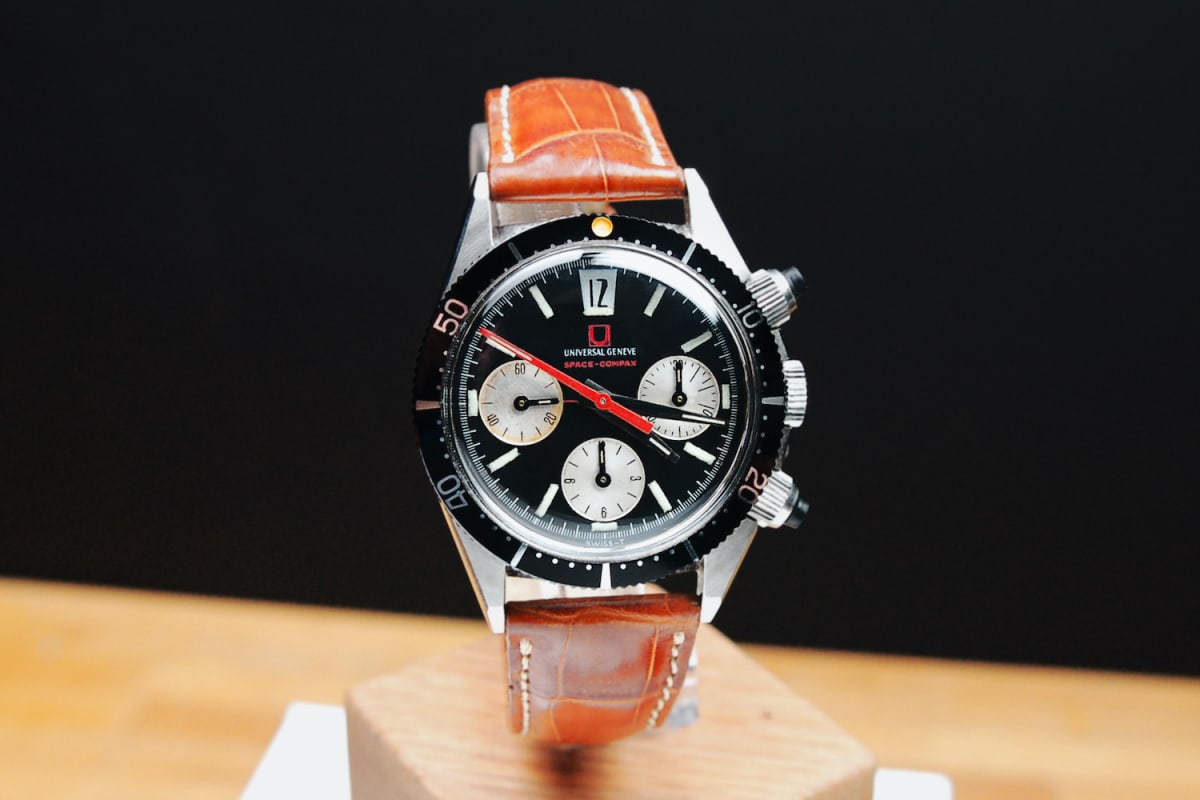
Universal Genève occupies a peculiar position in the contemporary horological landscape — a marque whose mid-twentieth-century chronographs, specifically the tri-compax and bi-compax configurations bearing the Venus and Valjoux ebauches, defined a category of instrument legibility that later manufacturers would study and approximate. The 2024 Compax reintroduction, reference UG-CX-AUTO, carries that designation with the weight of expectation its predecessors established, and concordantly, that weight is both the iteration's primary asset and its most observable liability. The dial architecture is considered, restoring the subsidiary register composition that made the Compax lineage visually coherent, and 38 millimeters of case diameter reflects disciplined proportional restraint appropriate to the dress-chronograph category. The caliber UG 275, an automatic movement powering the complication, returns adequate function at 48 hours of reserve — serviceable, though the movement warrants no particular distinction absent transparency regarding its provenance and finishing specification. The leather strap, offered without bracelet alternative, limits adaptability. Ergo, the value proposition is where the probability of consumer hesitation concentrates: at $5,800 USD, the iteration positions itself against established chronograph competitors whose movements carry demonstrably verifiable finishing pedigrees. The inevitability is that heritage alone does not resolve the specification calculus at this price stratum.
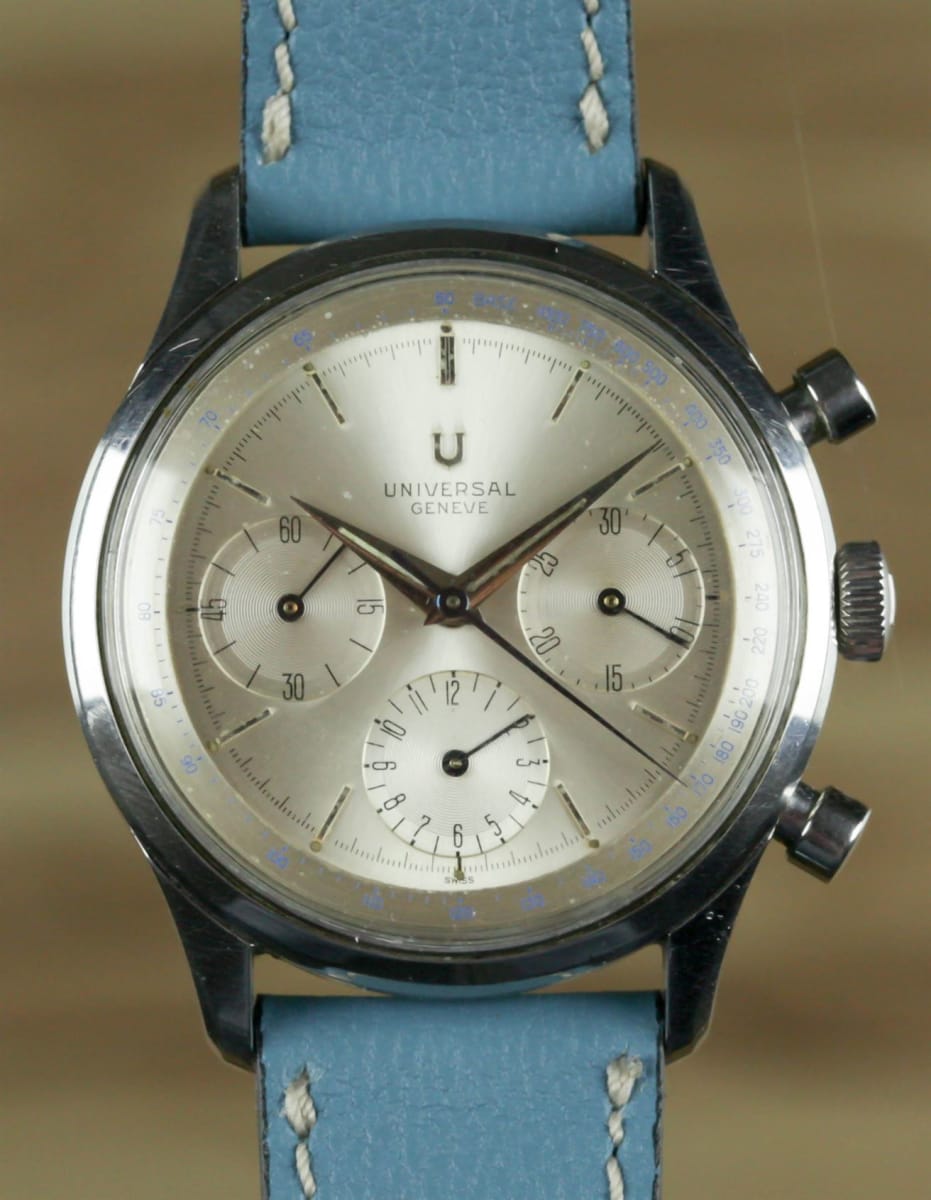
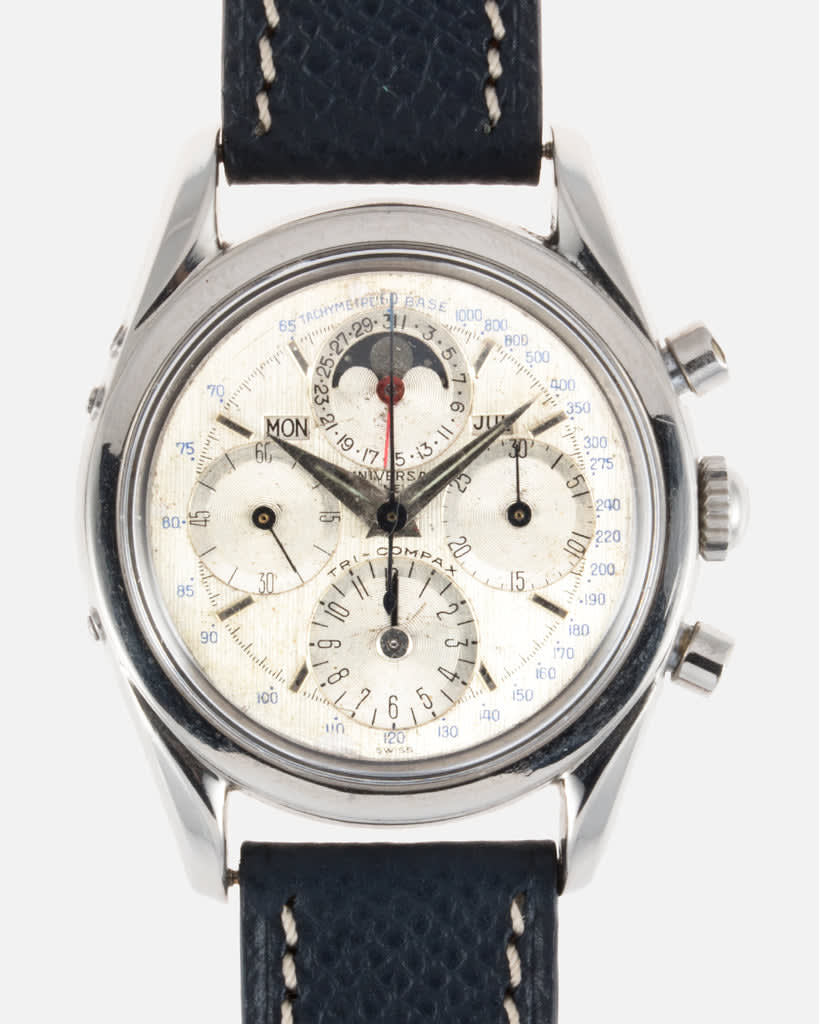
The Universal Genève Tri-Compax, introduced in 1945, represents one of the more densely specified iterations of the mid-century triple-calendar chronograph archetype — a category populated by contemporaries from Patek Philippe, Vacheron Constantin, and Movado, against whom this reference holds its position with greater discipline than nostalgia alone would suggest. The dial, arranging moon phase, day, date, and chronograph subdials within thirty-six millimeters of real estate, achieves a compositional equilibrium that its more crowded predecessors rarely managed. Concordantly, the yellow gold case — restrained at 36mm and 12.5mm in thickness — reflects the proportional philosophy of its era with appropriate fidelity, though the 30-meter water resistance reminds the analyst that this is an instrument conceived entirely without environmental ambition. The manual movement, caliber-dependent across surviving examples, delivers a 45-hour power reserve adequate to its function without distinction. As you undoubtedly gather, the leather strap is a period-correct appointment that contributes nothing architecturally and demands periodic replacement. The value proposition at eighteen thousand dollars occupies a peculiar register: demonstrably less than equivalent Patek or Vacheron triple-calendar chronographs of the same period, yet the probability of meaningful appreciation remains a function of provenance specificity and condition rather than the reference designation itself. The inevitability here is that the Tri-Compax endures as a paradigm of accessible mid-century complication rather than a speculative asset.
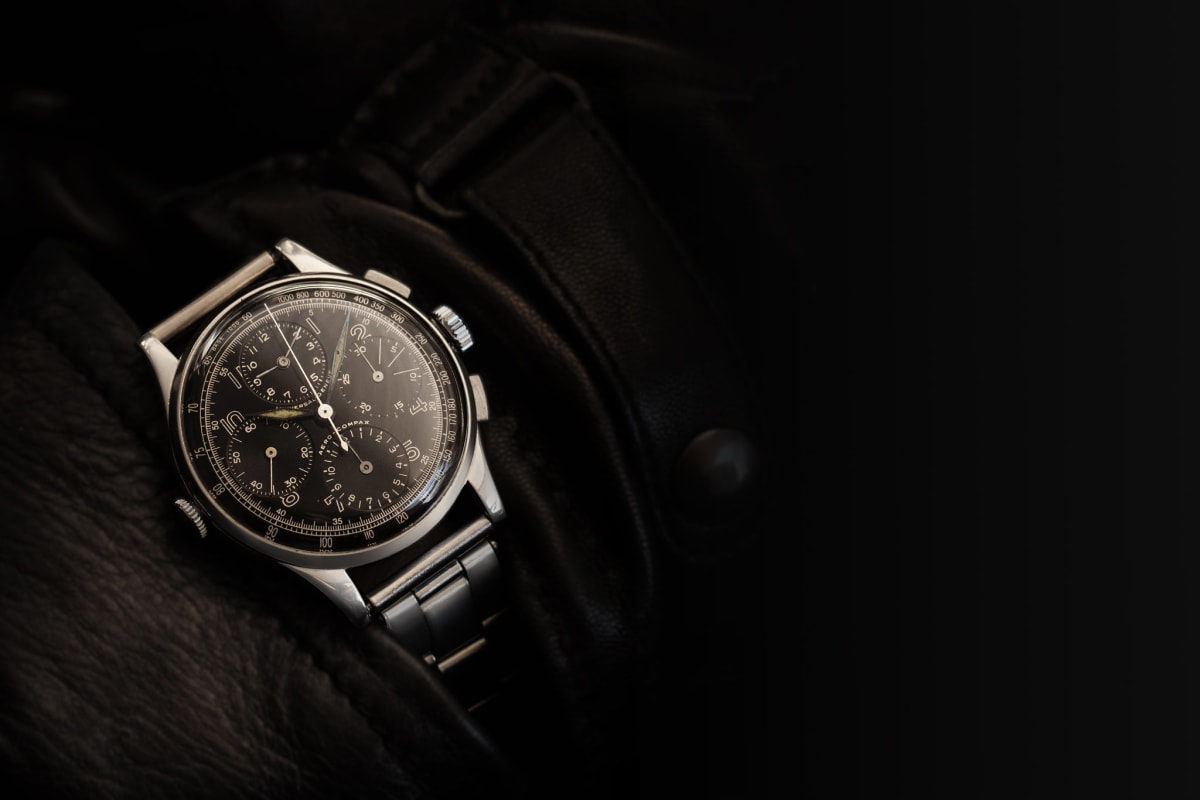
The UG Compax reference 22704 is one of the great column-wheel chronographs of the golden age - powered by the beautiful cal. 285 or 287 depending on execution. Case sizes hover around 34-35mm which reads properly vintage today, and the two-register layout has aged perfectly. Universal Genève's stock has finally started to recover - this is the kind of watch that gets you into that world.
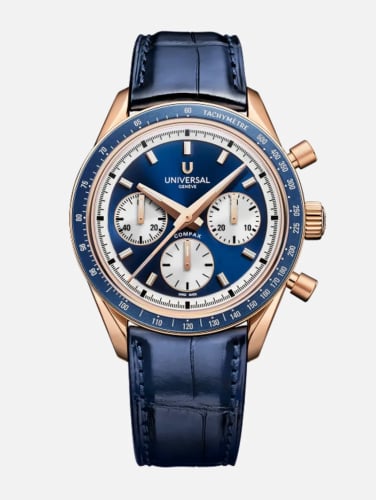
Universal Genève, a manufacture whose mid-century Compax references established the tri-register chronograph as a viable aesthetic paradigm, here presents its 2023 iteration under reference UGCO004 — a revival exercise confronting the considerable burden of its predecessors. The midnight blue dial, vis-à-vis the sector dials and lacquered surfaces of postwar Compax production, represents a deliberate modernization: deep, saturated, and calibrated to the contemporary market's chromatic preferences. The execution is exceptional within its category, the sub-register arrangement legible without sacrificing the compositional coherence that made the original lineage significant. Concordantly, the rose gold case at 39.5 millimeters reflects sound proportion for a dress chronograph — neither overcorrecting toward sportif excess nor retreating into excessive formality. The 12.45 millimeter thickness, however, is a concession to the automatic UG-200 movement beneath, and one the wrist registers with awareness. The movement itself performs its function adequately; there exists no certainty that an in-house caliber at this price point materially distinguishes itself from the ebauche alternatives deployed by contemporaries. The leather strap, as you undoubtedly gather, is a placeholder rather than a statement. At $17,050 USD, the value proposition is complicated by the inevitability that the brand's reconstituted prestige has not yet achieved the pricing authority its heritage technically warrants.
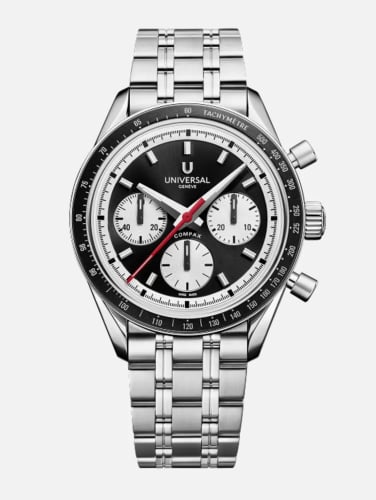
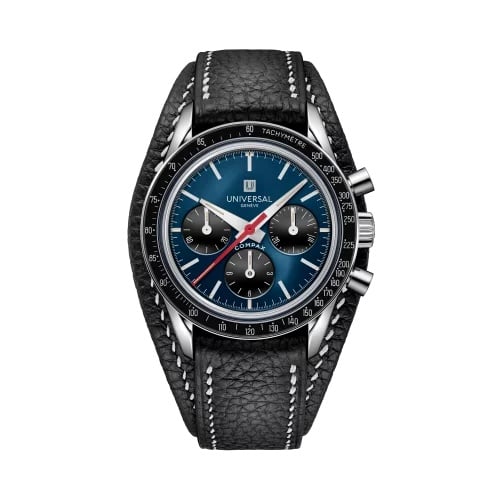
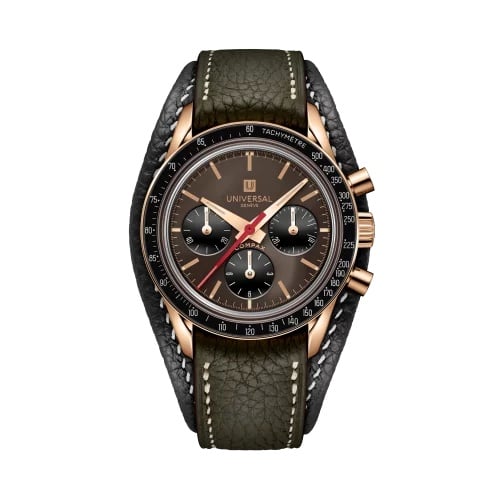
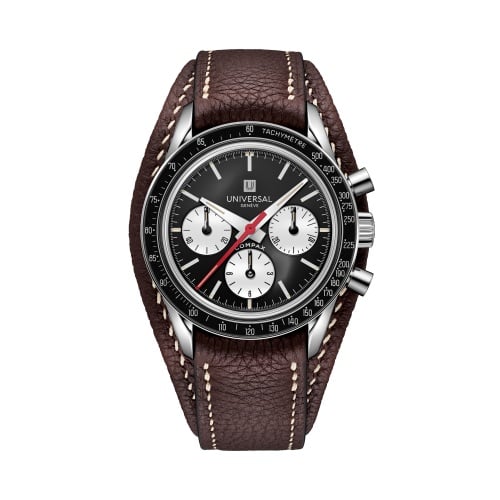
Universal Genève's reentry into active production — after decades of dormancy during which the name existed primarily as a collector's reference point rather than a functioning manufacture — produces the Compax Black, reference UGCO002, a chronograph that bears the weight of its predecessors with varying degrees of success. The original Compax lineage, which defined much of mid-century column-wheel chronograph design, established expectations that any contemporary iteration must navigate carefully. The dial execution achieves something defensible: a restrained black register arrangement that does not overclaim its relationship to vintage counterparts but does not repudiate it either. At 39.5 millimeters and 12.45 millimeters of thickness, the case occupies a disciplined proportion increasingly rare among contemporary chronograph offerings, concordantly producing wearability that the category frequently sacrifices in pursuit of visual presence. The UG-200 calibre functions as a competent automatic chronograph movement without attaining the mechanical distinction that would elevate this reference above its price cohort. Vis-à-vis the $17,050 asking figure, the probability of unambiguous value clarity diminishes — the market at this interval contains mechanically superior or historically unimpeachable alternatives. The leather strap, as delivered, represents the iteration's least considered element, adequate in execution without advancing the design proposition. There exists a certainty that the brand's reestablishment requires precisely this kind of reference, yet the value equation remains genuinely unresolved.
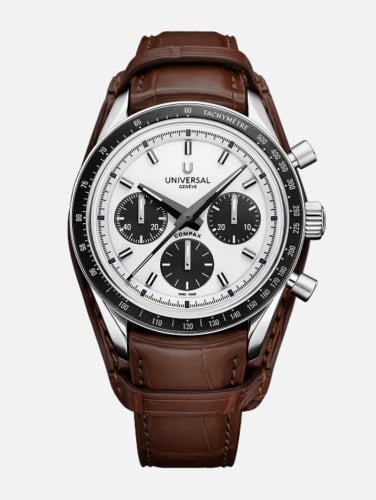
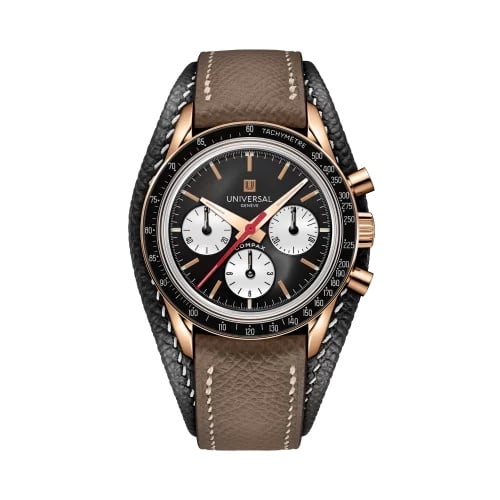
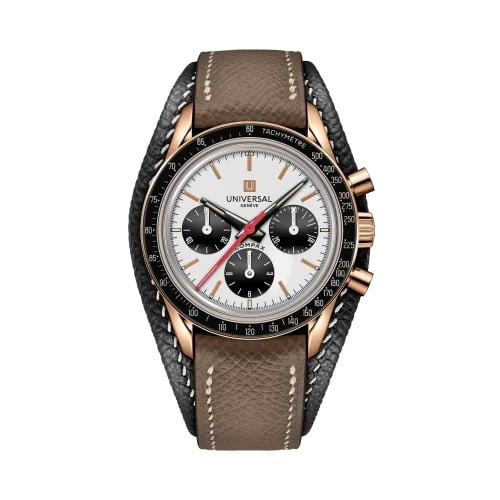
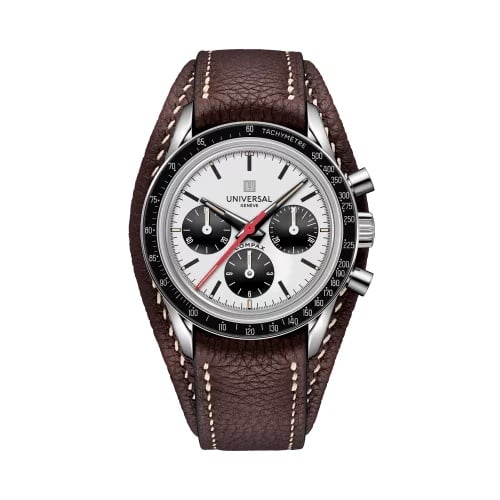
Universal Genève's reintroduction of the Compax denomination in 2023 represents a calculated reclamation of a lineage dormant for decades — a lineage whose mid-century iterations defined the tri-register chronograph as a formal instrument. The UGCO001, designated the Compax White, addresses a specific probability: that the market retains appetite for heritage revival executed with discipline rather than nostalgia as primary structural argument. The white dial achieves precisely the register its predecessors established in their most restrained configurations, with a clarity that rewards examination without soliciting it. Vis-à-vis the case, 39.5 millimeters at 12.45 millimeters of thickness produces proportions that concordantly align with dress-adjacent wearability — neither thin enough to claim haute horological pretension nor so thick as to compromise the tailored context the white dial implies. The UG Calibre UG-200 is a competent automatic chronograph movement with a 72-hour power reserve that functions adequately within its category without altering its trajectory. As you undoubtedly gather, the movement represents the weakest structural argument for the asking price of $17,050. The leather strap, while appropriate in register, remains generic in its execution. The inevitability is this: the Compax White succeeds most convincingly as an aesthetic argument, and the value equation demands that argument sustain scrutiny at a price point where movement provenance is not incidental.
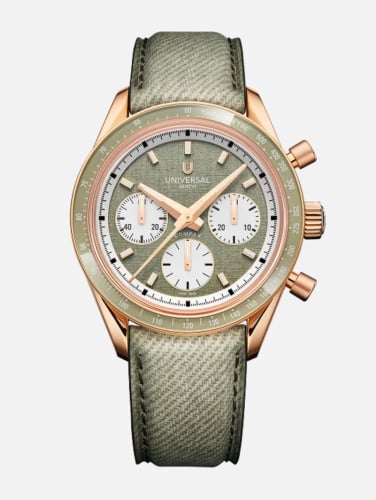
Universal Genève's Compax lineage extends across decades of mid-century Swiss chronograph production, a heritage of considerable weight that the Capsule Sage Green — reference UGCO006 — is tasked with carrying forward under the revived marque. The sage green dial represents the primary argument for this reference's existence: a considered, desaturated hue that situates itself apart from the saturated dials that dominated the preceding market cycle. Concordantly, the application of this colorway to a 39.5mm rose gold case produces a tension between restraint and opulence that is, on balance, navigated with reasonable discipline. The case thickness at 12.45mm is not negligible for a dress-adjacent chronograph, though it remains within acceptable parameters. The UG Calibre UG-200, an automatic movement with a 72-hour power reserve, performs its mechanical obligations adequately without presenting a persuasive technical argument at this price tier. Vis-à-vis competitors occupying the $40,000 to $45,000 chronograph segment, the movement specification does not differentiate the reference. The leather strap, while contextually appropriate, lacks the construction detail one would expect at this valuation. Ergo, the value proposition is the axis where the probability of buyer satisfaction most visibly contracts — $43,900 USD positions this iteration against established chronograph architecture of demonstrably superior movement provenance.
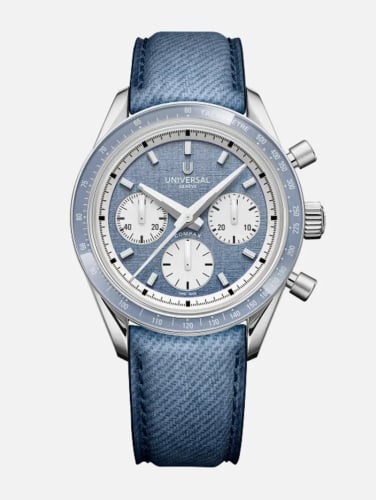
Universal Genève, a manufacturer whose mid-century Compax references established the formal grammar of the integrated column-wheel chronograph, has produced in the Capsule Brushed Indigo a contemporary iteration that engages seriously with that lineage without becoming enslaved to it. The brushed indigo dial is the axis upon which the entire proposition rotates: it is chromatic without vulgarity, its saturation calibrated to the threshold at which color becomes character rather than affectation. The handset maintains typographic discipline concordantly. The case at 39.5mm and 12.45mm thickness represents a proportional restraint that the broader industry has largely abandoned, and wearability is, as you undoubtedly gather, the direct beneficiary of this discipline. The UG-200 calibre — a movement produced in collaboration with a noted Swiss ebauche supplier — functions with competence but does not represent independent manufacture in the sense that would justify self-congratulation; it is adequate to the instrument's requirements and no more. The leather strap, vis-à-vis the dial's ambition, registers as an underinvestment, a component that communicates neither the craft vocabulary of the dial nor a considered alternative proposition. The value axis presents the analysis its most resistant problem: $43,900 USD for a movement of this derivation, however elegantly housed, requires the consumer to purchase a considerable portion of heritage alongside a modest portion of horology. The probability that this reference achieves the secondary market resonance of its predecessors remains, at present, uncertain.
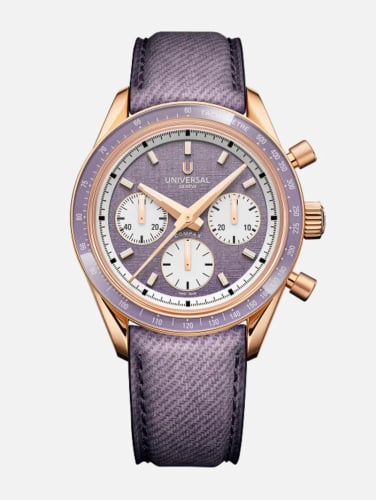
Universal Genève's Compax lineage extends back to the 1930s, a period in which the manufacture produced column-wheel chronographs of considerable technical consequence. The UGCO008 represents the brand's contemporary reclamation of that heritage — a calculated repositioning against the noise of the modern luxury chronograph market. The dry lavender dial is the defining decision of this iteration: a muted, desaturated hue that occupies a persuasive middle ground between formal restraint and chromatic distinction. Vis-à-vis the standard Compax Capsule executions, the colorway achieves genuine differentiation. The rose gold case at 39.5mm and 12.45mm thickness reflects a considered proportional discipline that many contemporaries have abandoned in pursuit of wrist presence. Concordantly, the sapphire crystal and 100-meter water resistance represent competent specification for the dress-chronograph category, neither deficient nor remarkable. The UG-200 calibre, while adequately specified with its 72-hour power reserve, does not carry the technical pedigree of its movement predecessors — the Calibre 215 among them — and this deficit registers against the $43,900 asking price. The leather strap, adequate in function, contributes nothing to a watch at this price point that a more considered strap program could not improve. Ergo, the value proposition is the axis where this iteration encounters friction: the probability that the market consistently affirms sub-$44,000 rose gold as the correct denomination for UG's current movement generation remains uncertain.