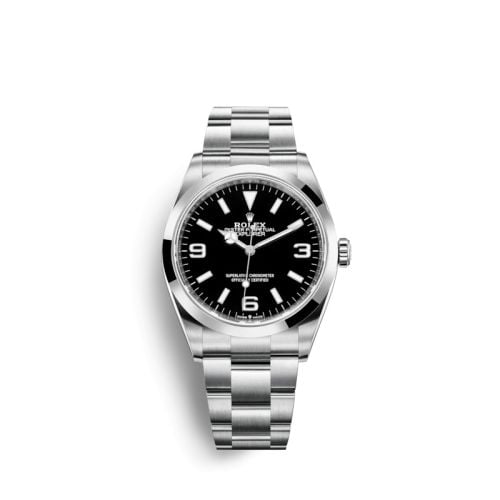
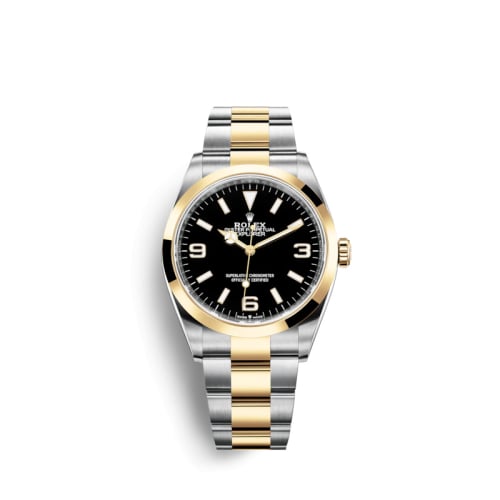
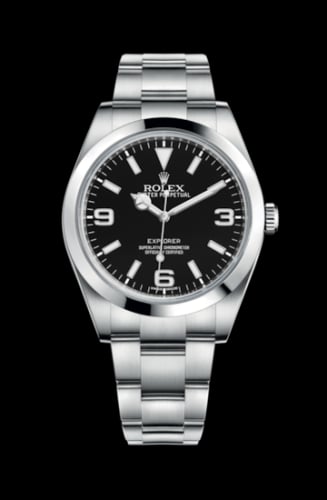
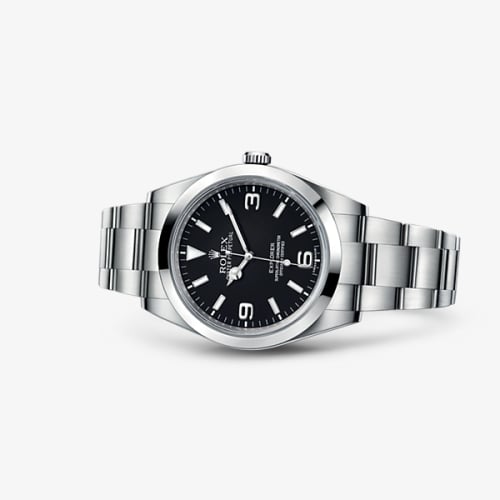
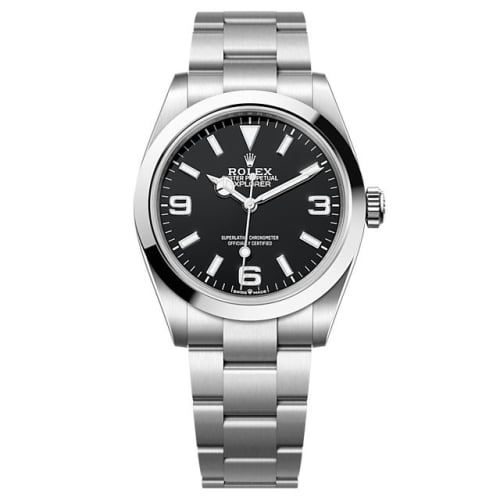
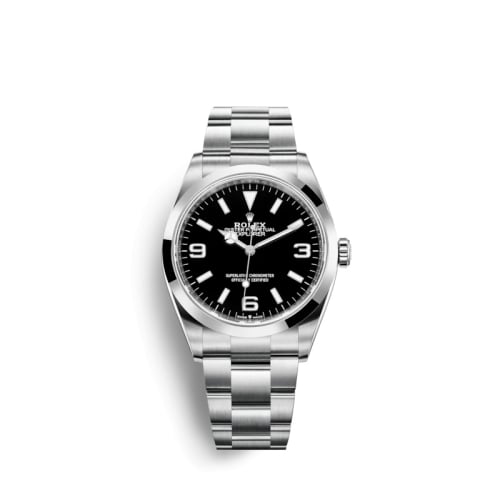
The Reference 124270 represents a deliberate regression in scale, returning the Explorer lineage to thirty-six millimeters after the 214270's forty-millimeter expansion — a recalibration that acknowledges the ergonomic preferences of a portion of the market without fully reconciling the brand's contemporary positioning. Its predecessors, particularly the 1016, established the Explorer as a study in purposeful minimalism: black dial, Arabic numerals at three, six, and nine, and a handset of sufficient luminosity to justify the tool-watch designation. The 124270 preserves this visual grammar with commendable fidelity. Concordantly, the dial execution is precise without being remarkable, occupying a register of disciplined competence rather than genuine distinction. The caliber 3230 — Rolex's introduction of the Chronergy escapement with a seventy-hour power reserve — constitutes the reference's most defensible advancement vis-à-vis prior iterations. Its performance metrics are exceptional for the category, though the movement remains inaccessible behind a sealed caseback, a condition that removes the usual horological consideration from the purchaser's deliberation. The Oyster bracelet functions adequately; it does not distinguish itself. The probability that the value equation resolves favorably for the buyer is complicated by the inevitability of secondary market premiums that routinely double the stated retail figure, rendering the official MSRP a largely theoretical construct.
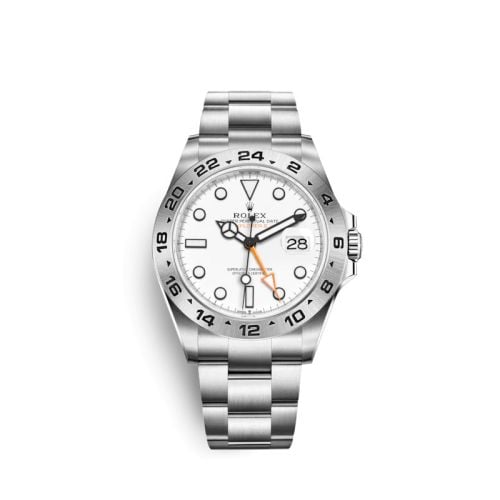
The Reference 226570 represents the current production iteration of the Explorer II lineage, a line whose origin in 1971 positioned it explicitly for spelunkers and polar researchers requiring a fixed 24-hour bezel to distinguish day from night in perpetual darkness. Concordantly, the contemporary execution retains that 24-hour graduated bezel and the distinctive orange GMT hand — elements that connect this reference to its predecessors with unusual fidelity. The dial, available in both matte black and white, maintains a legibility-first orthodoxy that suits the instrument's stated purpose. The applied hour markers and Mercedes handset are executed without error, though without distinction. Vis-à-vis its case design, the 42mm diameter represents an expansion from earlier iterations that some analysts regard as a violation of the Explorer II's original proportion discipline. At 12.9mm of thickness, the case resists disappearing beneath a cuff — a functional concession that undermines wearability for a meaningful segment of wrists. The Caliber 3285 is the axis on which this reference earns its most defensible score: 70 hours of power reserve, Chronergy escapement, and demonstrated positional accuracy constitute a movement of genuine consequence. The value equation, however, is complicated by market realities. At $9,550 MSRP and with grey market premiums persisting, the probability of acquiring this reference at list price without established dealer relationships approaches a figure that disciplines the value assessment considerably.
My husband bought this for himself and I ended up borrowing it more than he did. Ended up buying my own. The 36mm size is perfect for wrists like mine and the 3-6-9 dial layout is timeless. There's really nothing to dislike. Just a fantastic, quiet watch.
If I could only own one watch, this would seriously be in the conversation. The 36mm Explorer is one of the most versatile watches Rolex has ever made - it goes from a suit to a t-shirt without missing a beat. The dial is a masterclass in restraint: 3-6-9 numerals, Mercedes hands, and just enough lume to be useful without being flashy. On the wrist it disappears in the best possible way. The only real knock is availability at retail, but if you can get one, do it. This is a watch you buy once and never sell.
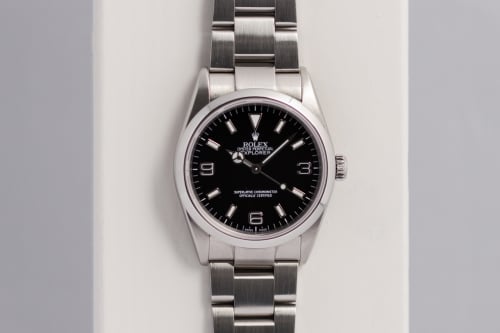
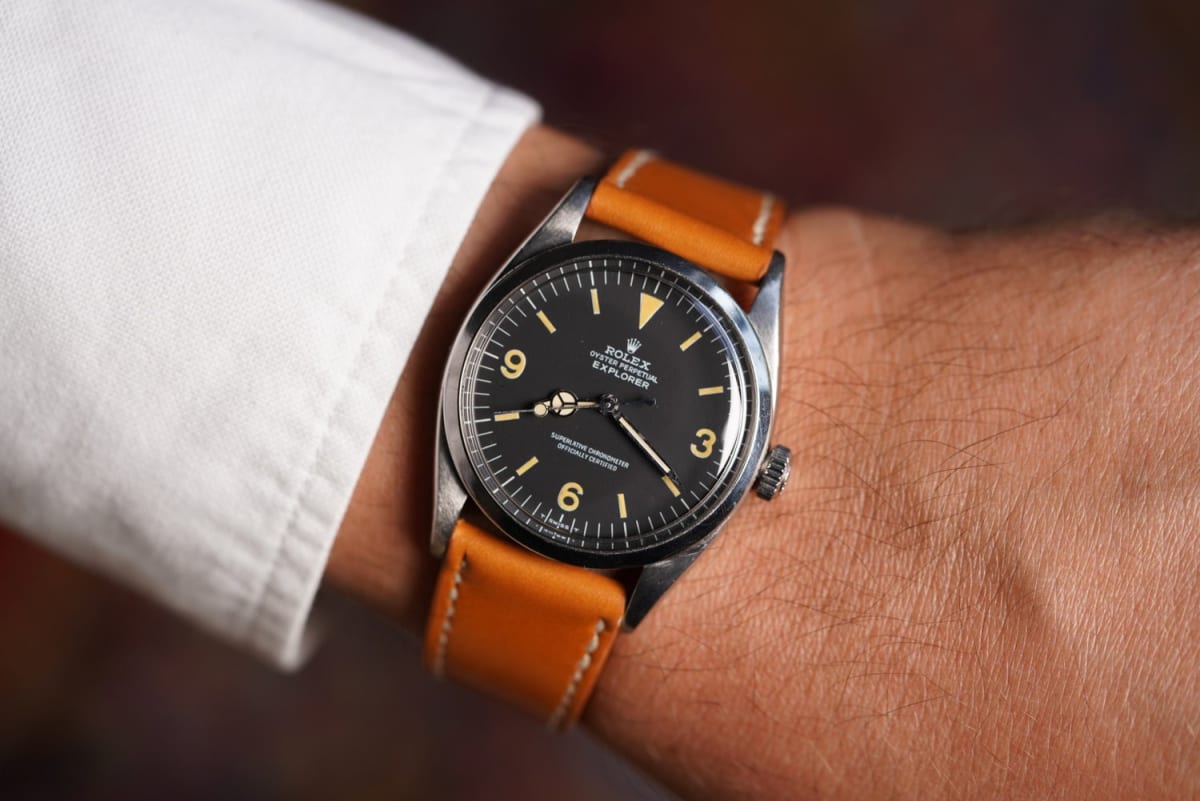
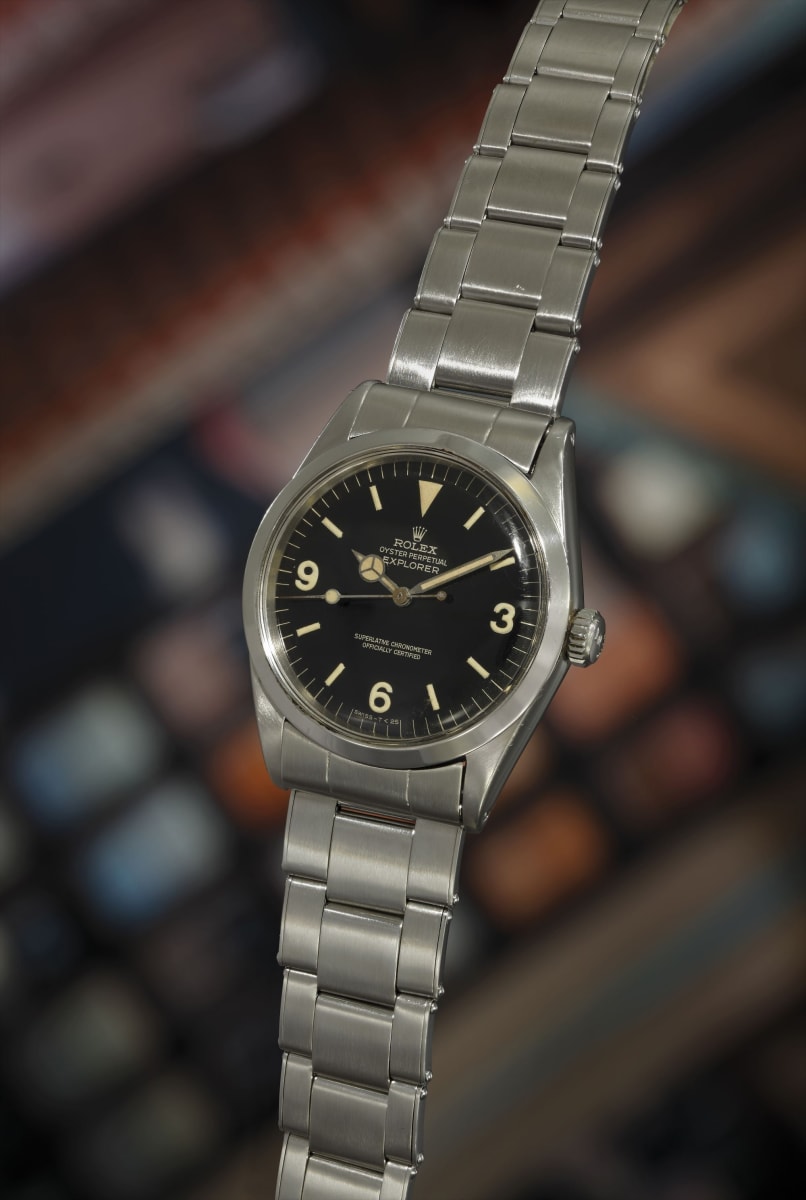
Owned my 1016 for over a decade now. It has become the watch - the one I reach for when I'm not sure what to wear. 36mm is not for everyone in 2025 but it's genuinely perfect for me. If you find an original matte dial with even patina, don't hesitate. These are only going up.
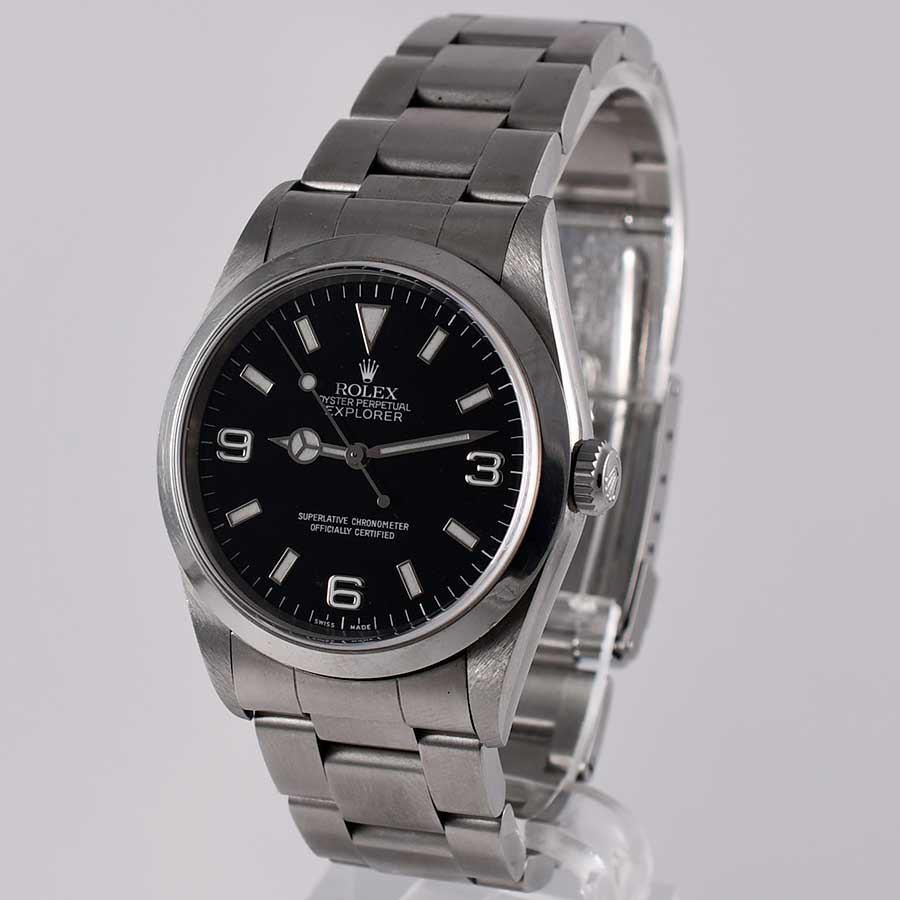
The 1016 is the definitive Explorer, full stop. Produced for over 26 years, this reference basically wrote the vocabulary for what an adventure watch should be: 36mm, clean dial, riveted or folded bracelet, no date, black. Matte dials with even patina are the hunt. On the wrist this is one of those references that just disappears in the best possible way.
The Explorer poses a simple question: what does a watch need? A dial, hands, numerals at the cardinal positions, and a case robust enough to accompany one on a genuine journey. In answering this question with such economy - and in producing that answer without variation for twenty-six years - this reference approaches, if it does not attain, the ideal.