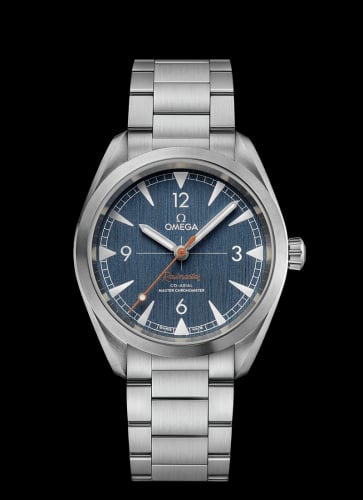
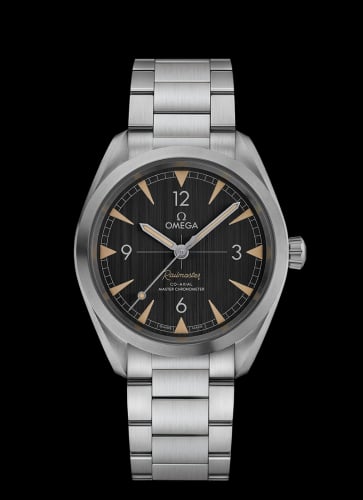
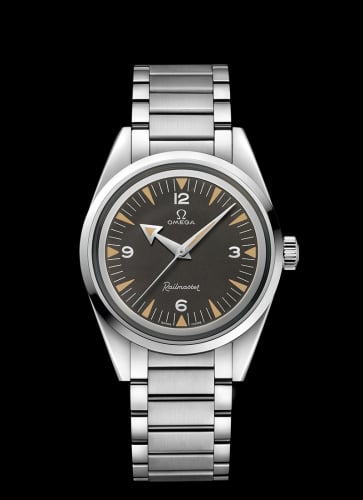
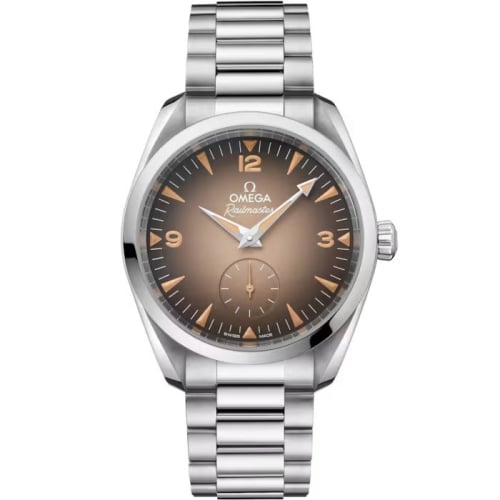
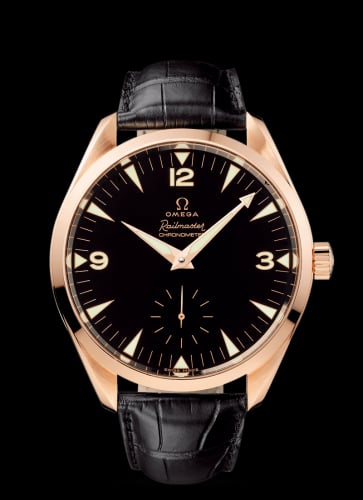
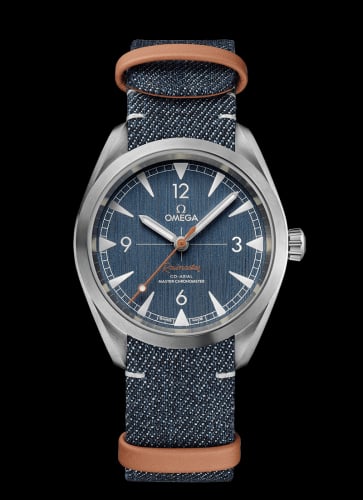
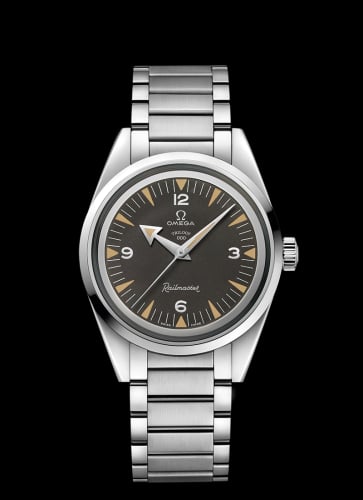
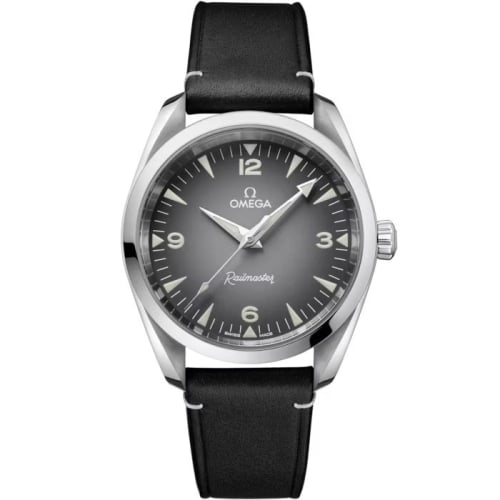
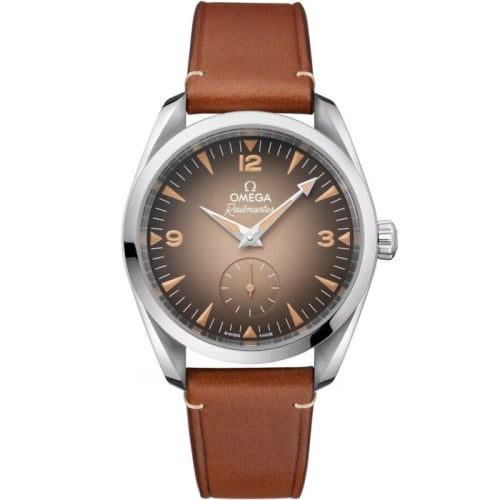
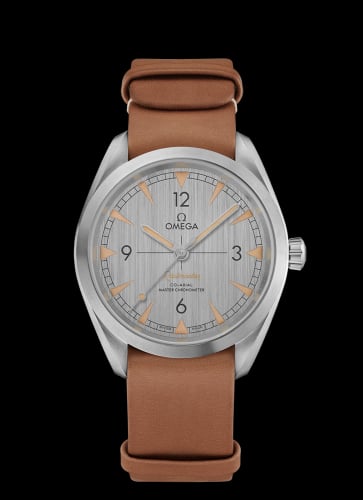
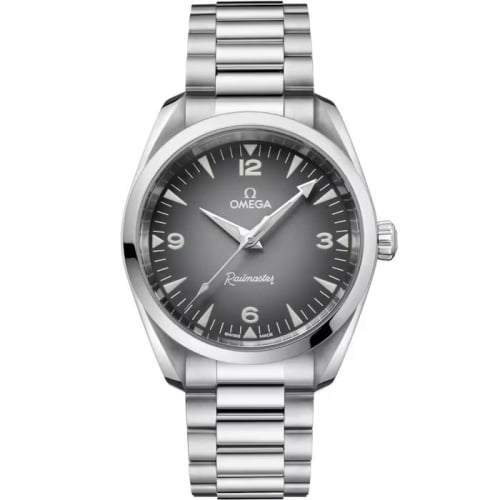
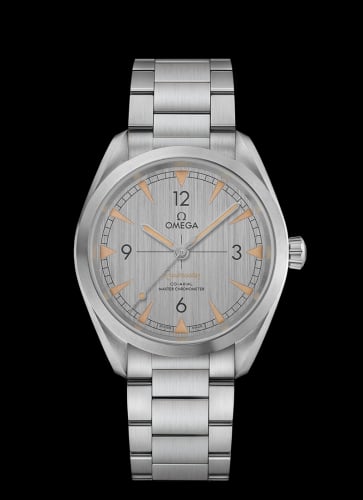
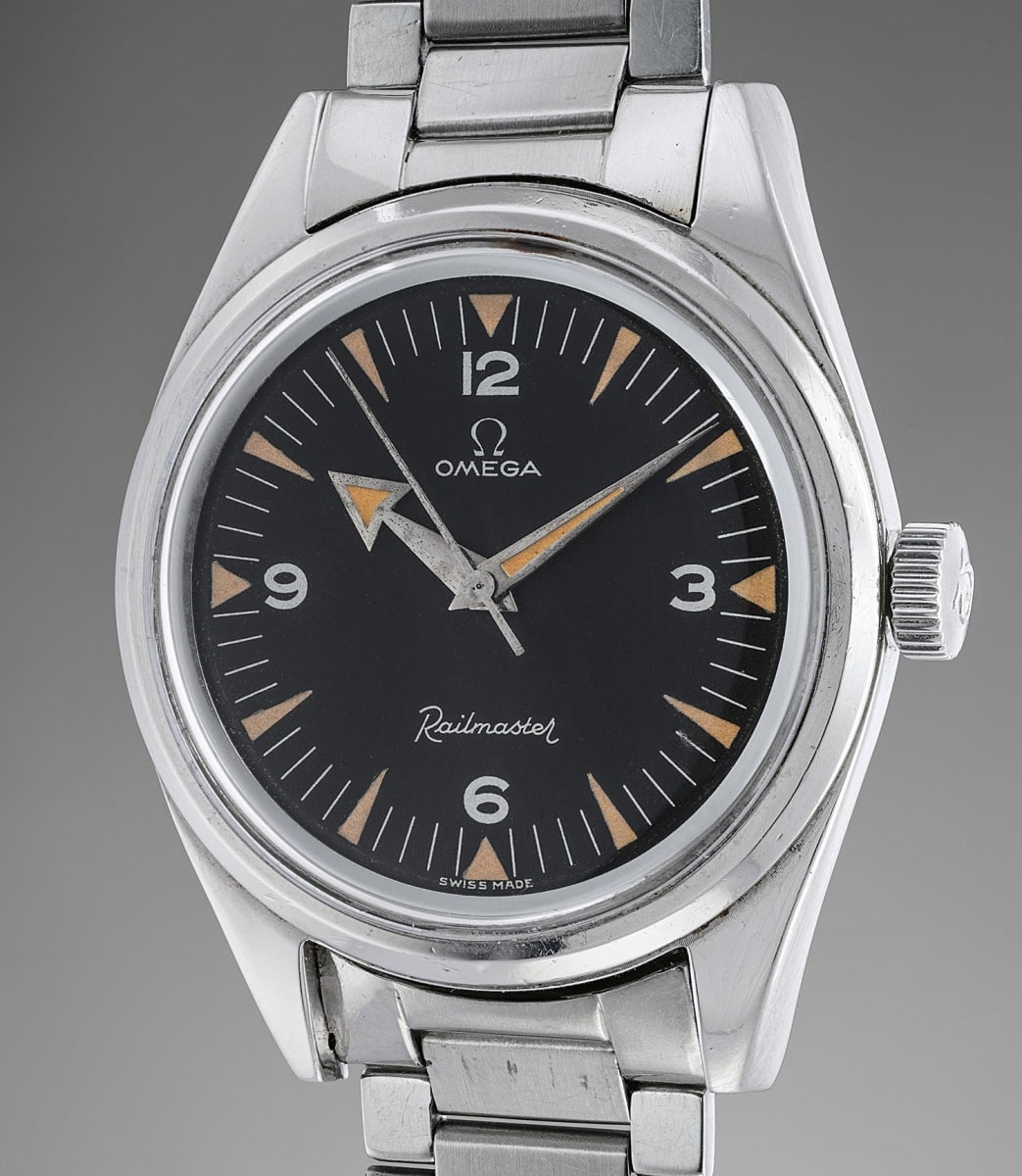
The Railmaster's third-generation iteration, reference 220.10.40.20.01.001, occupies a peculiar position within Omega's catalog — a tool watch whose original mandate, anti-magnetic field resistance for railway technicians, has been recontextualized for a contemporary market far removed from the vocational precision its predecessors served in 1957. The 2017 reintroduction brings with it the caliber 8806, a movement of genuine distinction: Master Chronometer certification, 15,000 gauss anti-magnetic resistance, and a 55-hour power reserve represent a specification tier that few competitors at this price stratum can credibly challenge. Concordantly, the movement is the instrument's primary argument for acquisition. The dial, however, demonstrates Omega's characteristic tension between legibility and restraint. The sector-style layout acknowledges the original's aesthetic without fully committing to its vocabulary, producing a competent but somewhat indeterminate result. The case proportions at 40 millimeters and 11.25 millimeters thickness are disciplined and wearable across contexts. The steel bracelet functions adequately without achieving the integrated refinement of the Seamaster's equivalent. As you undoubtedly gather, the value proposition is complicated: $5,200 purchases movement excellence while the broader design execution remains merely adequate. The probability of this reference achieving secondary-market appreciation is measurably lower than contemporaries with more coherent horological identities.
The Railmaster, reintroduced in 2017 as reference 220.10.40.20.03.001, represents Omega's third substantive iteration of a concept originating in 1957 — a tool watch designed for environments of magnetic interference, concurrent in its original generation with the Seamaster 300 and Speedmaster as part of the Professional trilogy. The 2017 reissue deploys the Co-Axial escapement in caliber 8806, a movement of genuine technical distinction, achieving METAS-certified antimagnetic resistance to fields exceeding 15,000 gauss. This is the axis upon which the reference justifies its existence. Concordantly, the dial — a sector-style execution referencing the original's railway-clock typography — achieves period fidelity without becoming pastiche, though the applied indices lack the depth and refinement that would elevate the execution beyond the notable. The case at 40mm and 11.25mm thickness is proportionally disciplined, as you undoubtedly gather, yet the integrated bracelet lacks the finishing gradation one expects at this price tier, with polished center links that sit in uncomfortable contrast to the watch's tool-oriented identity. Water resistance at 60 meters is, vis-à-vis category competitors, a figure of modest adequacy — sufficient for incidental exposure, insufficient for serious sport utility. The value equation presents its own friction: $5,200 USD for a watch whose movement surpasses its case finishing reflects a hierarchy of investment that some segment of the market will find difficult to rationalize against the Seamaster alternatives within the same catalog.
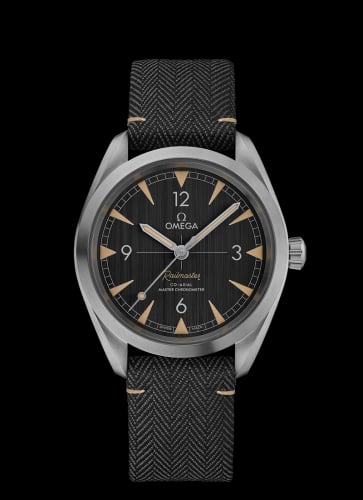
The Railmaster, reintroduced in 2017 as reference 220.12.40.20.01.001, represents Omega's third systematic attempt to codify the anti-magnetic tool watch proposition first articulated in the 1957 CK2914 original. Vis-à-vis that predecessor, the contemporary iteration substitutes romantic specification — the original's resistance to 1,000 gauss — with the considerably more rigorous 15,000 gauss threshold achieved through the Co-Axial Cal. 8806, a movement whose silicon escapement renders it genuinely category-relevant rather than merely nostalgic. Concordantly, the dial executes its retro mandate with discipline: the broad Arabic numerals, textured surface, and understated lume application produce a legible, considered face that functions without demanding attention. The case, at forty millimeters and 11.25 millimeters of thickness, occupies proportionally sound territory, though its architecture introduces no geometric vocabulary absent from contemporaries. As you undoubtedly gather, the supplied leather strap is the iteration's most structurally incoherent decision — a tool watch of this category logic demands either a textile or bracelet solution, and the probability that most owners replace it approaches certainty. The value axis presents difficulty: at $5,050, the Railmaster purchases a movement of genuine technical distinction packaged within a design that, while competent, does not fully justify its positioning above functionally comparable field watch alternatives.