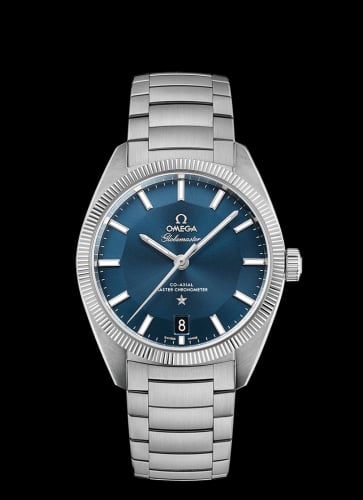
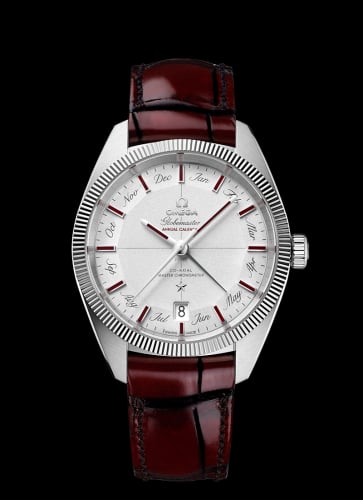
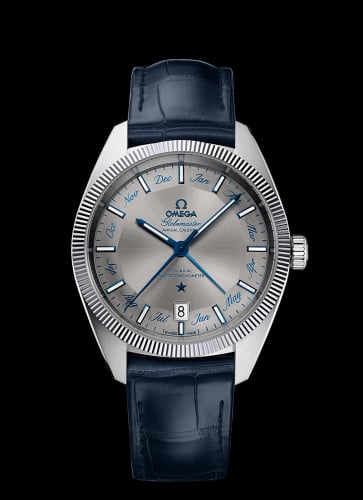
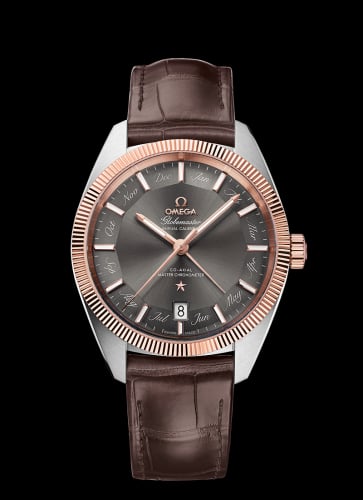
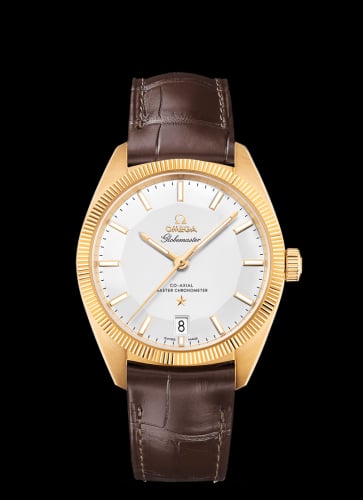
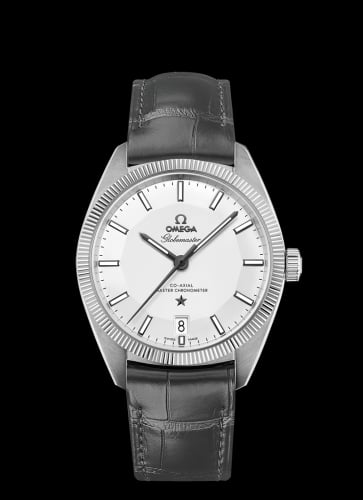
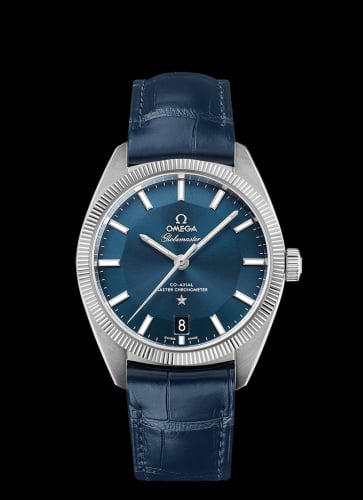
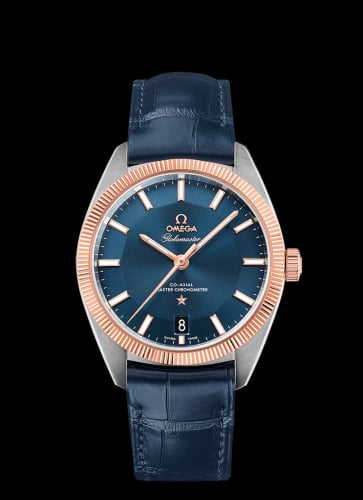
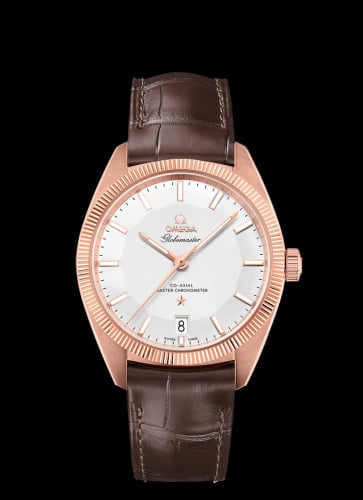
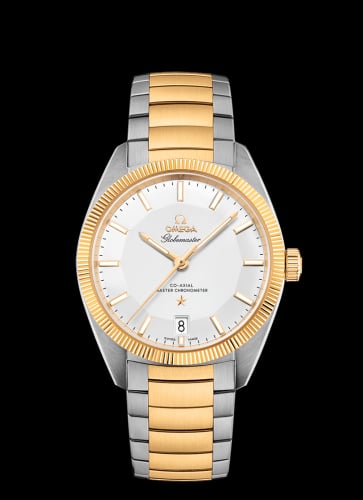
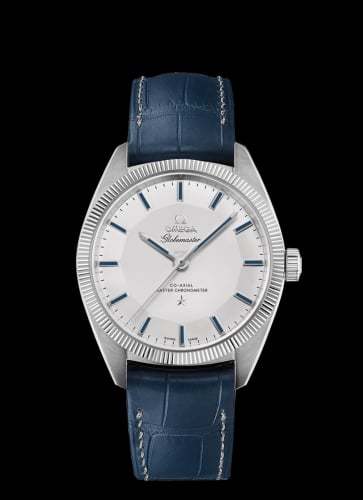
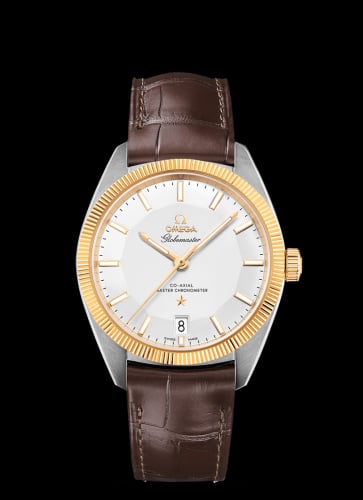
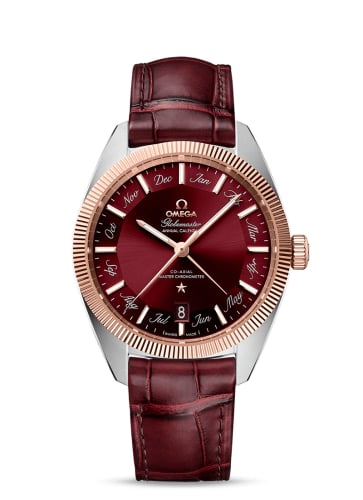
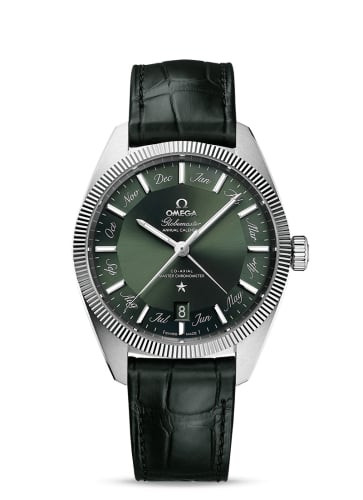
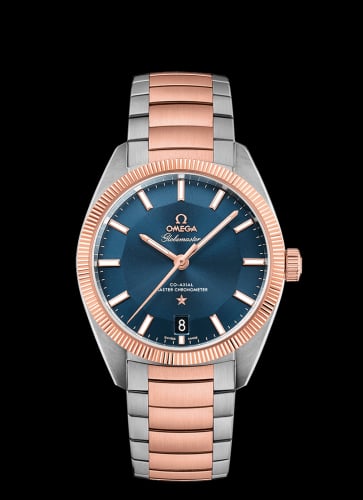
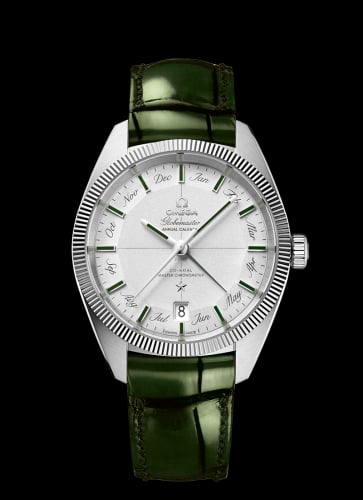
The Globemaster, introduced in 2015 as Omega's centennial commemoration of the Constellation lineage, represents a deliberate exercise in archival retrieval. Its pie-pan dial — a structural curvature borrowed directly from the Constellation references of the 1950s and early 1960s — constitutes the single most resolved aesthetic decision within this iteration. The dial's concentric geometry and applied indices achieve a coherence that many of its contemporaries in the dress segment conspicuously lack. Concordantly, the movement merits particular attention: the caliber 8900 carries METAS Master Chronometer certification, a standard that supersedes COSC in both magnetic resistance and accuracy verification rigor. There exists a certainty that this certification represents a genuinely meaningful engineering threshold rather than marketing nomenclature. The case diameter of 39 millimeters is proportionally disciplined for a dress category instrument, though the 12.3 millimeter thickness introduces a profile that strains against the category's formal demands. The bracelet, while competently finished, does not achieve the same design resolution as the dial — its link construction reads as functional rather than intentional. The value proposition is where the analysis grows complicated: at $6,650, the Globemaster occupies a contested stratum wherein the probability of category-leading competitors offering comparable or superior execution is demonstrably non-trivial. The movement justifies a premium; the bracelet execution and case thickness partially erode it.
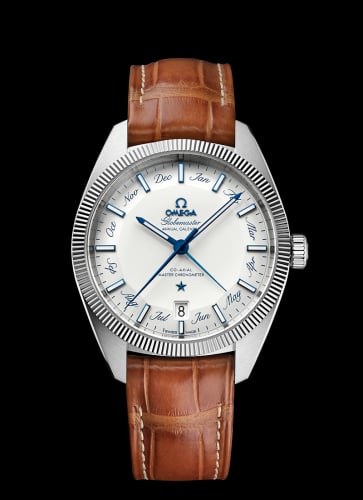
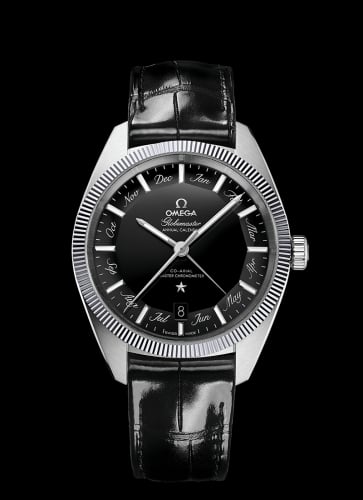
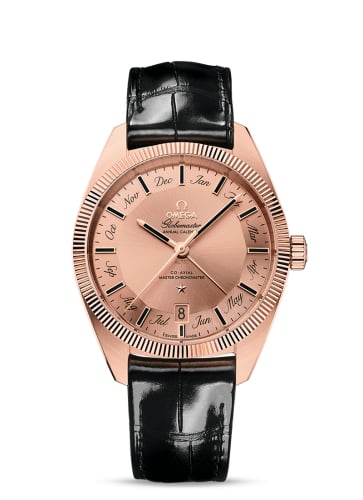
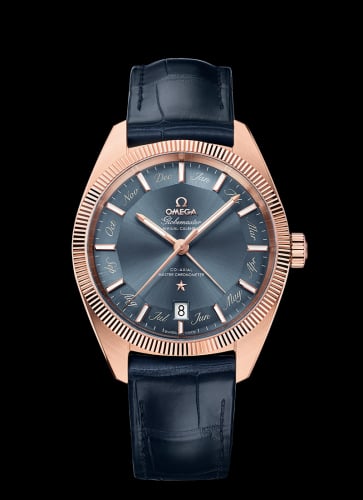
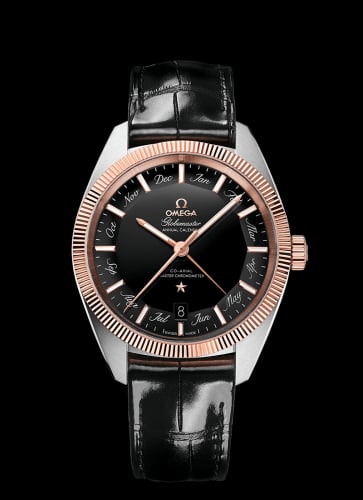
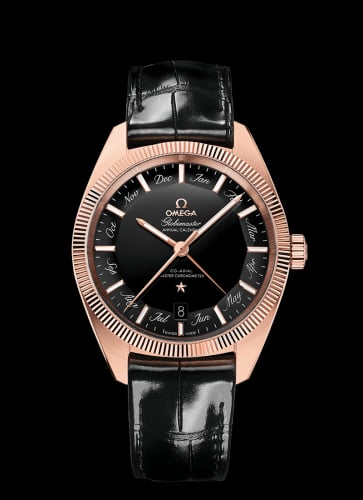
The Globemaster Annual Calendar of 2015 represents Omega's deliberate return to the pie-pan dial architecture last seen in the Constellation references of the 1950s and 1960s — those predecessors constituting the formal logic from which this iteration descends. The stepped, faceted dial surface and the twelve-pointed bezel recall that lineage with sufficient fidelity to constitute a genuine revival rather than mere pastiche. Concordantly, the dial execution is among the more considered in Omega's contemporary dress catalogue, and warrants acknowledgment as such. The movement, Caliber 9901, is the more substantive achievement: a co-axial, Master Chronometer-certified annual calendar mechanism achieving METAS standards for magnetic resistance and precision. The probability that a competing manufacturer offers an annual calendar at this price point with equivalent certification is, as you undoubtedly gather, low. The case, however, presents a tension. Forty-one millimeters is a defensible diameter for a sports reference; vis-à-vis the dress category, where wrist presence ought to recede in favor of proportion, the 14mm thickness compounds the issue into something approaching excess. The steel bracelet, while competently executed, contributes a sportif incongruity that the dial's formal vocabulary does not resolve. Wearability under a dress shirt cuff is, ergo, compromised. The value equation remains reasonable given the movement's technical specification, though the categorical ambiguity the design embodies prevents a more favorable assessment.
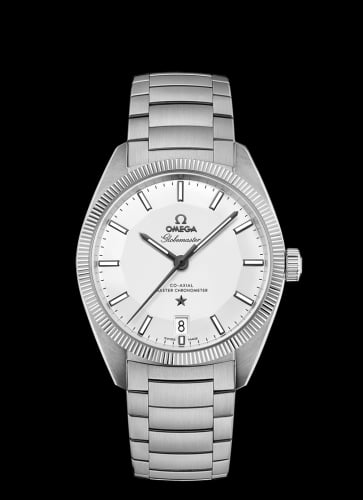
The Globemaster, introduced in 2015 as a centennial acknowledgment of Omega's 1915 Co-Axial platform ambitions, represents a deliberate excavation of the brand's dress-watch lineage. Its pie-pan dial — a formal gesture toward the Constellation references of the 1950s and 1960s — is among the more disciplined acts of retrospective design in contemporary Swiss manufacture. The fluted bezel and multi-pointed star at six o'clock function as heraldic callbacks to those predecessors, executed with sufficient fidelity to avoid the charge of superficiality. Concordantly, the dial's execution at this reference number achieves a visual hierarchy that the broader Constellation line has not consistently maintained across its recent iterations. The movement warrants attention disproportionate to the case containing it. Caliber 8900, Master Chronometer certified to METAS standards, represents a demonstrably rigorous specification — magnetic resistance to 15,000 gauss constitutes a paradigm-level technical achievement for this price tier. The case at 39mm and 12.3mm thickness remains proportionate for the dress category, though the water resistance of 30 meters signals an unambiguous formal positioning. The bracelet, while technically adequate, exhibits a finish quality that does not fully meet the expectations established by the dial. The value proposition is adequate rather than exceptional; at $6,650, the movement specification is defensible, but the broader market offers competitive pressure that the Globemaster's design differentiation only partially resolves.