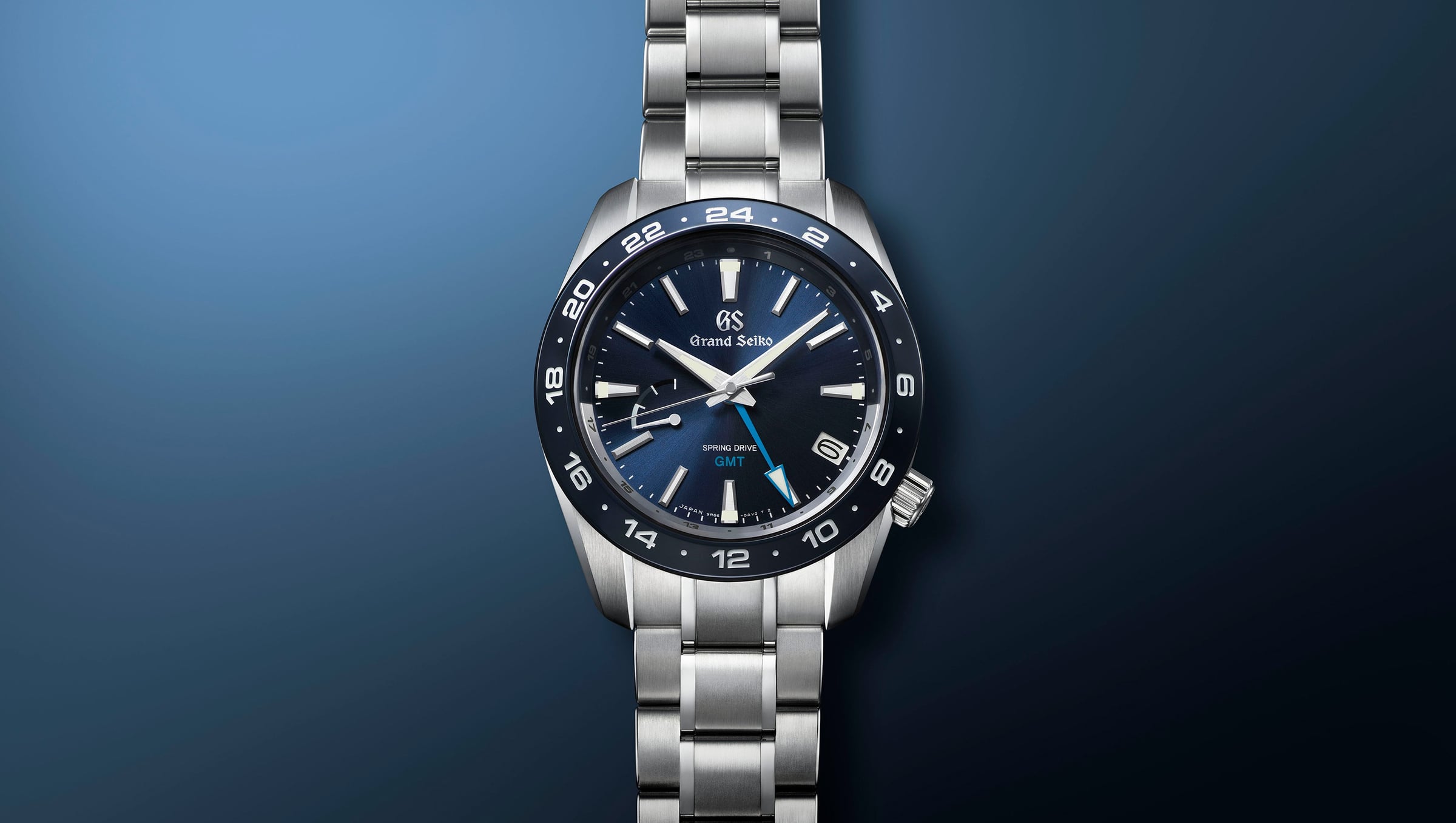
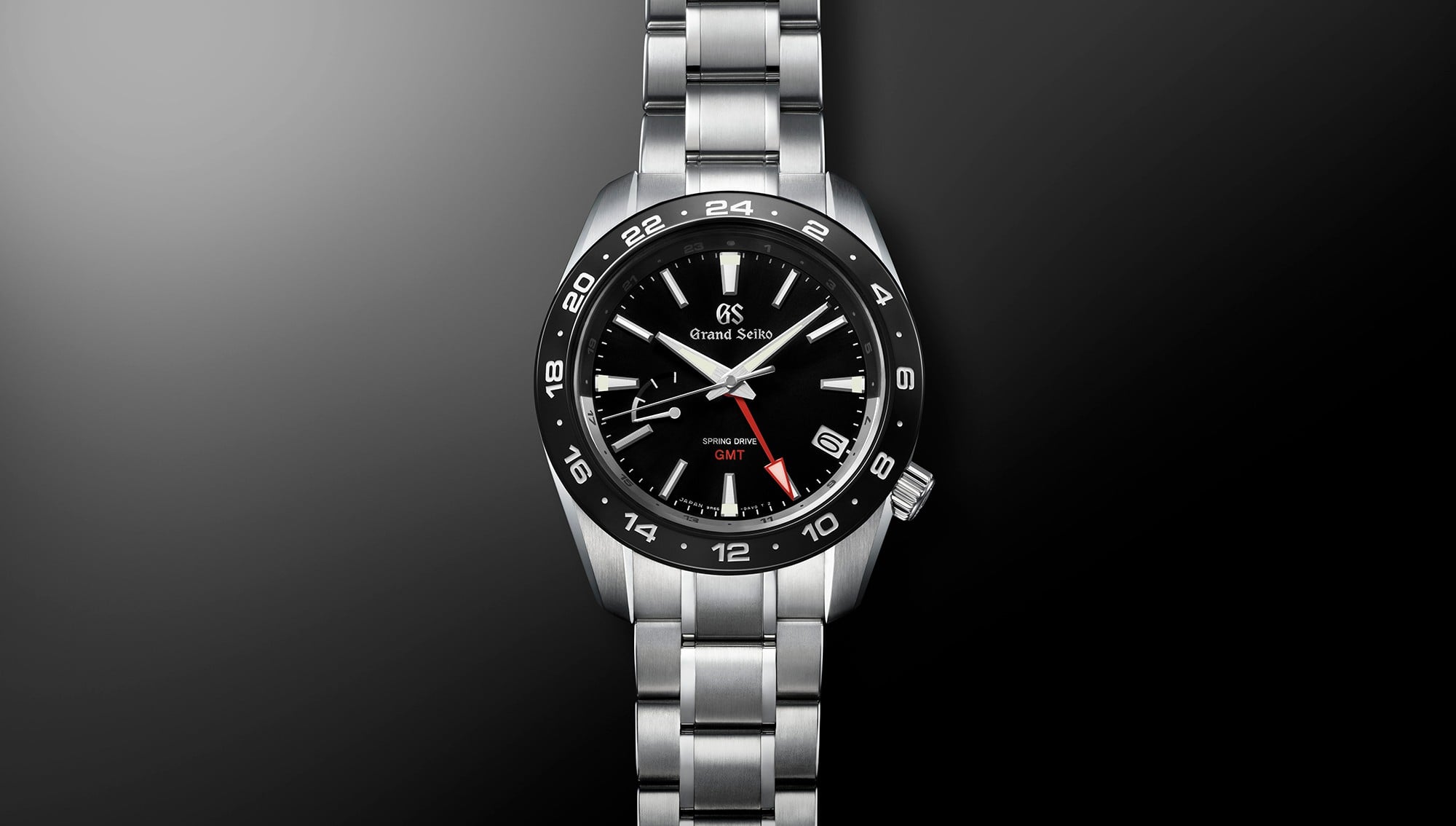
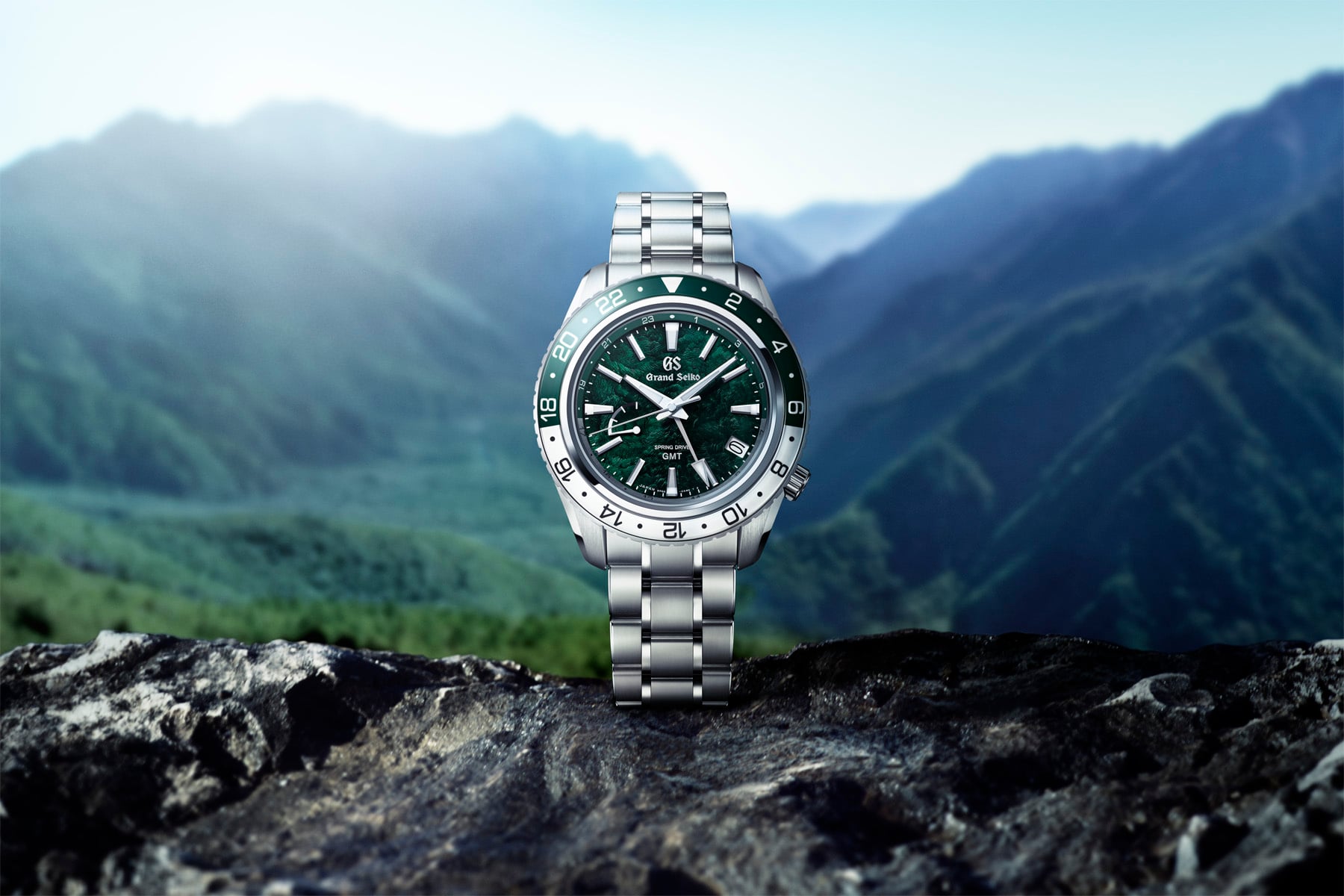
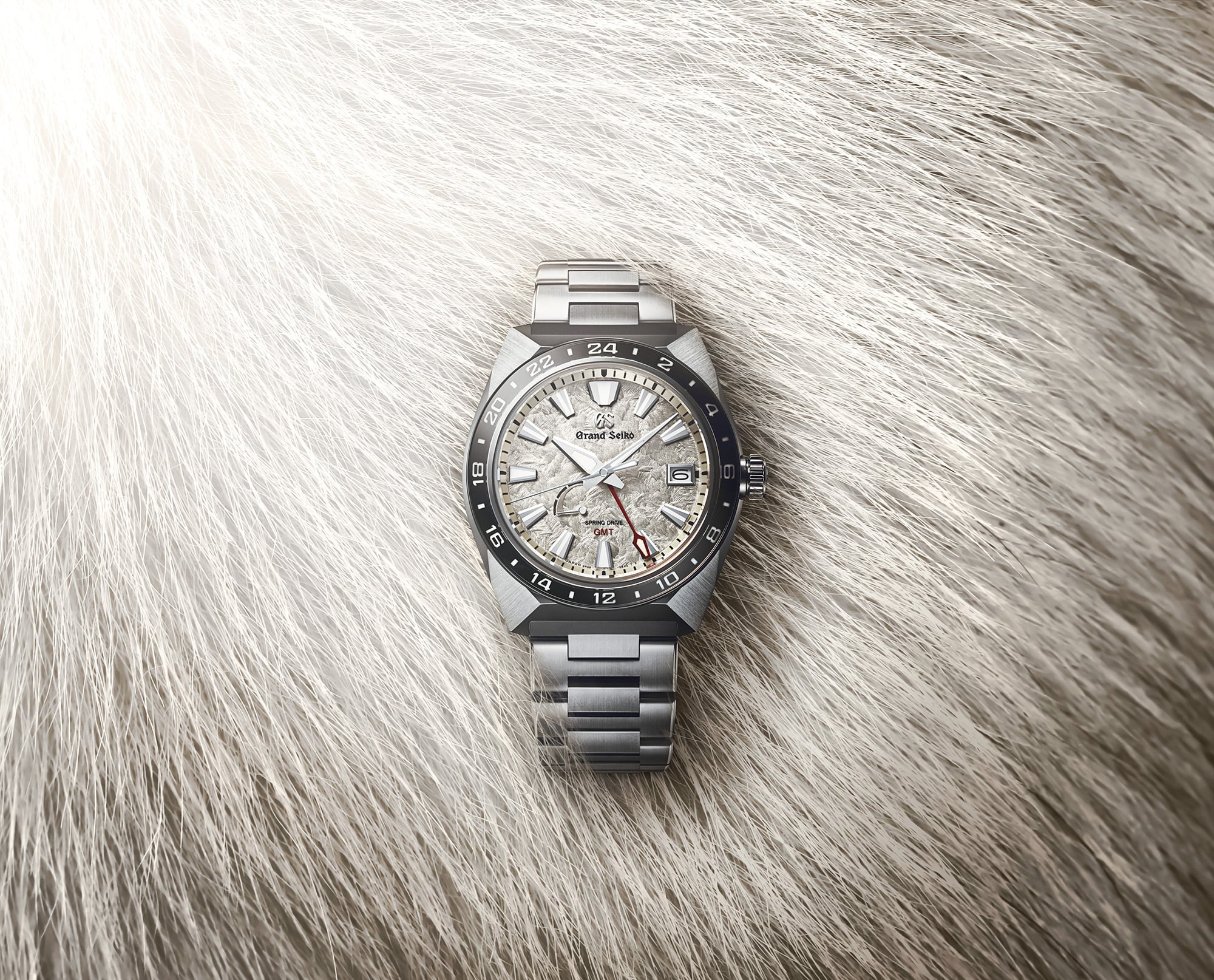
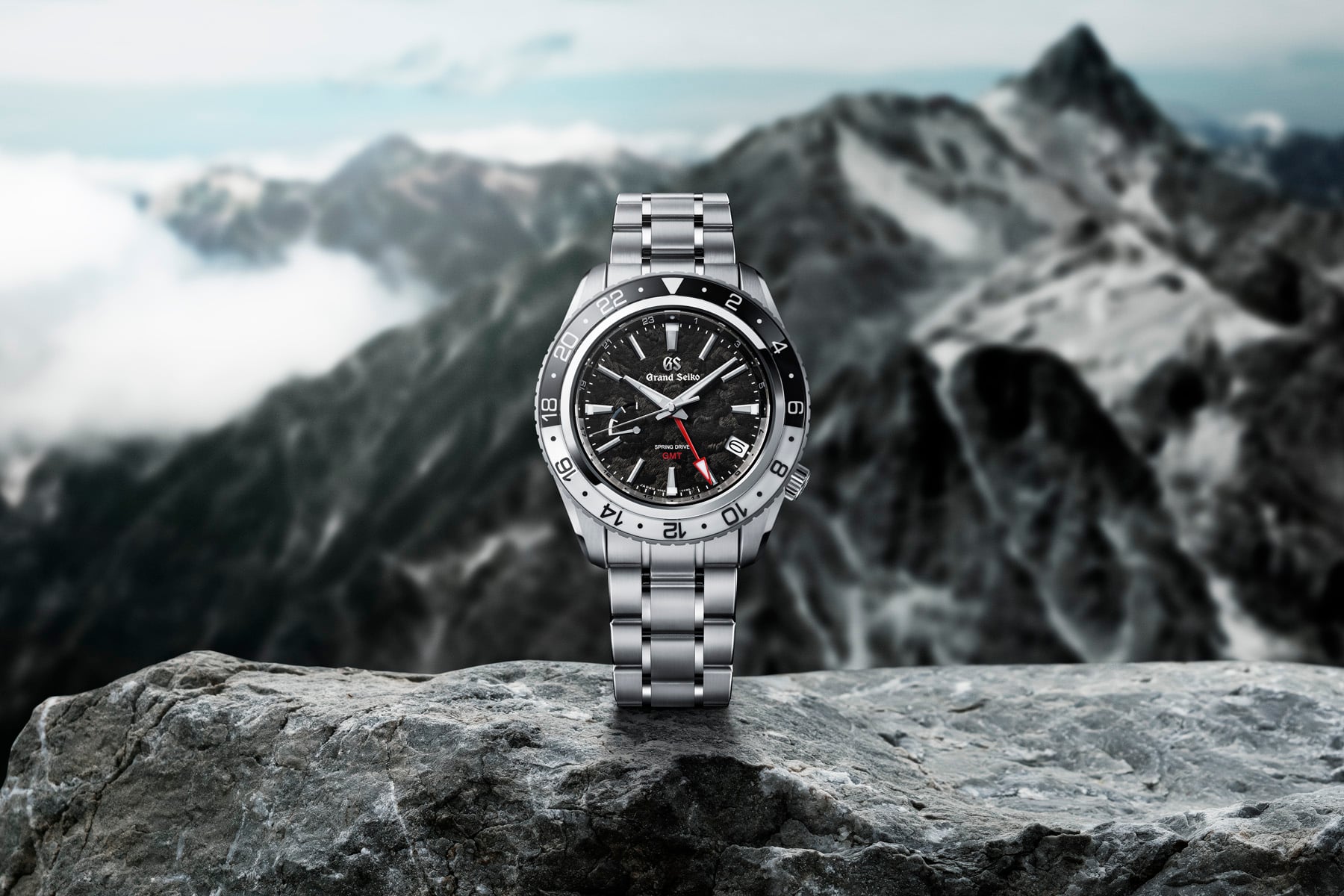
The SBGE307 represents a particular confluence within Grand Seiko's Sport collection: a titanium-cased dive instrument superimposed upon the Spring Drive GMT architecture, producing an iteration that serves two demanding functional masters simultaneously. The caliber 9R66 is the axis upon which the entire proposition rotates. Spring Drive technology, developed through successive internal iterations across the Seiko lineage, achieves a mechanical-electronic synthesis that produces accuracy figures — nominally ±0.5 seconds per day — that its purely mechanical contemporaries cannot approach without certification overhead. This is not a negligible distinction. The dial, executed in Grand Seiko's characteristic Zaratsu-adjacent finishing philosophy, presents a texture derived from natural landscape referencing, a design language the manufacture has developed with notable consistency across recent sport references. The result is legible and visually resolved. Concordantly, the case diameter of 44.5mm paired with a 14.9mm profile introduces a wearability calculus that the titanium construction ameliorates only partially. The probability that wrists below 17.5cm will find this reference comfortable across extended wear approaches unfavorable. The value axis presents complexity: at its market price point, the SBGE307 competes against Swiss GMT instruments of established lineage, and while the movement specification argues forcefully in its favor, the brand's secondary market behavior remains less predictable than its predecessors would suggest warranted.
The SBGE295 represents Grand Seiko's continued expansion of the Sport Spring Drive lineage, a series that positions the Shizukuishi studio's Spring Drive movement — caliber 9R66 in this iteration — within a category traditionally dominated by Swiss mechanical architecture. The movement warrants particular examination: Spring Drive's tri-synchro regulator, which governs the glide wheel through electromagnetic braking rather than conventional escapement mechanics, produces a seconds hand motion that predecessors in the mechanical GMT category cannot replicate. The probability that any comparable Swiss offering at this price stratum achieves equivalent chronometric precision approaches near-zero. Concordantly, the dial's Snowflake handset and textured finishing exemplify Zaratsu polishing disciplines that remain demonstrably superior to the surface treatment applied by most Swiss counterparts in this segment. The case, however, presents a complication of a different variety. At 44 millimeters diameter and 14.7 millimeters of thickness, the SBGE295 operates at the outer boundary of disciplined sport watch proportions. Ergo, wearability is compromised for wrists of moderate circumference, as you undoubtedly gather from its specifications alone. The steel bracelet, while competently finished with alternating brushed and polished surfaces consistent with the Sport collection's internal logic, does not resolve the wearing experience so much as adequately support it. The value equation at $6,800 is sustainable rather than extraordinary — the movement justifies proximity to that ceiling, though the case dimensions represent the primary variable working against the inevitability of broader recommendation.
The SBGE277 represents Grand Seiko's systematic application of its Spring Drive technology to the dual-timezone dive configuration — a convergence of the brand's two most technically assertive lineages. The caliber 9R66, a Spring Drive GMT movement, achieves a mean daily rate deviation of plus or minus one second, a specification that renders most Swiss lever-escapement competitors categorically inferior by the mathematics of precision. This is not a marginal advantage; it is a structural one, and the probability that any automatic GMT movement at this price tier approaches comparable accuracy is negligible. The dial, executed in Grand Seiko's characteristic Zaratsu-polished environment, demonstrates the Shizukuishi atelier's commitment to surface treatment as a primary design language rather than an afterthought. Concordantly, the case design presents complications. Forty-four millimeters with a 14.7mm profile produces a geometric proposition that prioritizes specification over wearability — predecessors in Grand Seiko's sport catalog have demonstrated greater dimensional restraint without sacrificing presence. The bracelet finishing maintains the brand's established equilibrium between polish and brushing. Ergo, the value axis introduces tension: this reference occupies pricing territory where the Swiss GMT orthodoxy is well-entrenched, and the SBGE277's case volume will disqualify it for a measurable segment of prospective wearers before technical merits are ever considered.
The SBGE285 represents a considered iteration within Grand Seiko's Sport collection, deploying the Spring Drive GMT architecture — caliber 9R66 — against a titanium case proposition that positions it deliberately against Swiss GMT incumbents of comparable market weight. The dial, produced through the Zaratsu-polishing tradition and exhibiting the textural language characteristic of Shinshu's seasonal aesthetics, achieves a surface complexity that mechanical reproduction cannot readily replicate. This is not mere decoration; it is a design methodology with identifiable lineage tracing to Grand Seiko's formal separation from Seiko as a distinct marque in 2017, and further back to the Suwa and Shizukuishi manufacturing philosophies. Concordantly, the 9R66 caliber — a Spring Drive variant incorporating a GMT complication with independently settable local hour hand — functions at a precision threshold that its purely mechanical predecessors could not attain, the tri-synchro regulator producing a glide-seconds behavior that remains genuinely distinct. The titanium case at 41 millimeters and 13.9 millimeters thickness presents acceptable proportions for the complication housed within, though the latter figure resists the category's thinner ambitions. Vis-à-vis the value axis, the probability that this reference satisfies the cost-conscious buyer approaches low certainty; the premium reflects craft specificity rather than brand mythology, which the market continues to price with only partial efficiency.
The SBGE255 occupies a specific coordinate within Grand Seiko's Sport Collection lineage — the product of the Shinshu watch studio's ongoing project to reconcile the Zaratsu-finished aesthetic tradition with the functional demands of a 200-meter diver equipped for transmeridian utility. Vis-à-vis its predecessors in the SBGE series, this reference introduces the aquatic blue dial treatment — a textured surface invoking the surface tension of deep water — executed with the obsessive surface refinement that distinguishes Grand Seiko's dial workshop from virtually all contemporaries operating at this price stratum. The handset, lacquered in white with precisely beveled luminous capsules, achieves a legibility that does not require compromise from elegance. Concordantly, the Cal. 9R86 Spring Drive movement represents one of the more intellectually coherent propositions in contemporary horology: a mechanical-electronic hybrid achieving ±0.5 seconds per day accuracy through the application of a glide spring electromagnetic regulator — a paradigm-adjacent achievement in its category. The titanium bracelet is engineered with perceptible precision, though its articulation under sustained wear reveals the inevitability of any bracelet approaching this thickness-to-link-ratio. At 14.7mm, the case thickness creates a meaningful friction point against narrower cuffs, suppressing wearability scores accordingly. The probability that $7,800 USD secures equivalent movement refinement elsewhere in the market approaches zero — ergo, the value proposition holds, though it does not transcend its category.
The SBGE257 represents Grand Seiko's application of the Spring Drive mechanism — itself a category-defining hybridization of mechanical energy generation and electronic regulation — to the GMT complication, a pairing that its predecessors in the SBGE series established as a coherent proposition. The caliber 9R66, oscillating via a tri-synchro regulator with an accuracy specification of plus or minus one second per day, positions this reference above the mechanical GMT field with a probability approaching certainty. Concordantly, the dial, bearing the characteristic Snowflake texture derived from the Shinshu highlands, achieves a quality of surface diffusion that competitors at this price stratum do not replicate through printing or applied finishing alone. The case, at 40.5 millimeters and a non-trivial 14.7 millimeters of thickness, presents a wearability constraint that the bracelet — competent in finishing, though without the exceptional articulation of the brand's finest iterations — does not fully resolve. Ergo, the watch reads as slightly thick on narrower wrists, a function of accommodating the Spring Drive's glide-spring architecture within a case architecture also tasked with 200-meter water resistance. As you undoubtedly gather, the value calculus at 6,900 USD is defensible rather than exceptional: the movement justifies the price; the overall package, vis-à-vis Swiss GMT competitors at similar price points, reflects a distinct horological philosophy rather than a straightforward superiority.
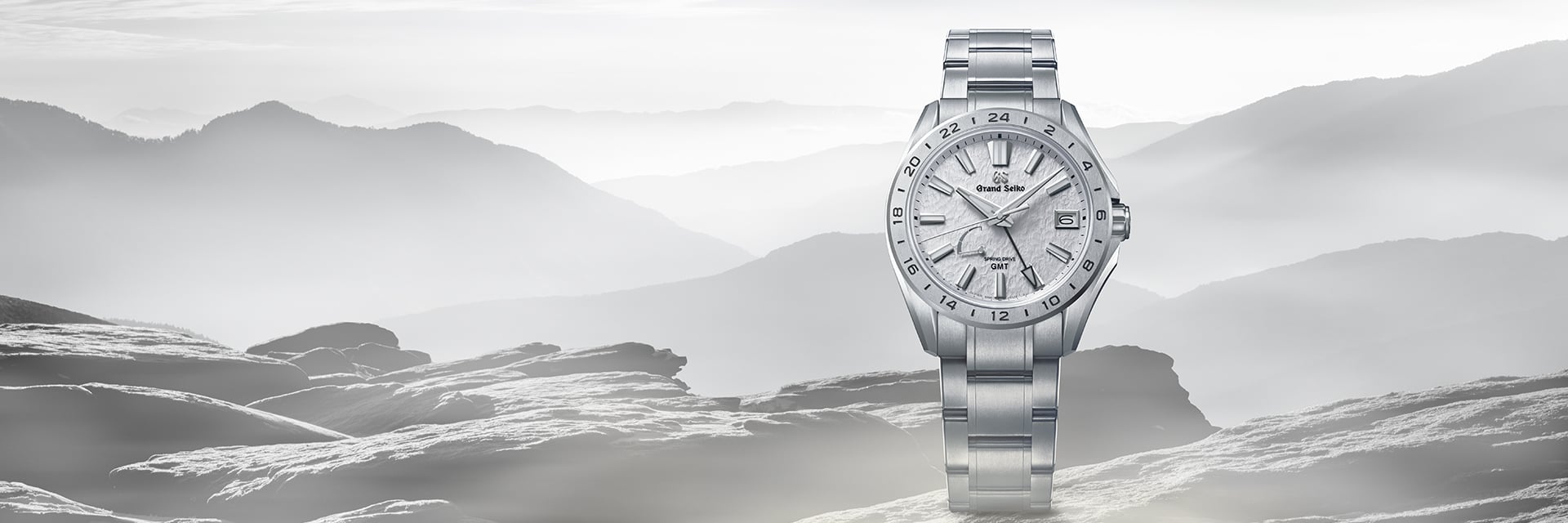
The SBGE253 occupies a specific coordinate within Grand Seiko's Sport collection: a GMT-configured Spring Drive iteration introduced in 2021, positioned to reconcile the manufacture's Shinshu atelier aesthetic with the functional vocabulary of a dual-timezone instrument. The dial, rendered in a textured blue-grey that references the surface conditions of the Shinshu highland terrain, represents one of the more disciplined applications of Zaratsu-polished indices against a matte ground in this price category. Concordantly, the Spring Drive caliber 9R66 beneath the exhibition caseback is the axis upon which the SBGE253's analytical case most firmly rests. The glide-spring regulation mechanism — a triaxial proprietary architecture combining mechanical energy generation with electromagnetic retardation — produces chronometric accuracy approaching ±1 second per day, a figure that situates it categorically above conventional automatic GMT movements and proximate to regulated quartz. As you undoubtedly gather, this represents a paradigm-defining proposition within the 9R lineage. The case at 40.5 millimeters presents adequately, though 14.7 millimeters of thickness introduces wrist-clearance considerations that predecessors in the Sport range managed less conspicuously. The bracelet executes its function without distinction. The probability that this reference defines the GMT segment at its price tier is, vis-à-vis the movement alone, quite high.