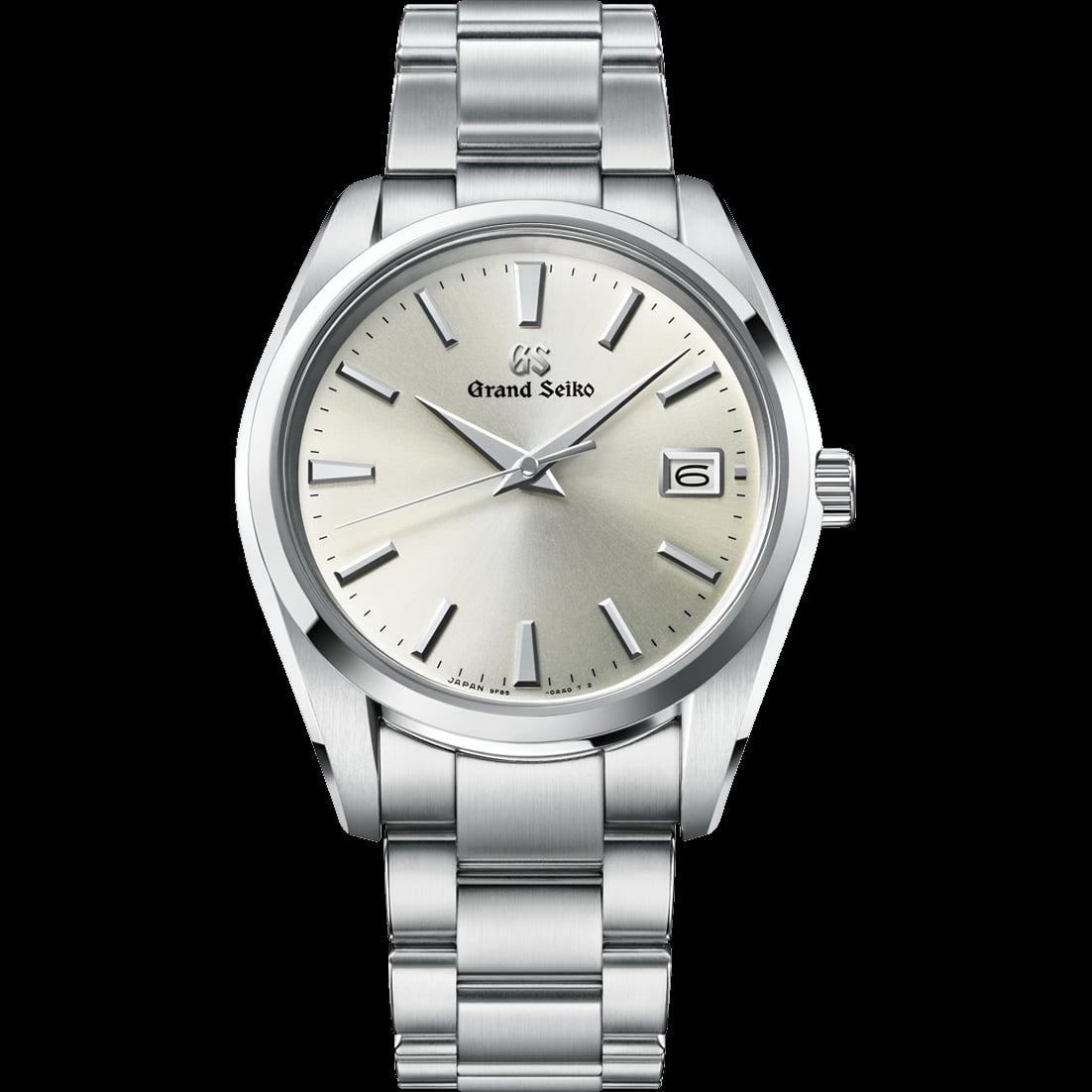
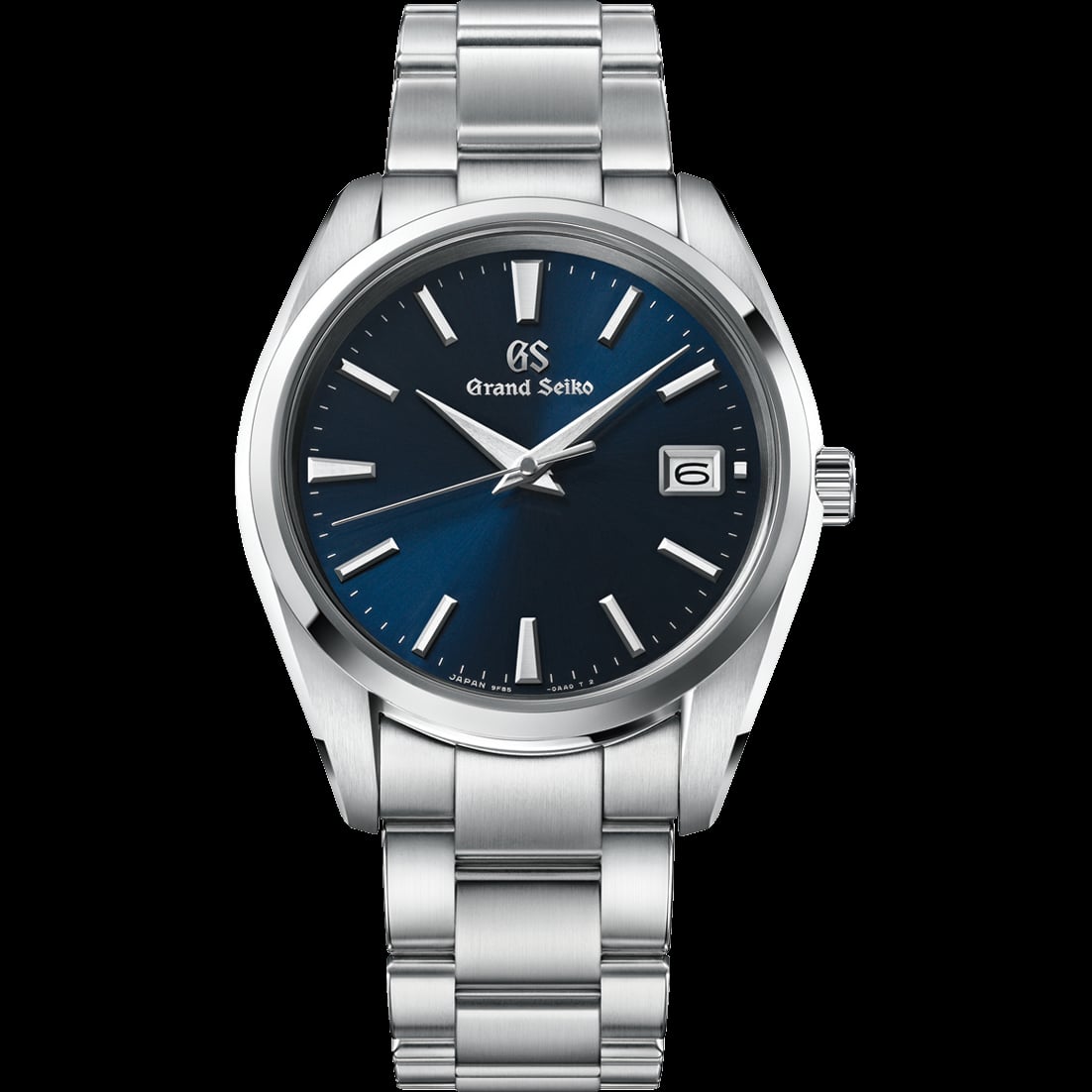
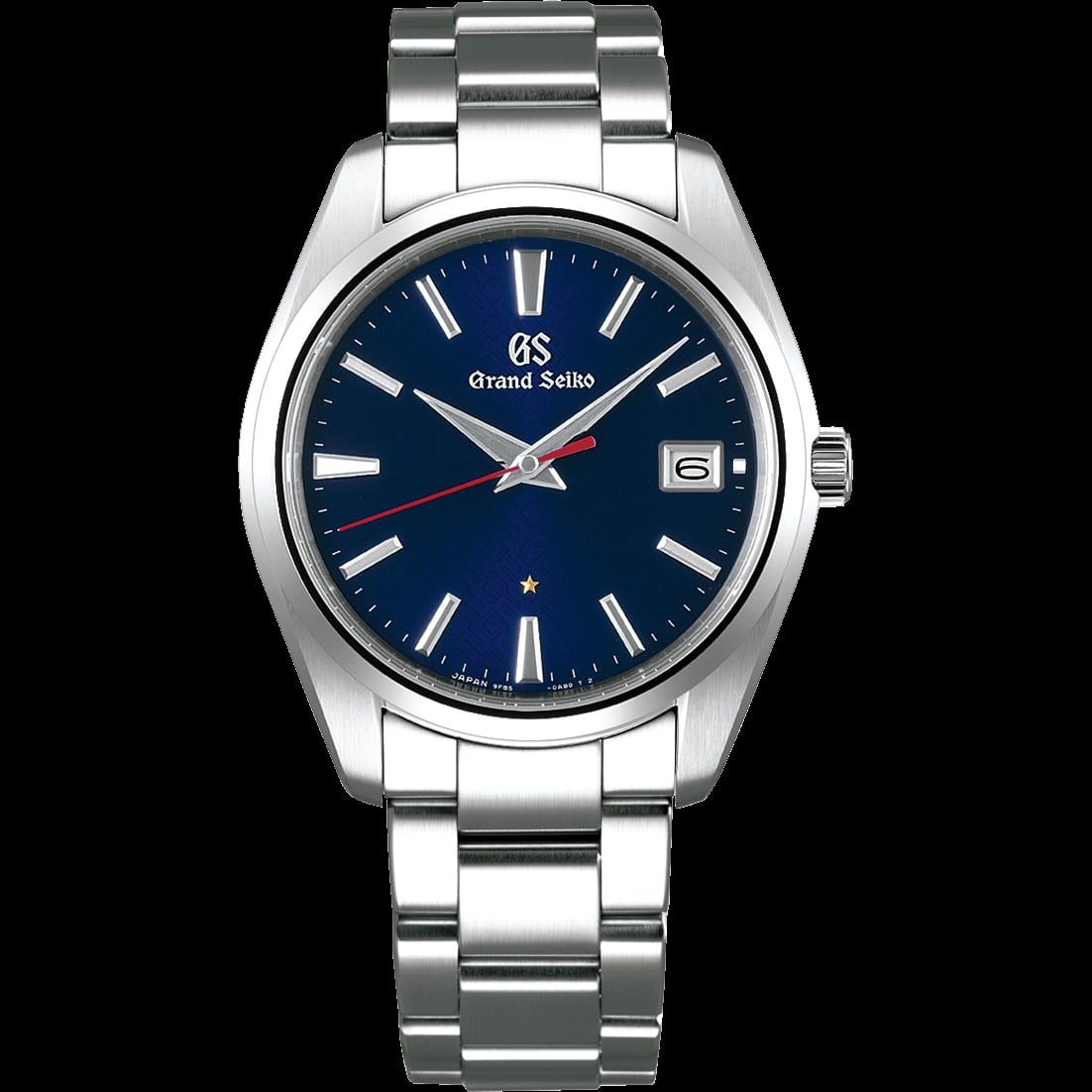
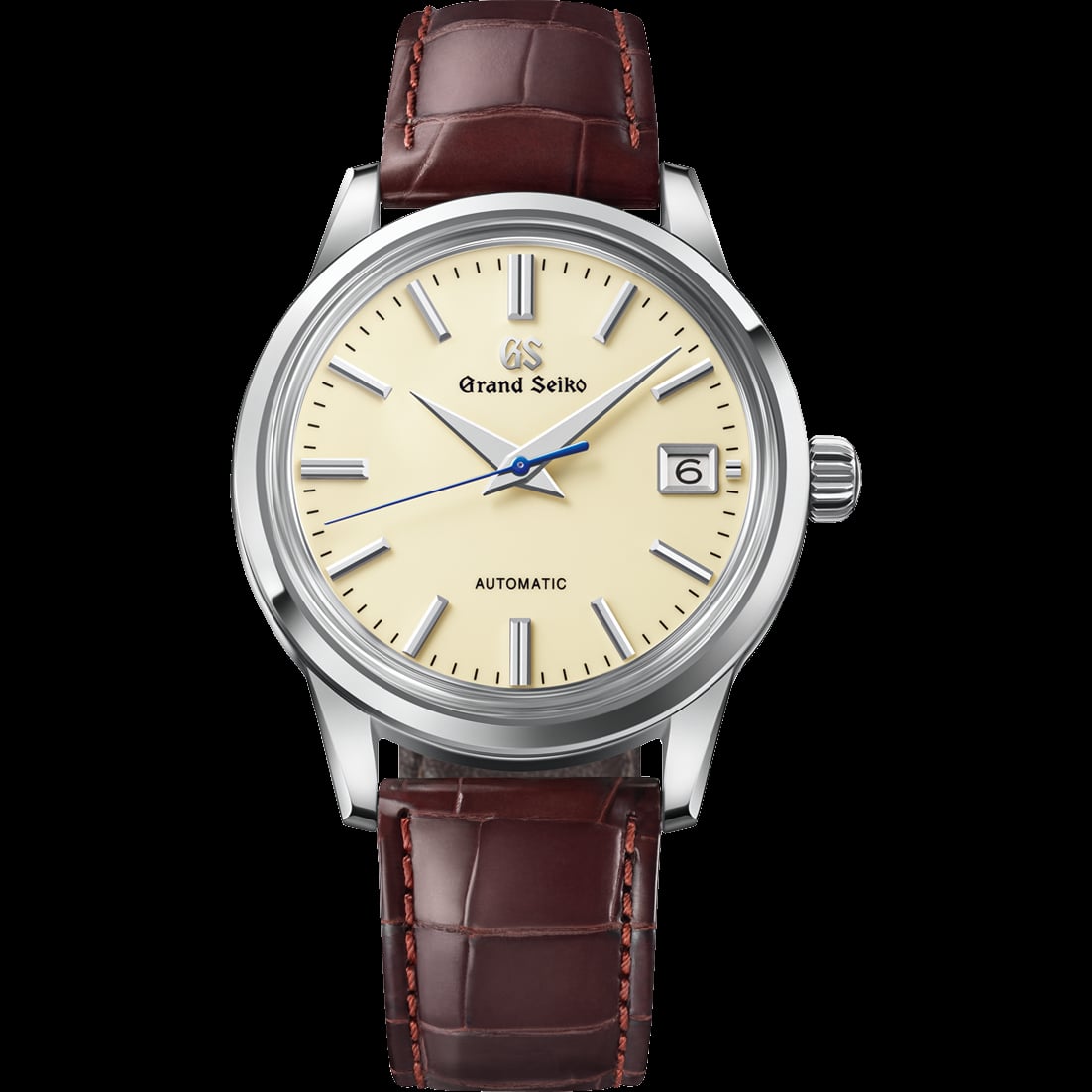
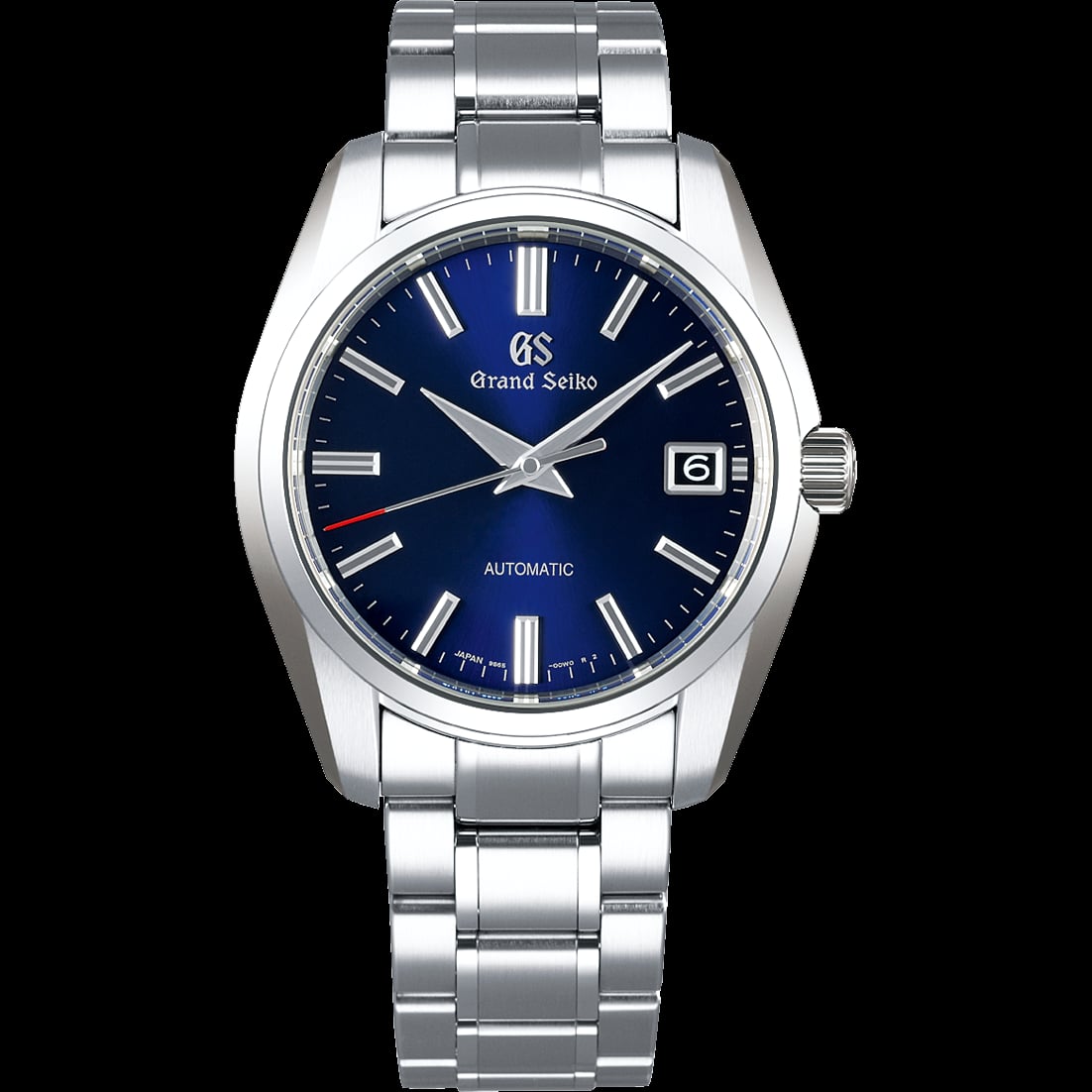
The SBGR321 occupies a precise coordinate within Grand Seiko's sport lineage — a 40mm stainless steel iteration deploying the caliber 9S65, itself a movement whose 72-hour power reserve and 10-beat frequency position it as a technical counterargument to the Swiss mechanical orthodoxy that dominated the category across preceding decades. The dial, produced through the Zaratsu-polished philosophy that defines the manufacture's finishing doctrine, achieves a textural contrast between brushed and mirror surfaces that the probability of any competing sport reference replicating at equivalent price approaches low. Concordantly, the handset reflects the same discriminating attention to surface geometry that distinguishes Grand Seiko's output from its contemporaries. The case, at 13mm thickness, represents a tension between the demands of 100m water resistance and the aesthetic ideal of thinness — a tension resolved adequately without achieving formal elegance. The bracelet executes the house's characteristic multi-finish link construction with notable precision. Vis-à-vis wearability, the 40mm diameter sits within the acceptable athletic proportion, though the case thickness imposes a modest penalty under a shirt cuff. The value axis reflects the inevitability of Grand Seiko's ascending market positioning: the SBGR321 commands a price that its specification warrants, though the margin between cost and perceived value has contracted as the manufacture's international recognition has expanded.
The SBGP007 represents Grand Seiko's sustained argument that quartz technology, properly iterated, constitutes a legitimate horological discipline rather than a concession to utility. Caliber 9F85 — a twin-pulse stepping motor movement accurate to plus or minus ten seconds annually — does not merely perform; it redefines what the category is permitted to claim. The probability that any mechanical movement at a comparable price point exceeds this accuracy approaches zero, and therein lies the analytical tension this reference perpetually generates among its contemporaries. The dial exhibits the Zaratsu-polished indices and snowflake-adjacent surface treatment that predecessors within the Grand Seiko lineage established as a house identity: light moves across the surface with a deliberateness that rewards patience. Concordantly, the 40mm case at 10.8mm thickness is proportionally disciplined, achieving a wearability coefficient that larger-cased sport references systematically sacrifice. The bracelet executes its function adequately without the refinement of finish that the case itself commands — a disparity the attentive observer will register. Vis-à-vis value, the SBGP007 occupies an uncomfortable position: priced at the boundary where mechanical movements become available, it demands that the purchaser resolve, philosophically, whether precision constitutes sufficient justification. As you undoubtedly gather, for a measurable segment of the market, it does not — and that resistance, rather than any deficiency in the object itself, constrains its broader reception.
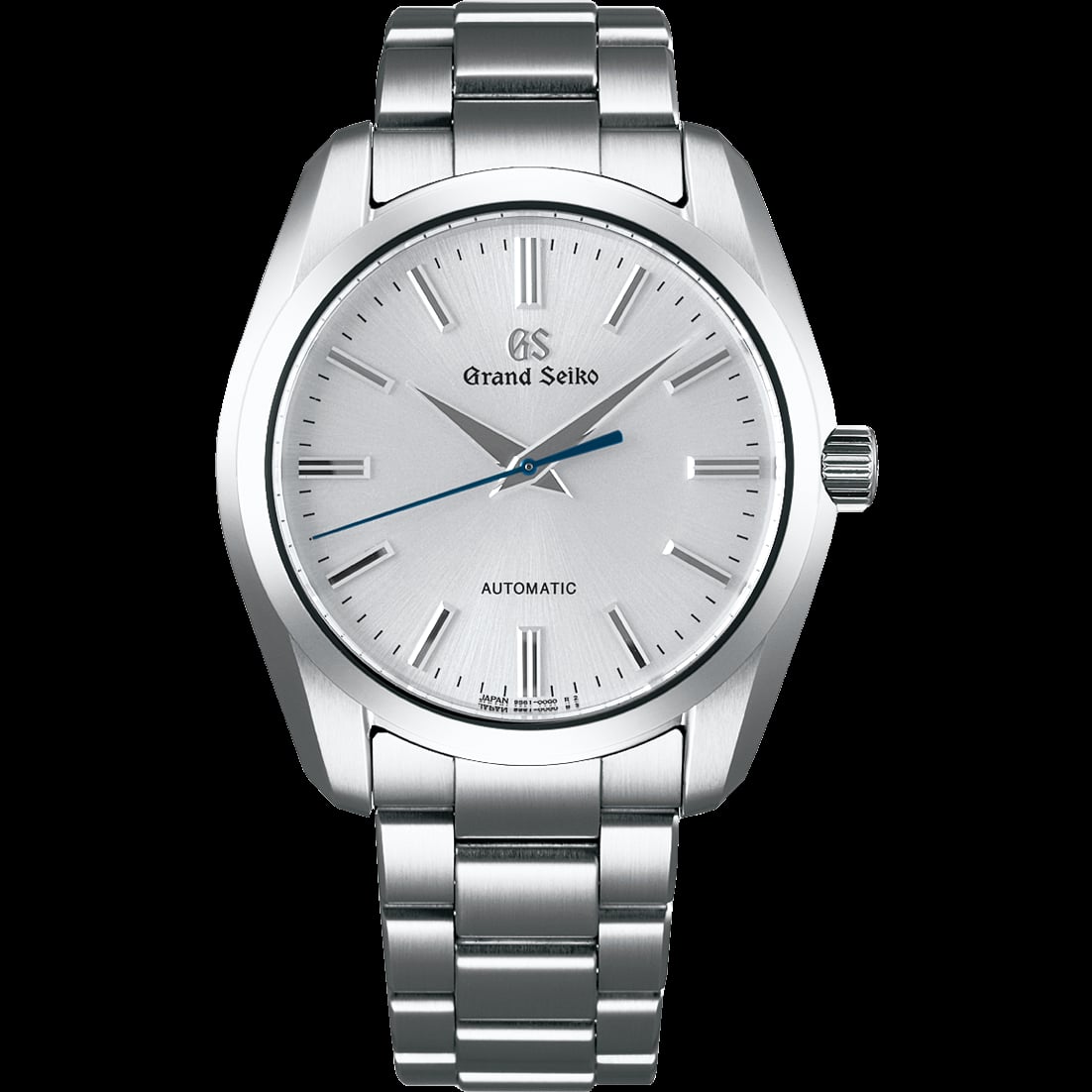
The SBGR261 represents a mature iteration within Grand Seiko's mechanical dress lineage, positioned as a carrier of the Zaratsu-polished case language that differentiates the marque from its Swiss contemporaries. The caliber 9S65 constitutes the movement around which this reference is constructed — a 72-hour power reserve, 50,000-beat-per-hour operation, and a stated accuracy of plus-or-minus ten seconds per day that, concordantly, places it in measurable proximity to certified chronometer territory without formal designation. The dial, a silver sunburst with applied indices finished to the tolerances for which the Shinshu atelier is documented, is among the more disciplined executions in the contemporary dress segment. Vis-à-vis its predecessors in the SBGR lineage, the 39.5mm diameter represents a considered restraint, though the 13.1mm case thickness introduces a complication for wearers who prioritize cuff clearance — a dimensional consequence of the movement architecture beneath. The bracelet, while functionally coherent, does not achieve the same polishing precision that distinguishes the case surfaces, and this discrepancy is observable under scrutiny. As you undoubtedly gather, the value proposition is the axis of greatest friction: the probability that a buyer in this price category overlooks the 30-meter water resistance specification without consideration approaches zero, and that limitation requires acknowledgment proportional to its consequence.
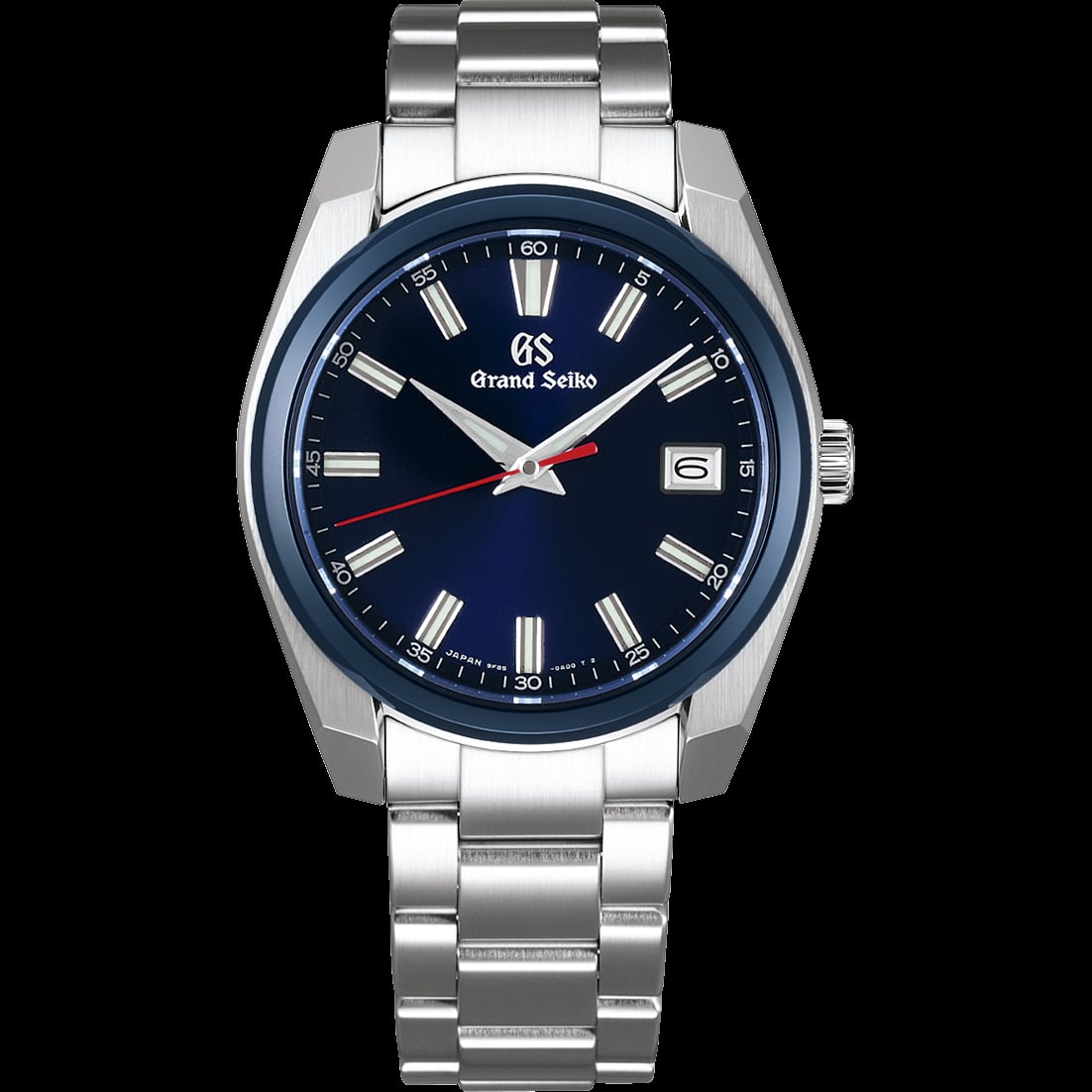
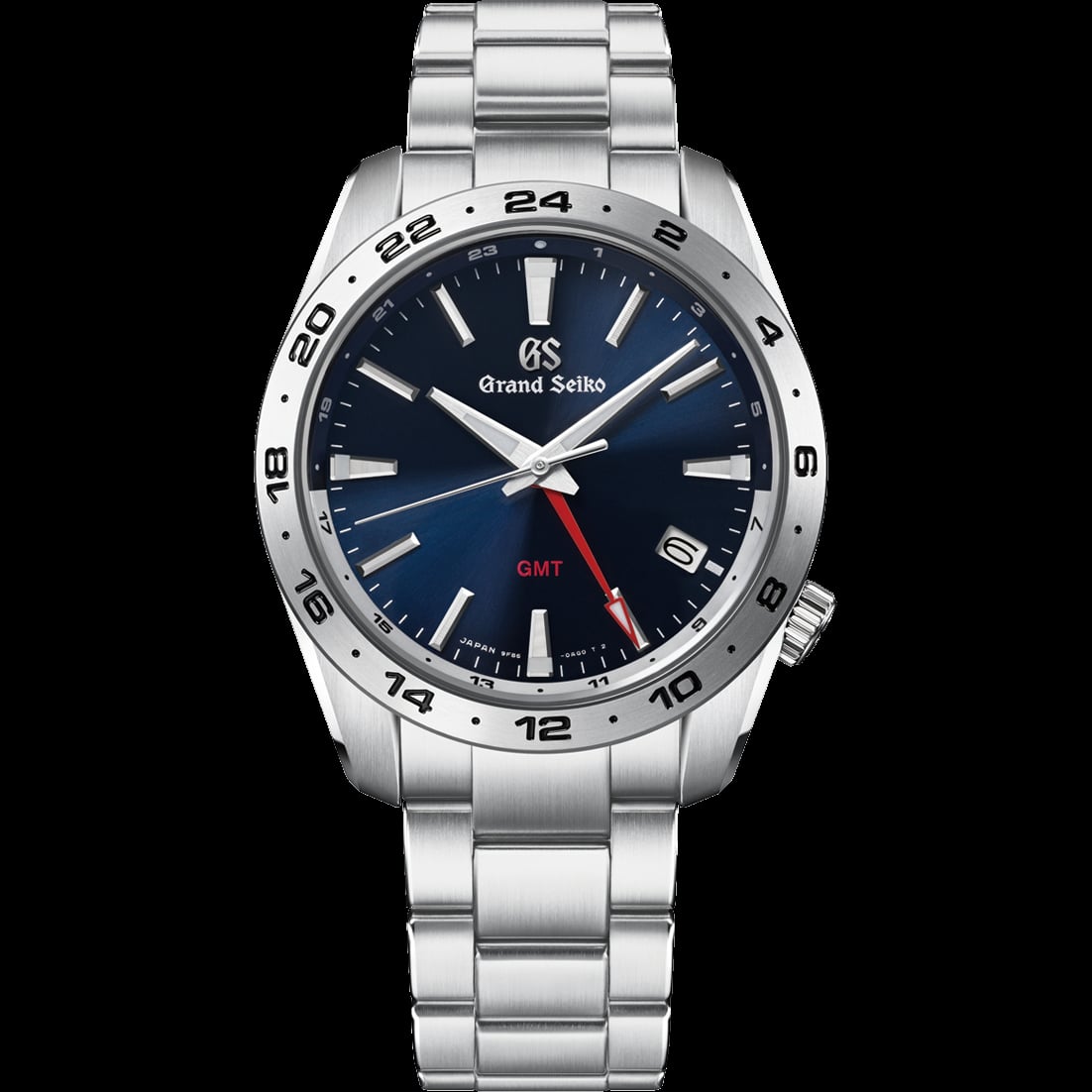
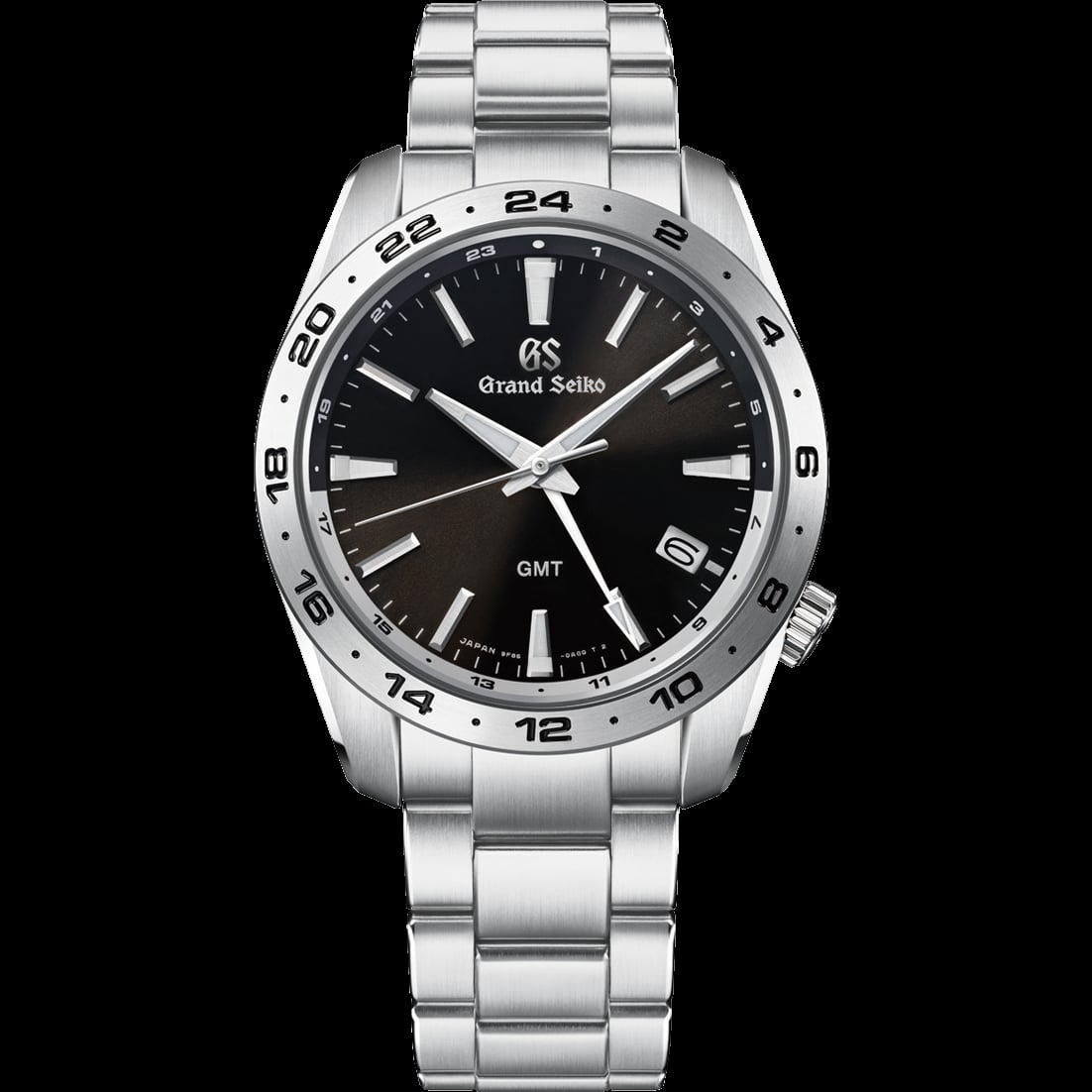
The SBGN029 represents Grand Seiko's application of its Sport collection logic to the quartz discipline, a deliberate positioning that separates it from the mechanical iterations dominating collector discourse. Vis-à-vis its Spring Drive sport predecessors, the SBGN029 accepts a categorical reduction in movement complexity while substituting the caliber 9F86 — a movement whose ±10 seconds annual accuracy constitutes a near-paradigmatic achievement within quartz horology, and one that its Swiss counterparts have not meaningfully contested. The dial, finished in the characteristic Snowflake-adjacent texture that Grand Seiko has refined across successive sport references, achieves a luminous depth that the category rarely demands of itself. Concordantly, the 39mm case diameter represents a considered restraint, producing wearability that wider sport-dive iterations sacrifice in their pursuit of legibility. The 12.3mm thickness is the sole structural concession one might interrogate — adequate for a quartz movement, though not invisible on the wrist. The bracelet executes its function without distinction. As you undoubtedly gather, the value axis is where probability introduces complexity: the SBGN029 occupies pricing territory where mechanical alternatives exist, and there exists a certainty that a segment of prospective purchasers will encounter ideological resistance to quartz at this price point. The inevitability is that those who do not will find the specification largely without peer.
The SBGN027 occupies a precise coordinate within Grand Seiko's Sport Collection lineage — a 39mm quartz dive reference that resolves a tension the marque has navigated since the formal separation of Grand Seiko from Seiko's broader commercial architecture in 2017. Predecessors within the Sport line defaulted toward mechanical movements as the expected vessel for horological legitimacy; concordantly, the deployment of the 9F86 caliber here represents a studied provocation. The 9F86 is not a compromise. Its ±10 seconds annual accuracy and instantaneous date change mechanism constitute, vis-à-vis the broader quartz landscape, a paradigm-defining execution — the movement alone elevates this reference above the categorical dismissals that quartz sport watches typically invite. The dial, rendered in the characteristic Grand Seiko manner with its pronounced surface texture and Zaratsu-finished applied indices, achieves a luminosity that 200-meter dive utility rarely demands yet consistently rewards. The 39mm case diameter represents an act of discipline increasingly absent from this category. As you undoubtedly gather, wearability is the direct consequence of that restraint. The value calculus presents the review's central friction: a quartz instrument at Grand Seiko pricing requires the prospective acquirer to accept the marque's argument that execution supersedes mechanism. There exists a certainty that this argument is correct; whether the market concurs remains the more variable probability.
The SBGP013 represents Grand Seiko's sustained argument that quartz movements need not occupy a subordinate position within horological discourse. Caliber 9F85, the movement at the core of this reference, achieves a stated accuracy of plus or minus ten seconds annually — a specification that positions it not merely as adequate quartz engineering but as a paradigm-defining iteration of battery-driven precision. Predecessors within the 9F lineage established this standard decades prior; the 9F85 refines rather than reinvents, incorporating an instant-jumping seconds mechanism and backlash-auto-adjustment that subordinate mechanical irregularity to mathematical certainty. The dial, executed in the vocabulary that Grand Seiko has refined across successive generations, demonstrates the Zaratsu-polished indices and textured surface treatment that distinguish this reference from its contemporaries. Concordantly, the case at forty millimeters and ten-point-six millimeters of thickness exhibits proportional discipline absent from much of the category. The bracelet, while competently integrated, does not achieve the same standard of finishing resolution as the case flanks — a perceptible, if measured, inconsistency. The value proposition invites scrutiny: the probability that a prospective acquirer reconciles a premium price tier against a quartz movement category is non-trivial, irrespective of how thoroughly the 9F85 challenges inherited prejudice. Ergo, the SBGP013 is a coherent object evaluated poorly only by those applying the wrong analytical framework.
People sleep on Grand Seiko's quartz offerings, and the SBGP015 with its 9F85 caliber is proof that quartz can be a serious collector's choice. This isn't your average battery-powered watch - the 9F85 is accurate to ±10 seconds per year and features an instant-jumping seconds hand that snaps precisely on each beat. It's mechanical watchmaking discipline applied to quartz engineering. The case finishing is immaculate, as you'd expect from Grand Seiko, and the dial has that quiet, sophisticated elegance the brand is known for. For someone who wants a dress watch that never needs regulating and always looks perfect on the wrist, this is an underrated gem. Buy this if you want precision without the romance of winding.
The SBGP015 represents a precise coordinate within Grand Seiko's systematic expansion of the 9F quartz architecture into sport-adjacent territory. Its predecessors — the dresswear iterations of the 9F caliber lineage — established the movement's reputation with a degree of rigidity that the broader market has been slow to acknowledge. Concordantly, the SBGP015 inherits that mechanical discipline and extends it into a 40mm stainless case rated to 200 meters, a water resistance specification that satisfies the functional demands of serious aquatic use without the architectural overcorrection that afflicts many contemporary dive-category offerings. The dial exhibits the characteristic Zaratsu-polished indices and lacquer surface construction common to the Grand Seiko production standard, and the execution is, as you undoubtedly gather, difficult to position against Swiss counterparts at equivalent price strata. The caliber 9F85 itself warrants particular attention: its accuracy specification of plus or minus ten seconds annually places it in a category that mechanical movements, by the inevitability of physics, cannot approach. Ergo, the tension within this reference is not one of quality but of category perception. The market continues to apply a quartz discount to watches of this specification, which produces a value equation that is, on balance, favorable to the informed buyer. The bracelet, while competently finished, does not achieve the integration precision of the case itself.
The SBGP009 occupies a precise coordinates within Grand Seiko's taxonomy: a Sport collection iteration housing the caliber 9F85, which itself represents one of the more consequential arguments for quartz legitimacy in contemporary horology. The 9F85's ±10 seconds annual accuracy tolerance and instantaneous date-change mechanism constitute a technical proposition that mechanical predecessors within the same price bracket cannot address without misrepresentation. Concordantly, the dial and handset demonstrate the Shinshu Shojiro workshop's characteristic obsession with surface geometry — the Zaratsu-polished hands and applied indices producing a light-interaction behavior that most Swiss sport iterations do not approach, let alone achieve. The case, at forty millimeters and a disciplined 10.6 millimeters of thickness, observes proportions that permit wearability across formal and sport contexts, which the 100-meter water resistance rating ratifies without excess ambition. The bracelet, while adequately finished and functional, does not achieve the same standard as the dial surfaces it terminates — a recurring disparity across Grand Seiko's sport references of this era. The value axis introduces the primary tension: the probability that a quartz movement, however technically superior, commands sustained secondary market confidence vis-à-vis in-house mechanical alternatives from the same maison approaches, at best, uncertain equilibrium. There exists a certainty that the 9F85's technical merits are understood only by those already persuaded.
The SBGR299 occupies a precise coordinate within Grand Seiko's sport taxonomy — a 42-millimeter stainless steel proposition built upon the caliber 9S61, itself a mechanical iteration that advances the Seiko lineage toward the theoretical ceiling of manually achievable accuracy without electronic intervention. The 9S61 operates at 28,800 vibrations per hour and delivers a 72-hour power reserve, a specification that, vis-à-vis contemporaries at comparable price points, presents a defensible engineering argument. One observes the characteristic Zaratsu-polished surfaces, a finishing methodology inherited from predecessors across the Grand Seiko catalog, producing the planar mirror quality that constitutes the brand's most recognizable contribution to horological aesthetics. The dial and handset reflect this same discipline — sharp, high-contrast execution with an interior logic that rewards proximity. Concordantly, the bracelet achieves a standard of surface finish that most Swiss sport iterations at equivalent price do not approach. The wearability calculus, however, introduces friction: 13.1 millimeters of thickness across 42 millimeters of diameter produces a geometry that remains perceptible on the wrist, and the probability of this reference disappearing beneath a standard shirt cuff approaches low. The value proposition is adequate rather than exceptional — the SBGR299 commands premium positioning that the movement and finishing justify intellectually, though the sport category context invites comparison with Swiss alternatives possessing greater heritage visibility in that specific segment.