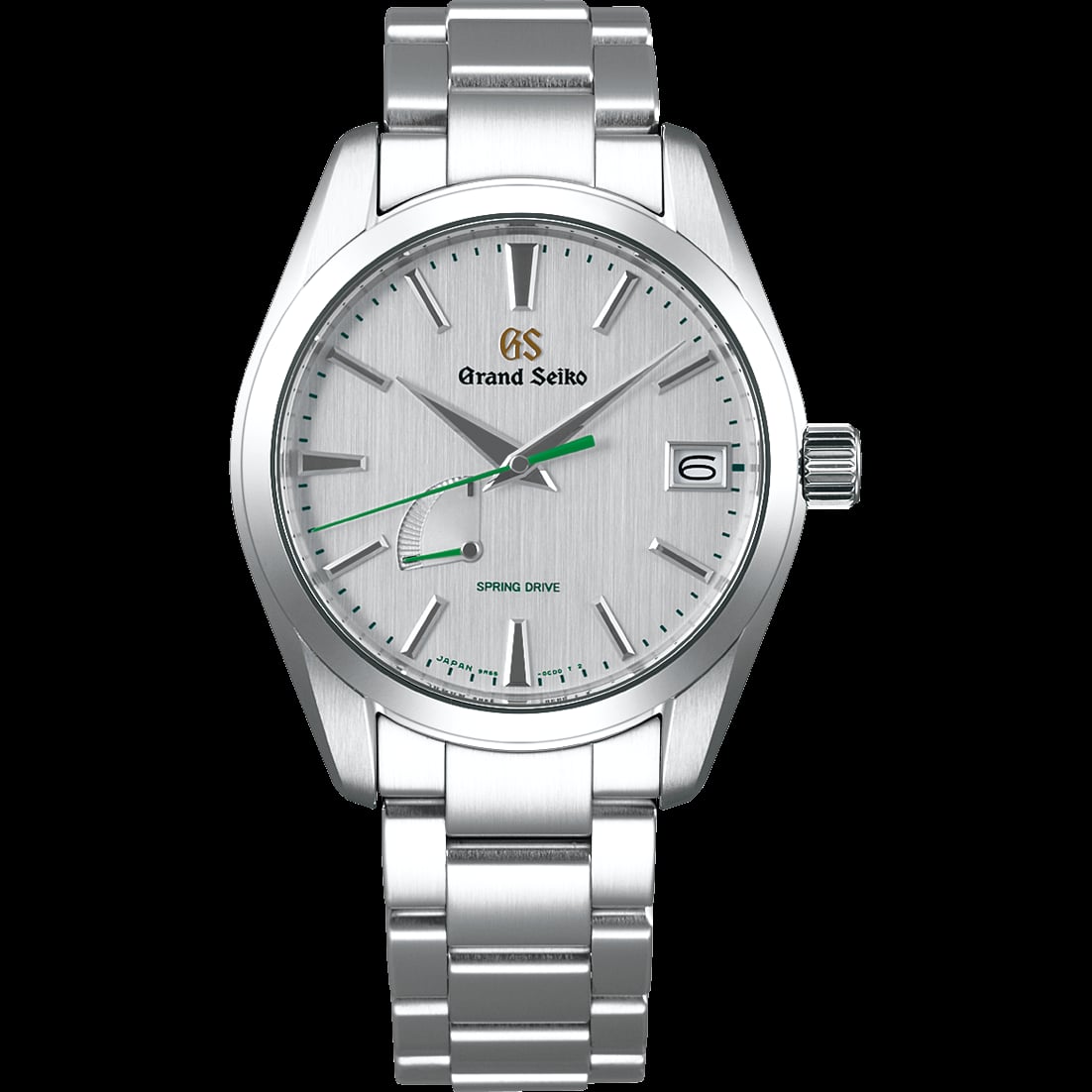
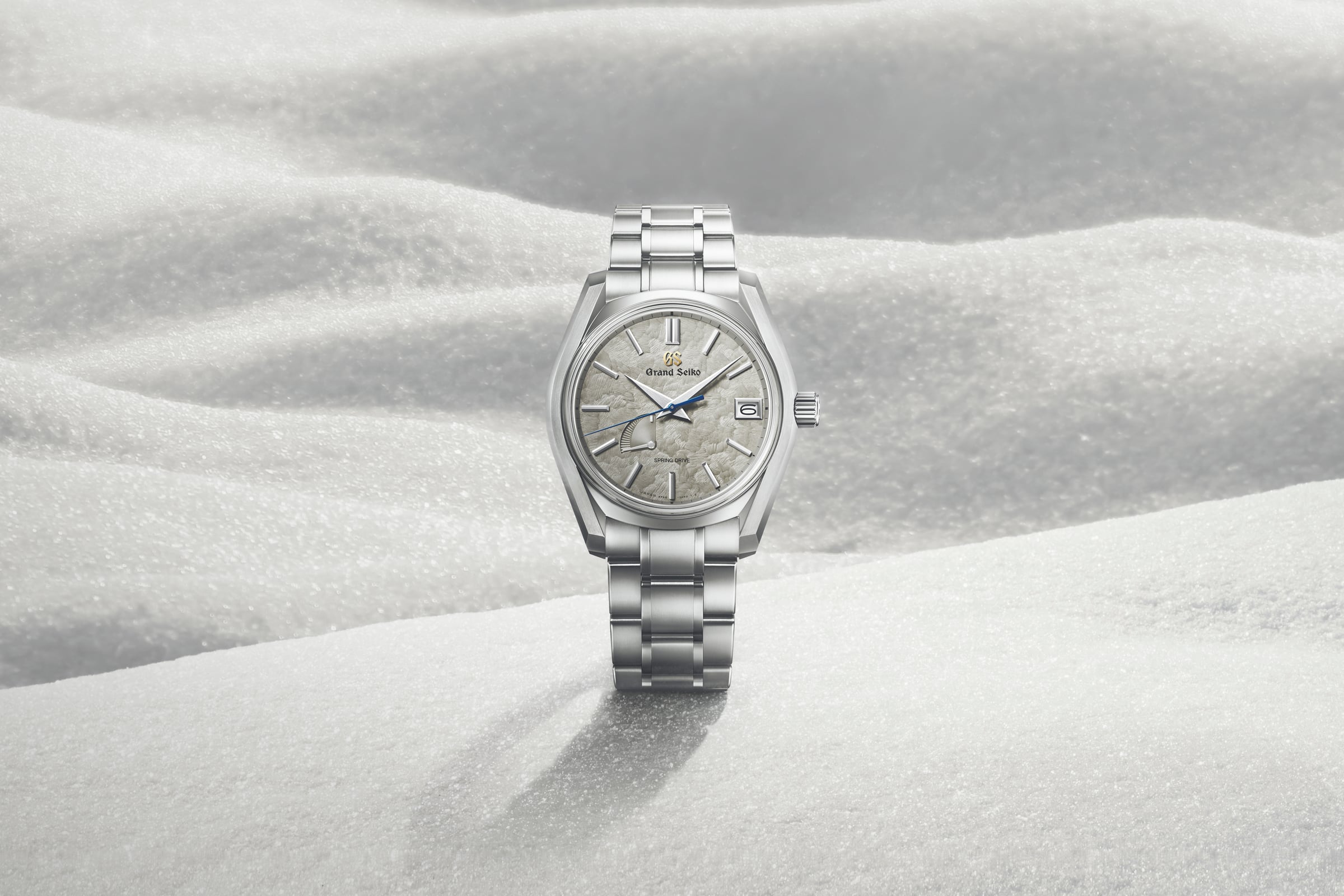
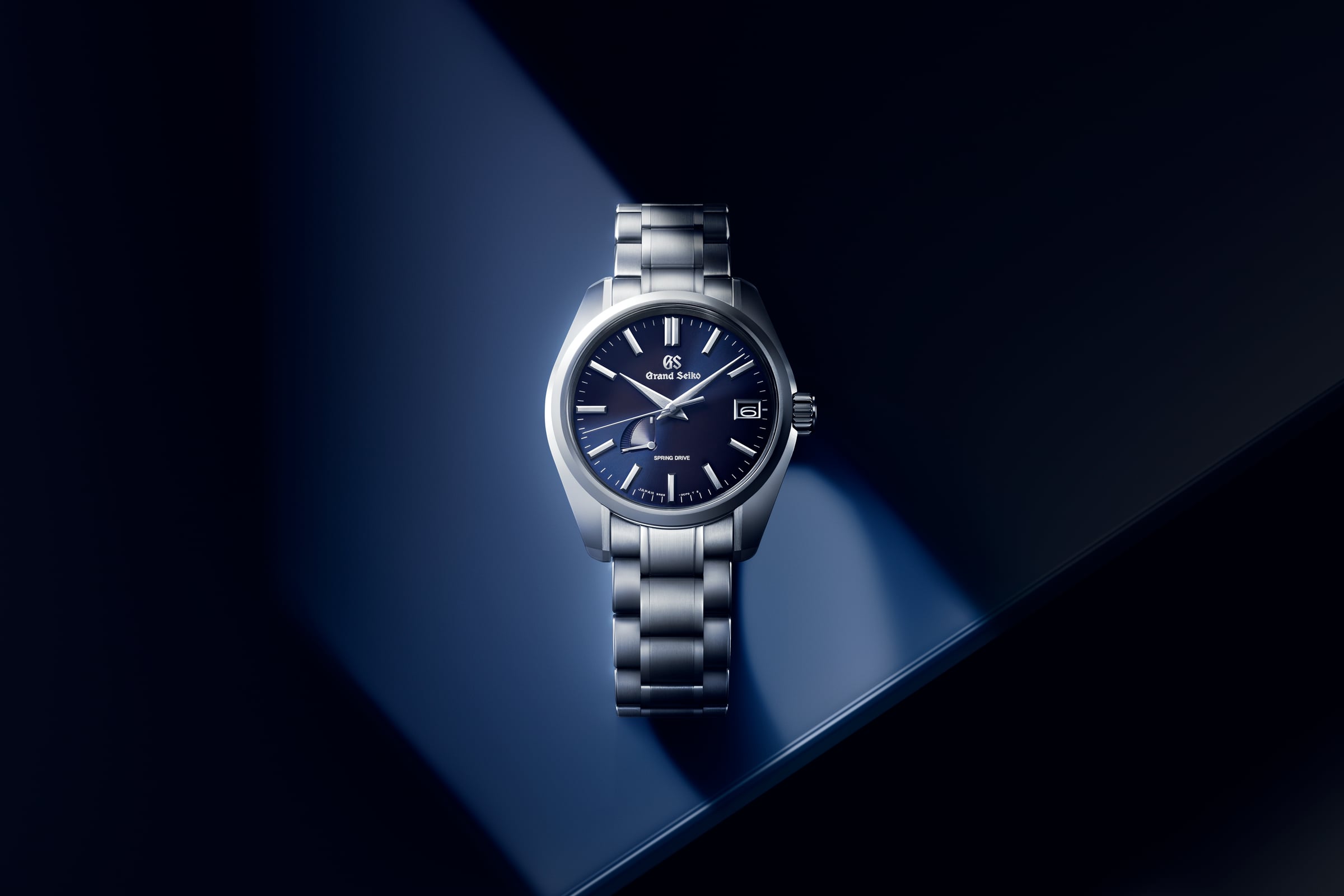
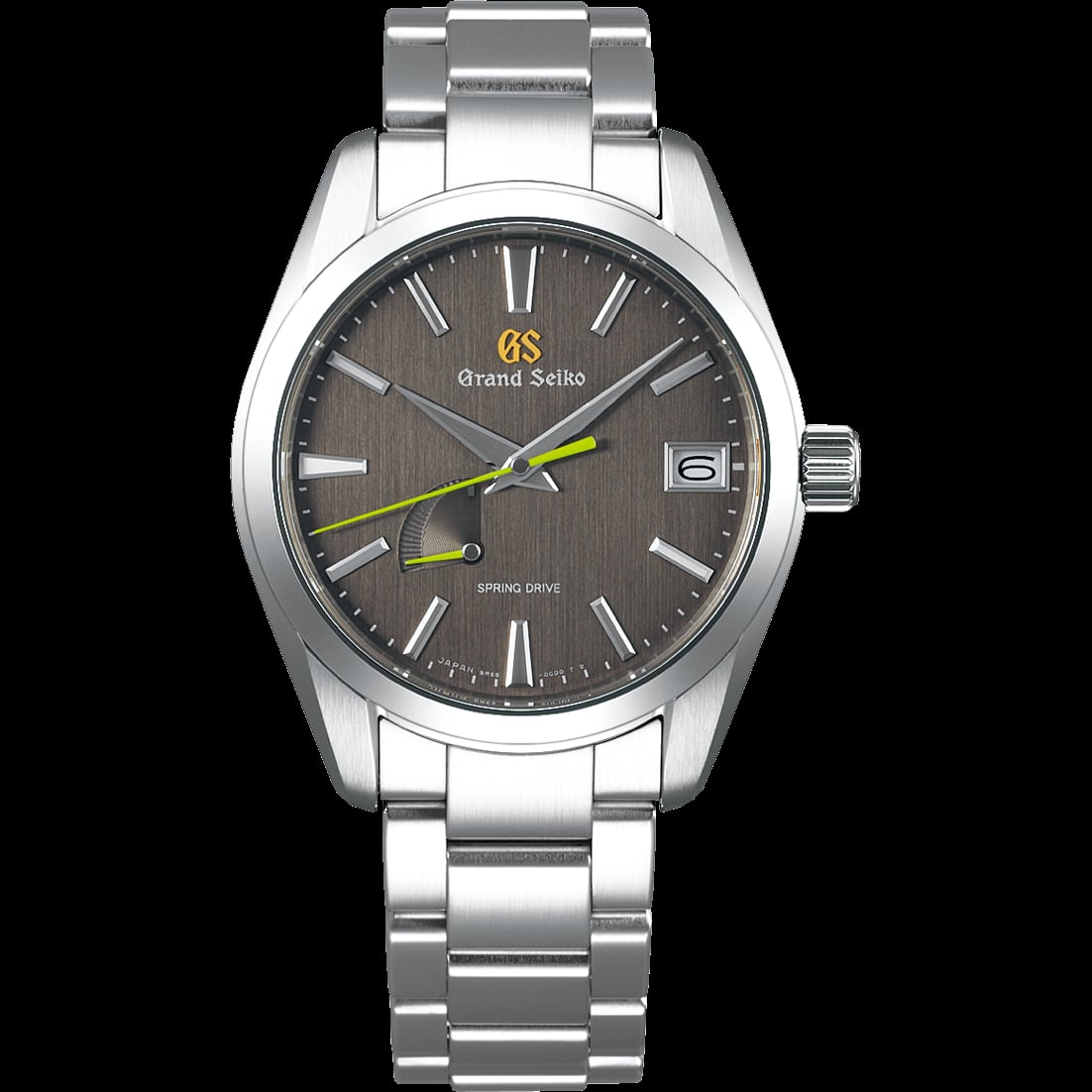
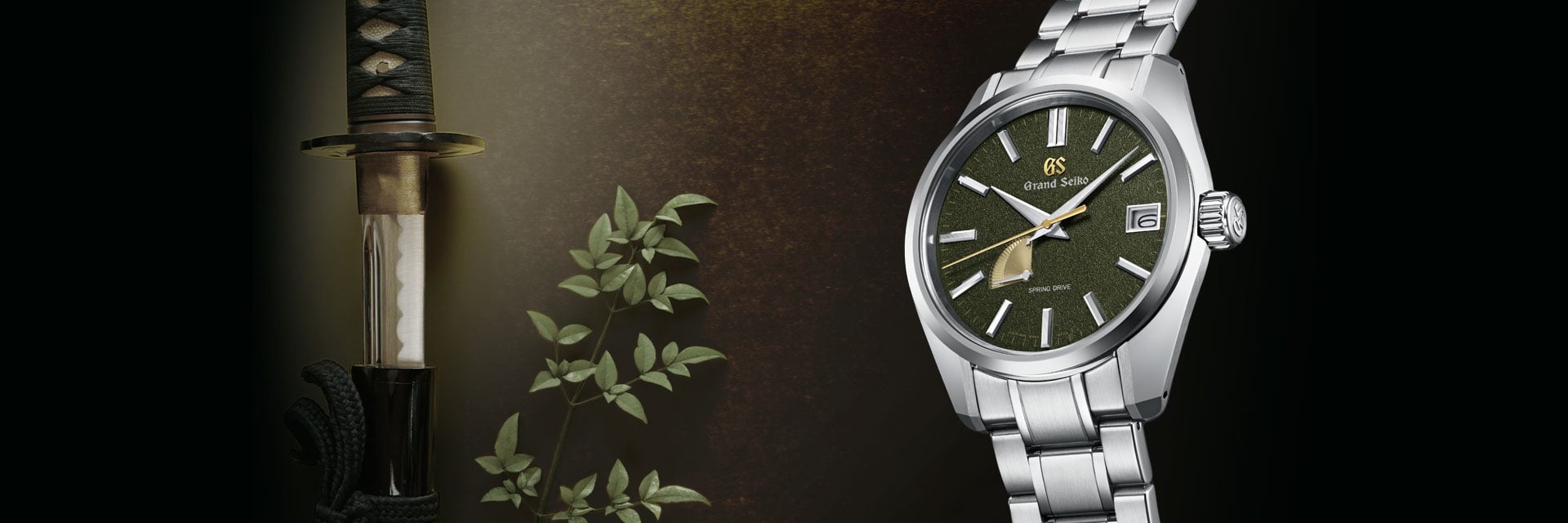
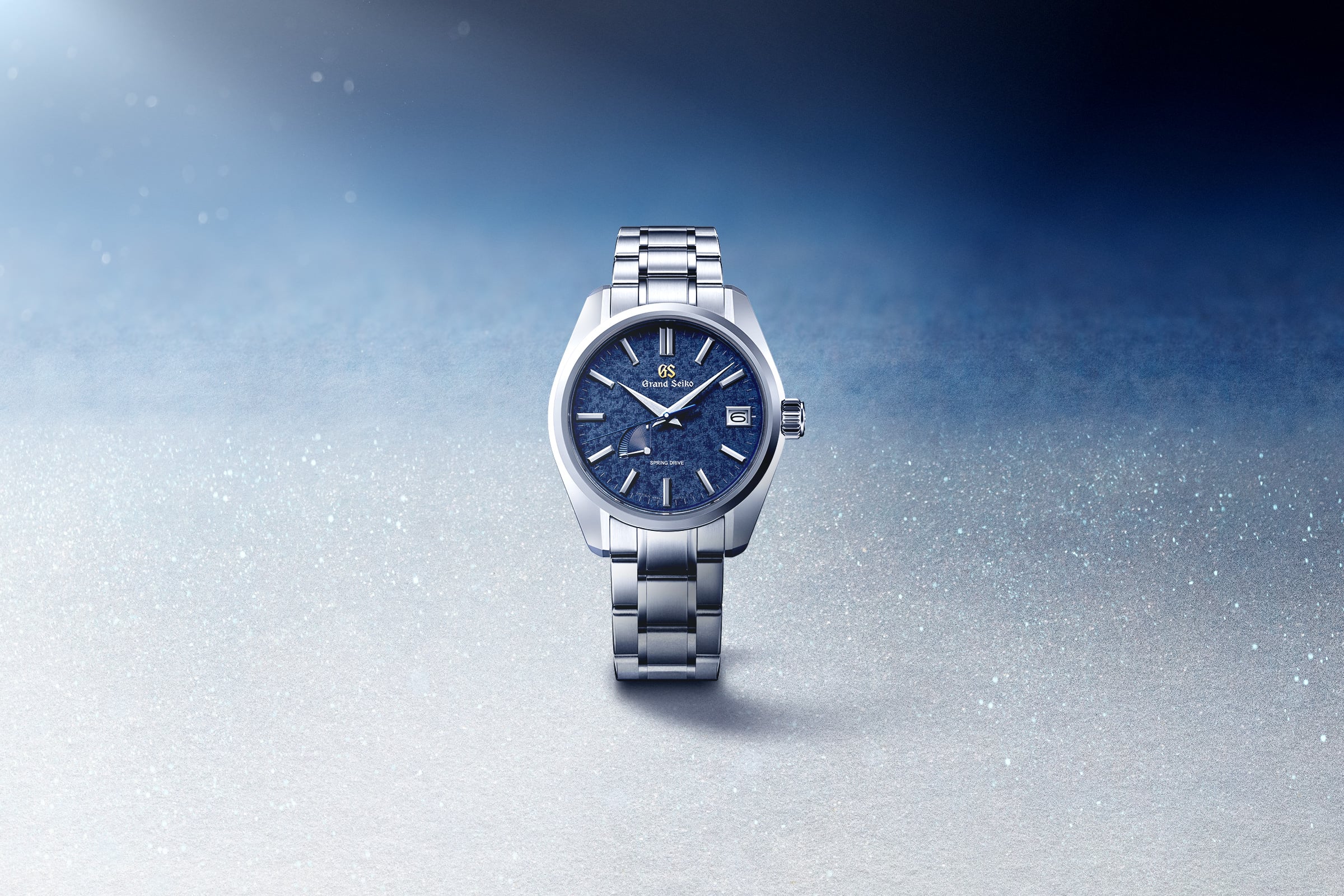
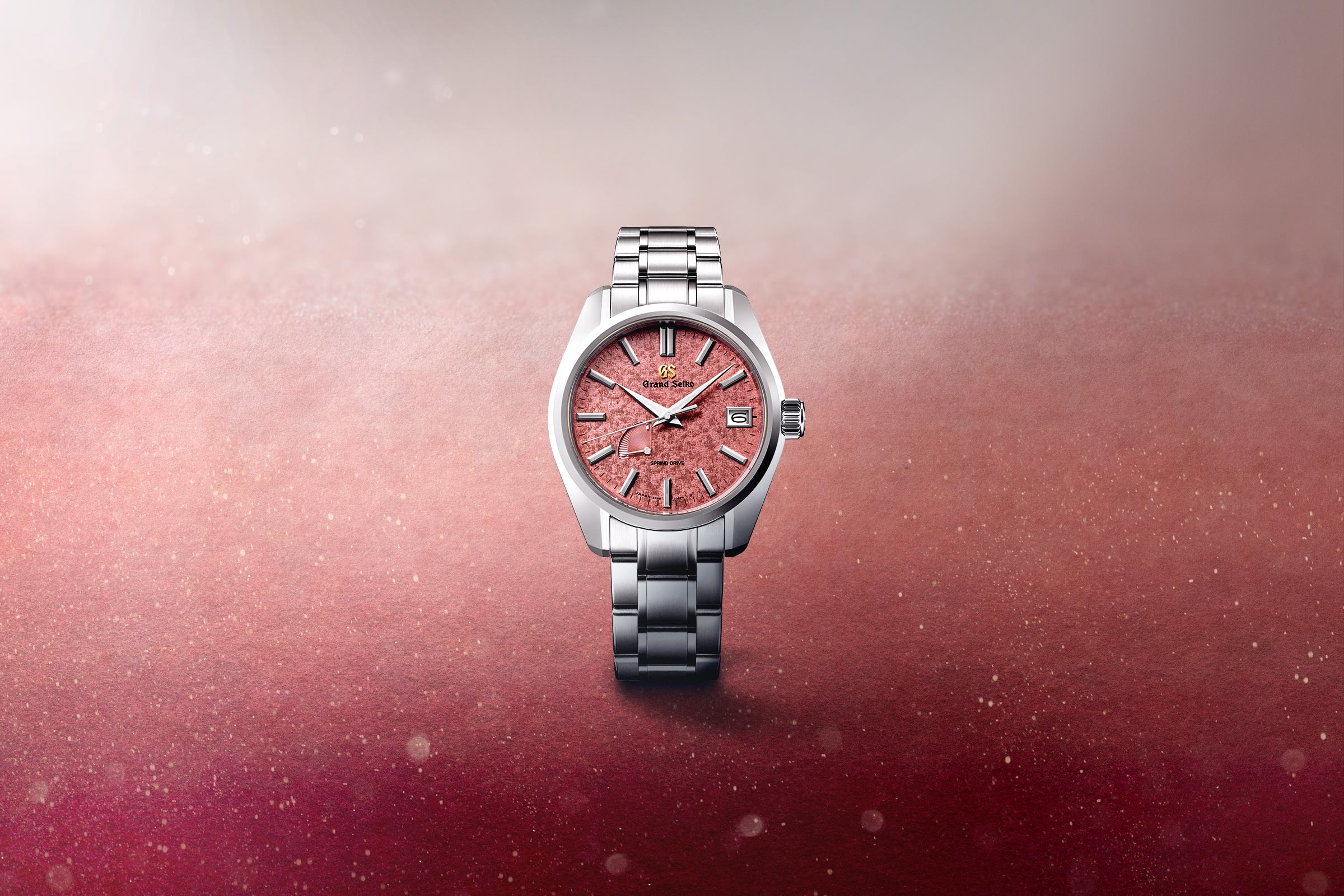
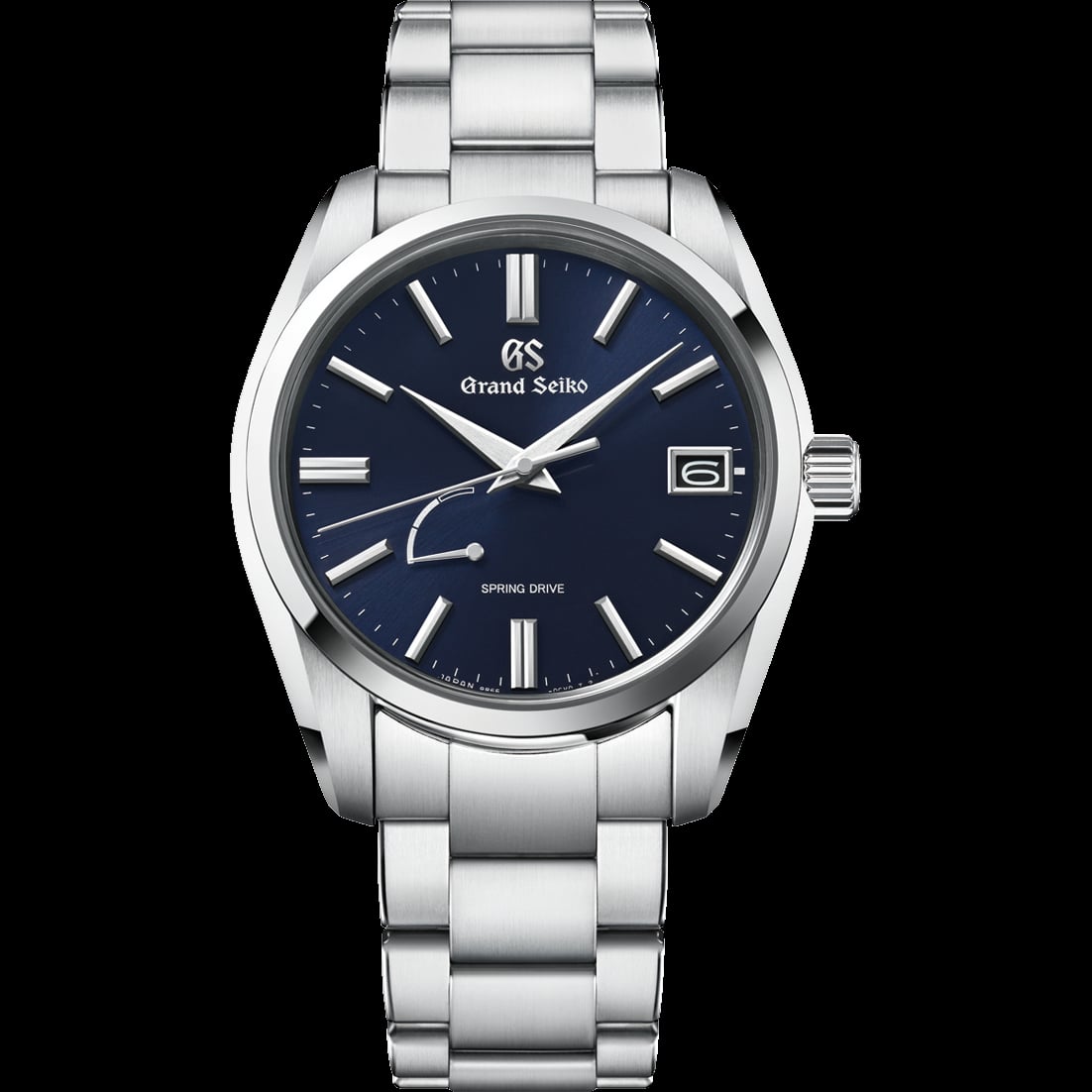
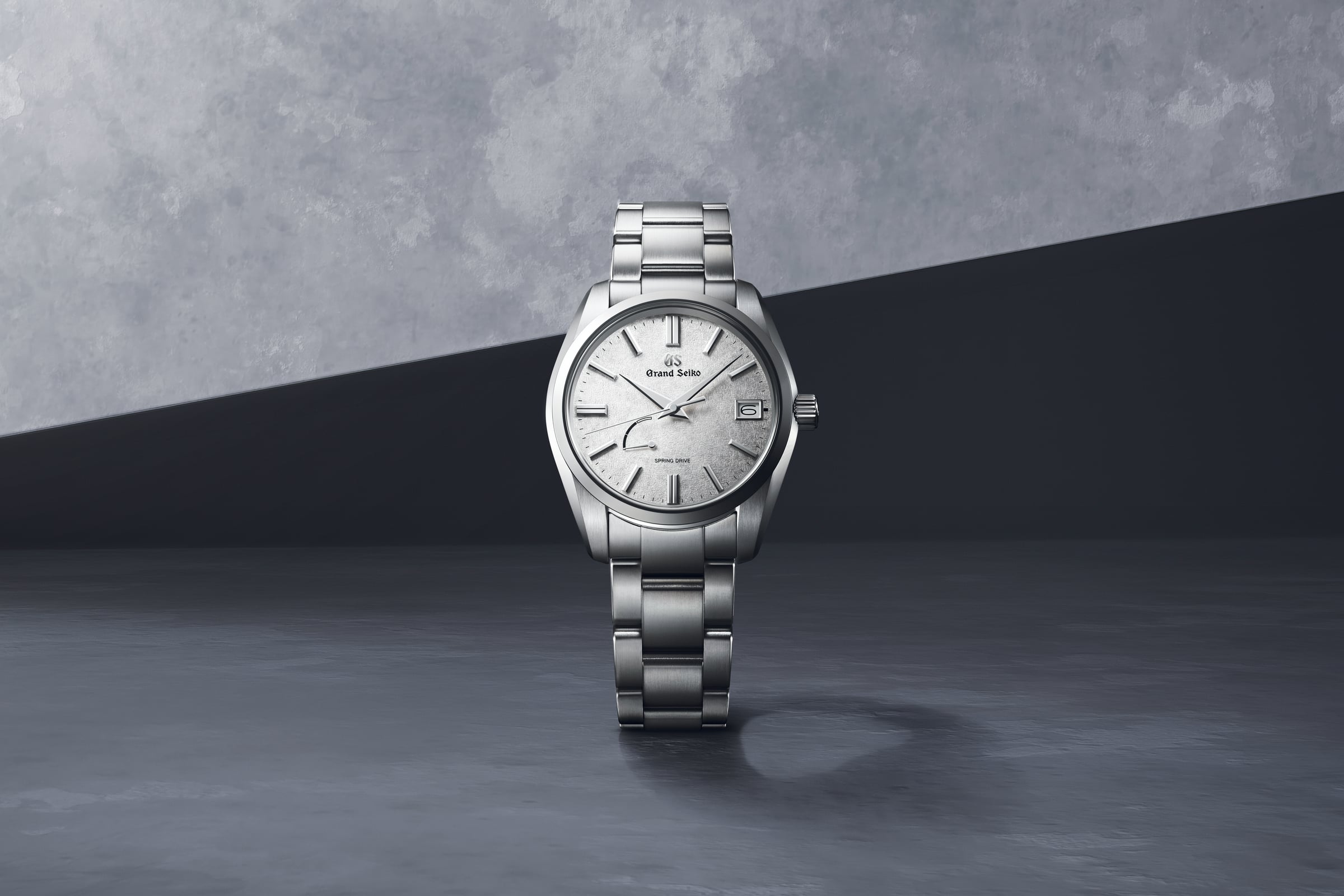
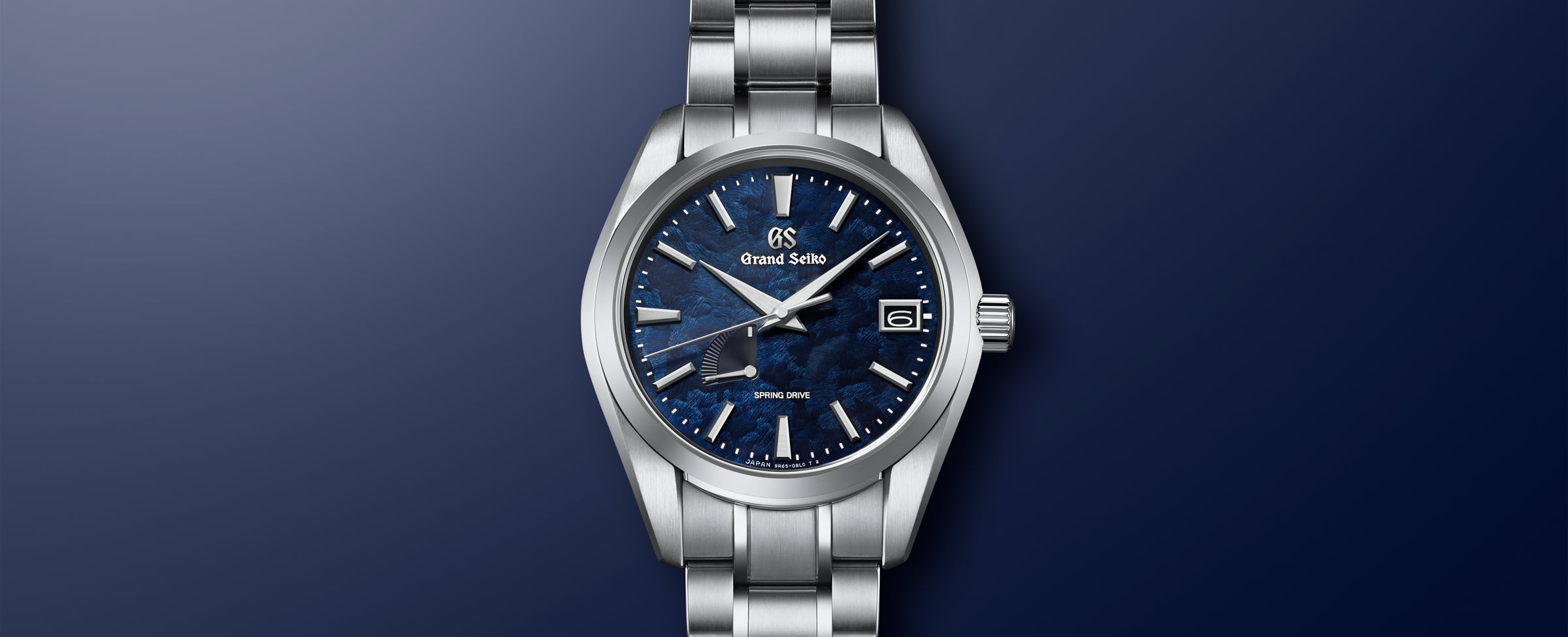
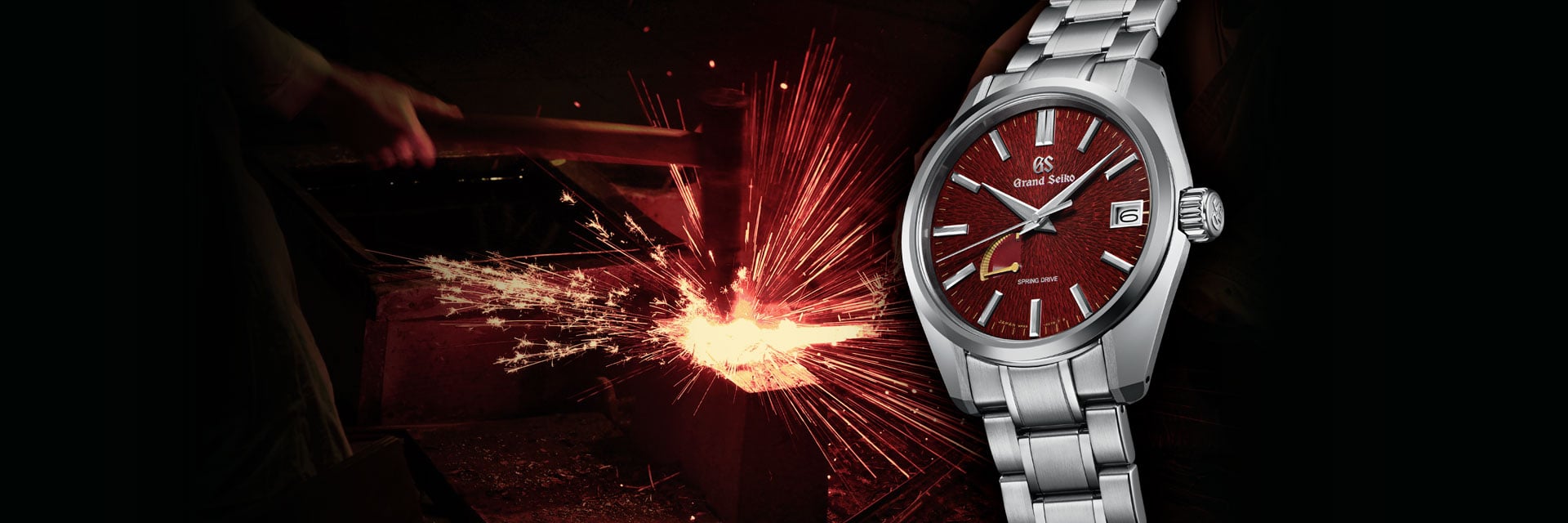
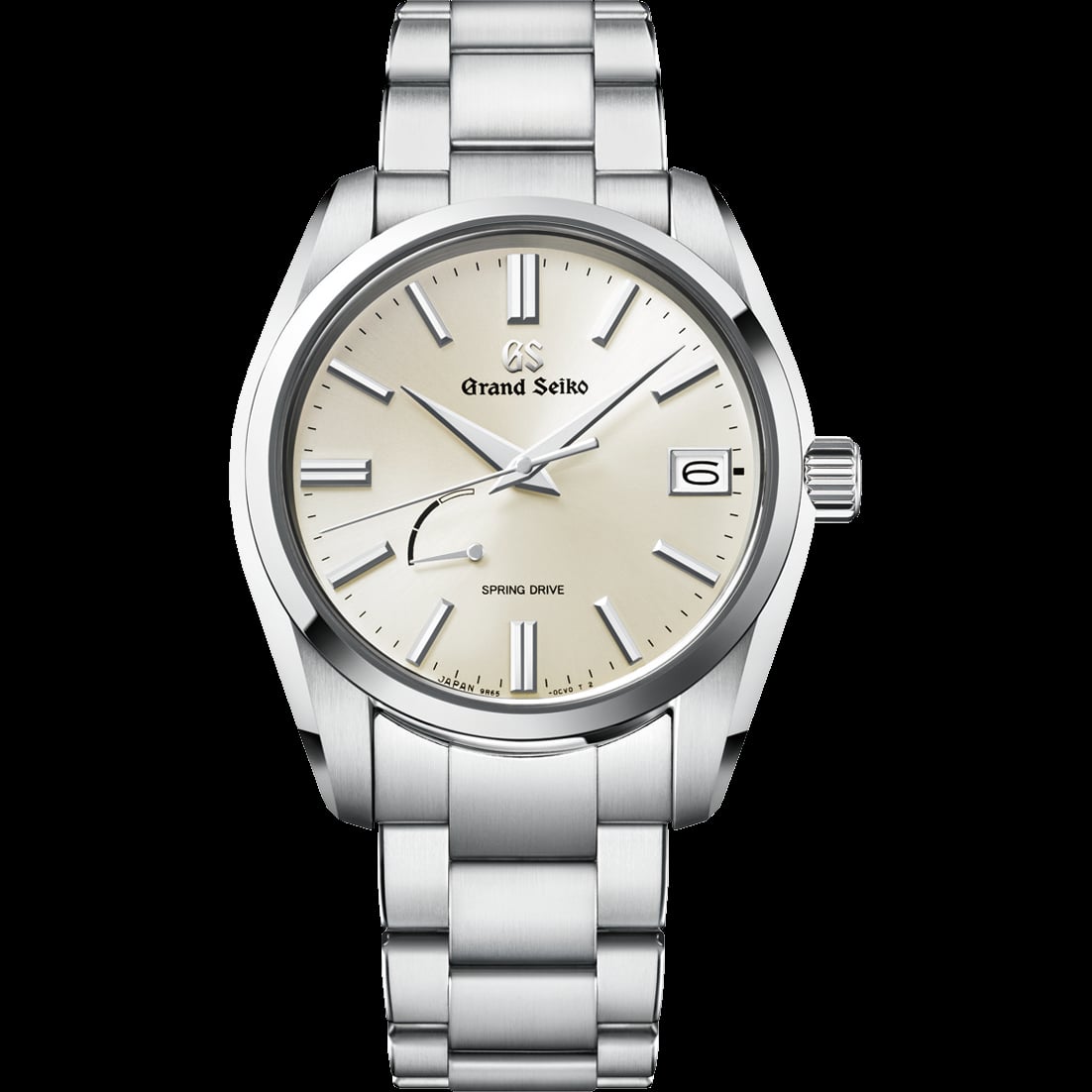
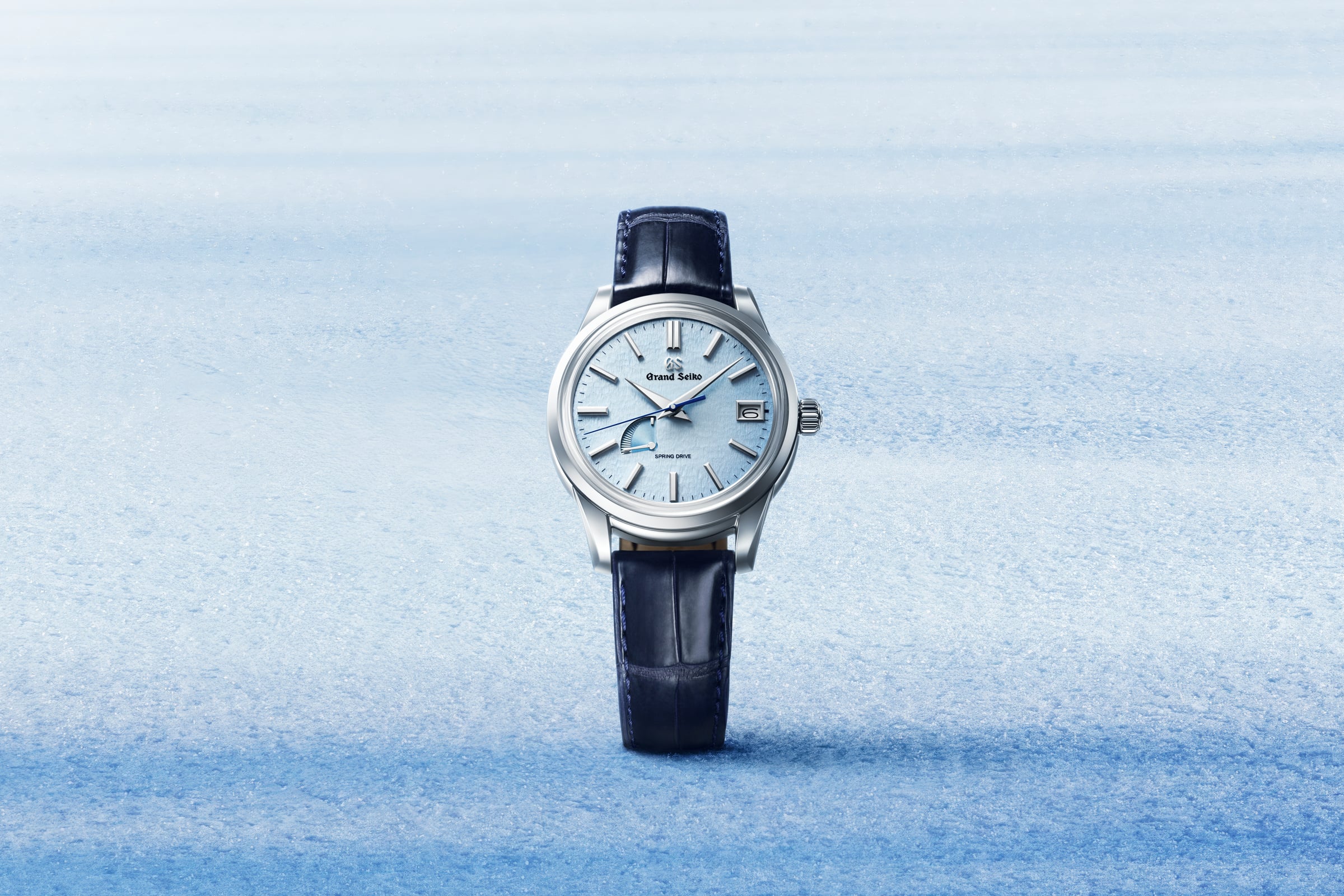
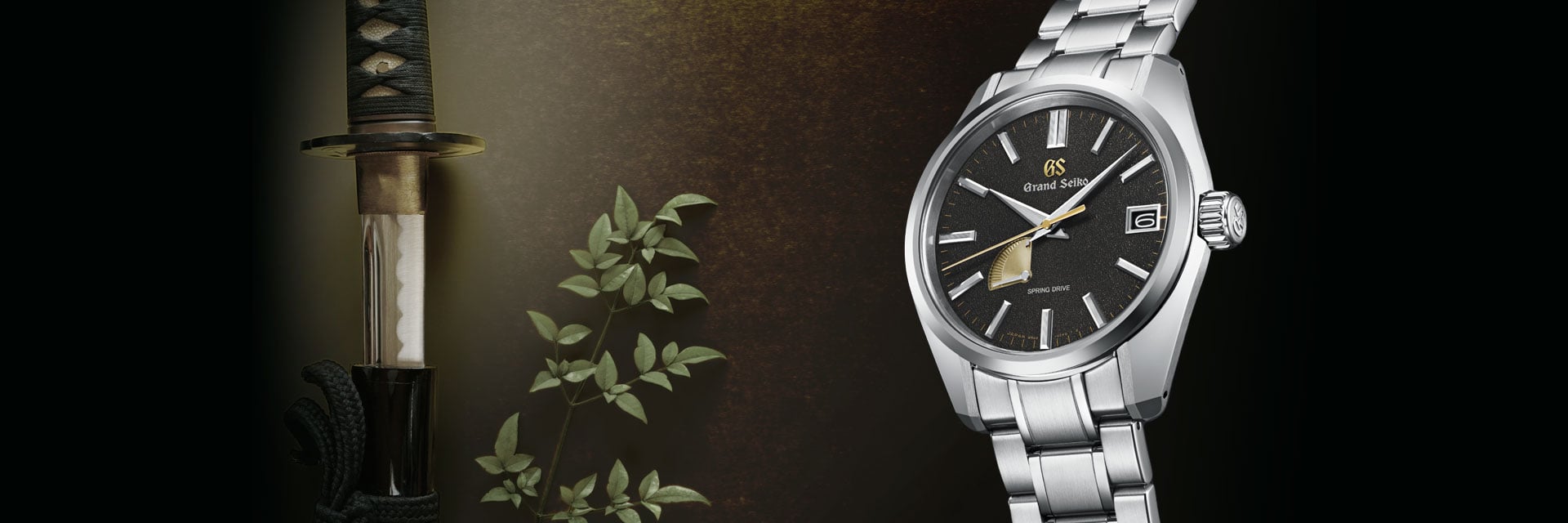
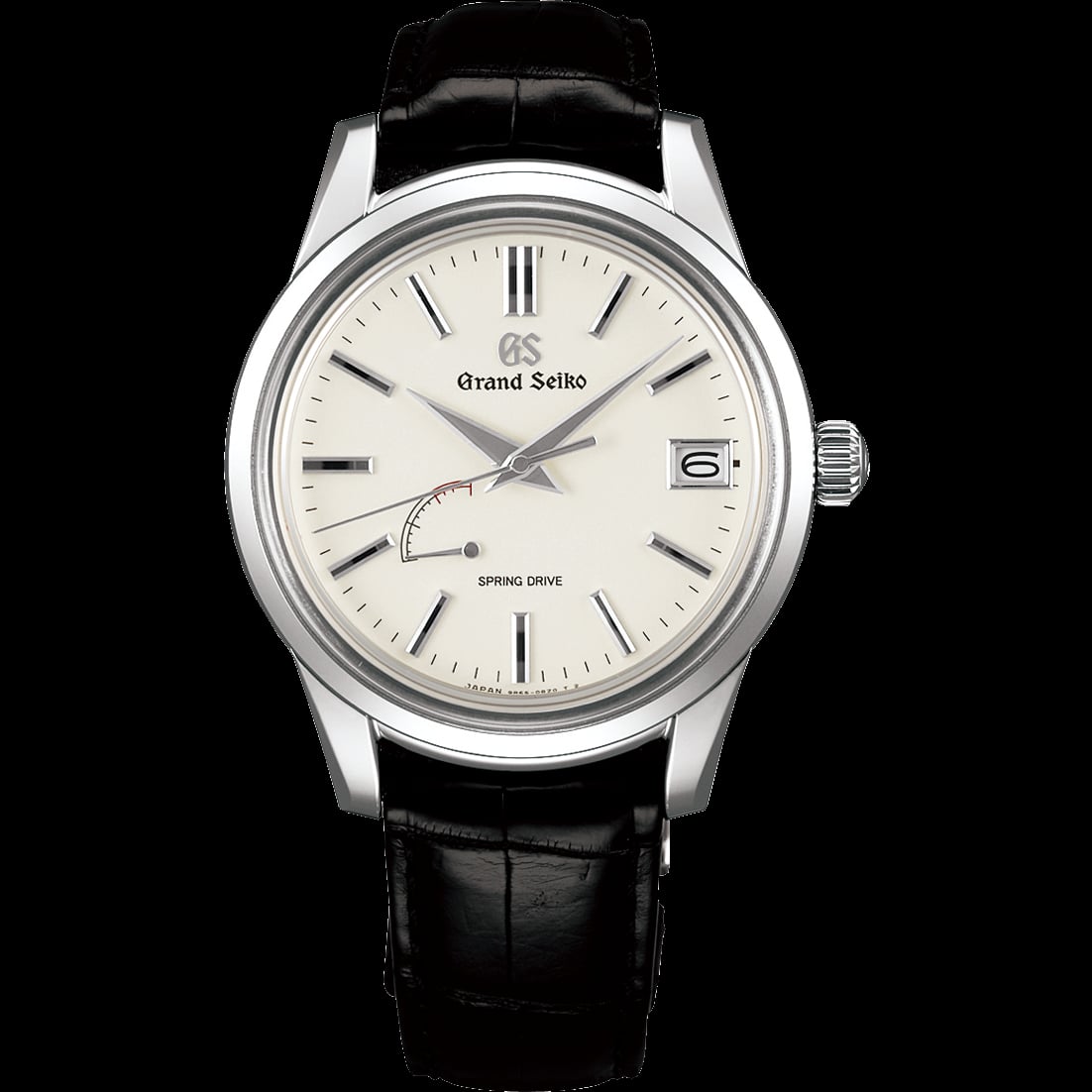
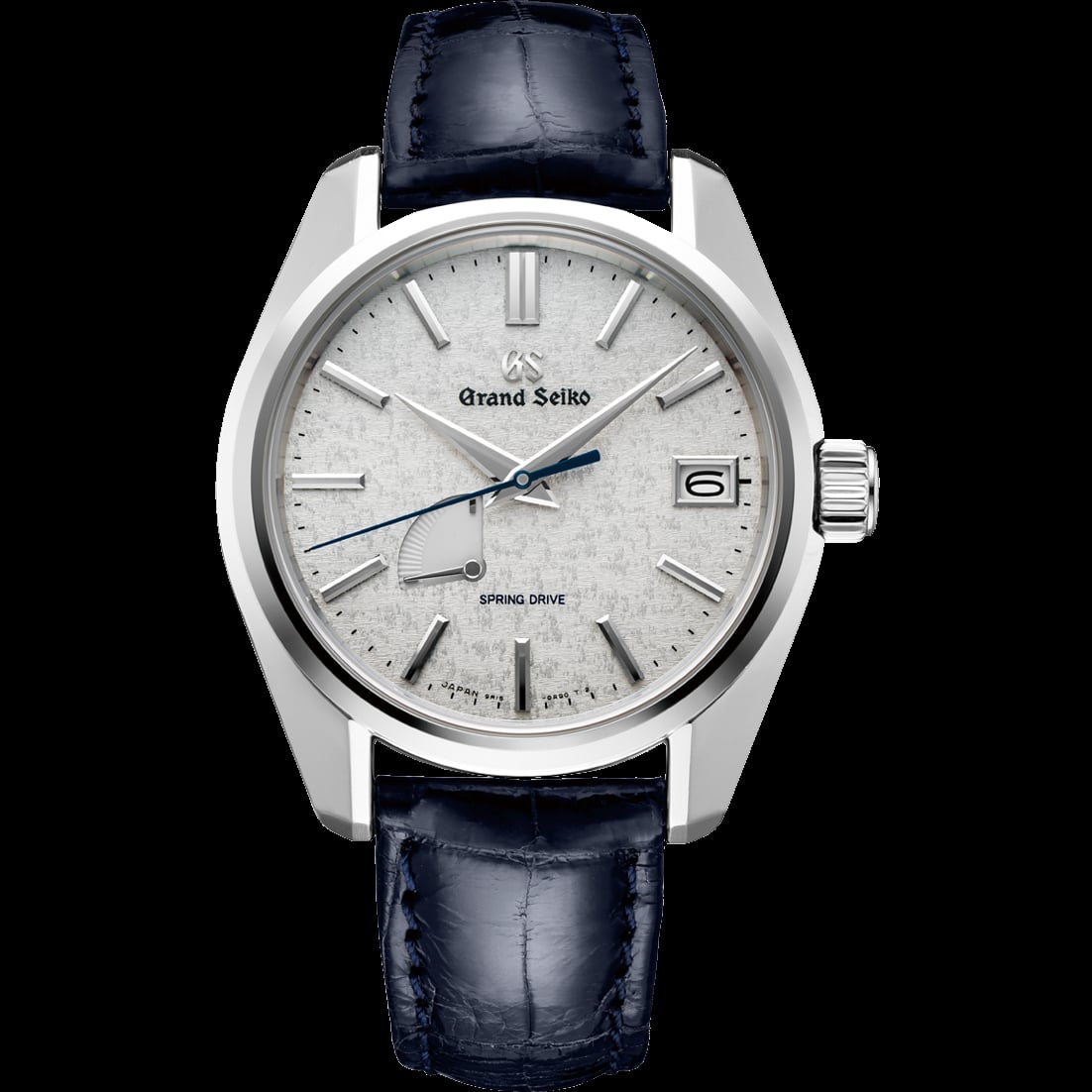
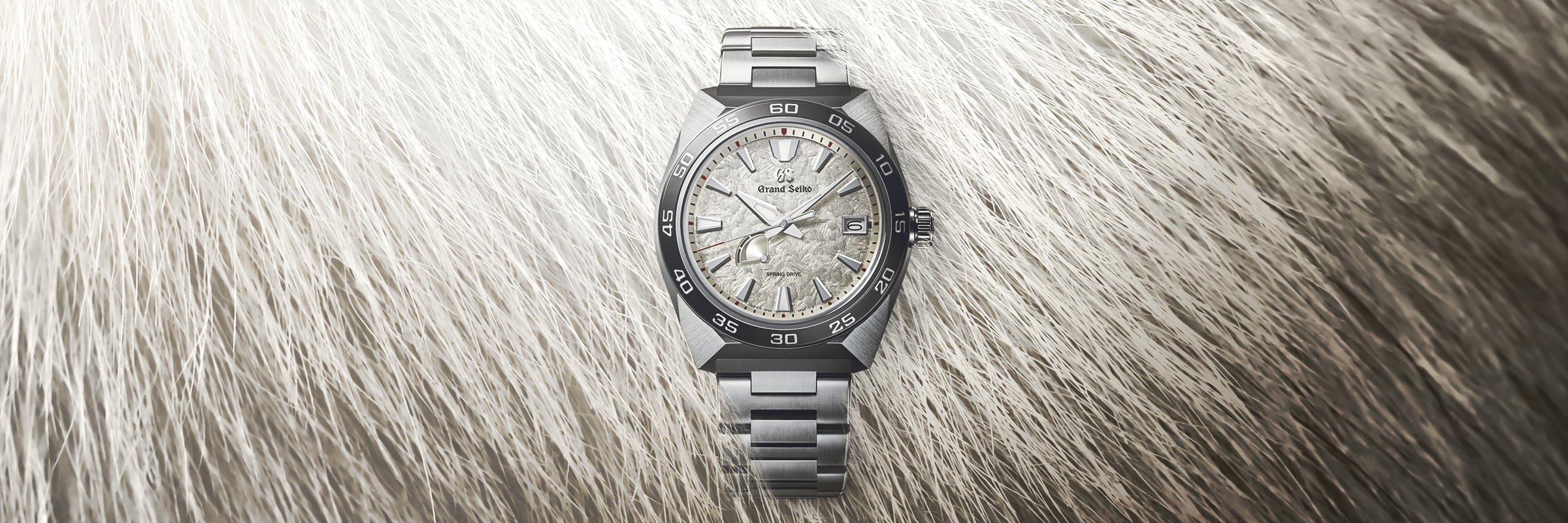
The SBGA469 occupies a precise coordinate within Grand Seiko's Spring Drive taxonomy — a lineage that, vis-à-vis conventional mechanical horology, introduced the Tri-synchro regulator as its defining proposition. Caliber 9R65 is not, strictly speaking, a new solution; it represents a matured iteration of the 9R6-family architecture, delivering 72 hours of power reserve and a rate accuracy of plus or minus one second per day that its purely mechanical predecessors could not defensibly claim. The dial, almost certainly a Shizukuishi studio production, exhibits the characteristic surface topography associated with Grand Seiko's Seasons series — light refracts across its texture with the mechanical predictability of a designed phenomenon rather than a happy accident. Concordantly, the case finishing — alternating Zaratsu-polished flanks against brushed surfaces — represents the category of craftsmanship that renders photographic documentation structurally inadequate. At 41 millimeters and 12.5 millimeters of thickness, the SBGA469 occupies a wearability envelope that is functional without being refined; there exists a certainty that thinner executions of comparable diameter would elevate the proposition. The bracelet, competent in its integration, does not achieve the same formal distinction as the case surfaces it serves. Value analysis is complicated by category positioning: the SBGA469 commands a price point at which Swiss dress-sport alternatives proliferate, yet the probability that any among them offers equivalent movement transparency and finishing discipline approaches negligible.
The SBGA375 represents a studied reconciliation of two lineages within the Grand Seiko corpus: the 44GS case architecture, first codified in 1967 under the directorship of Taro Tanaka, and the Spring Drive movement philosophy, which occupies a categorical position orthogonal to both mechanical and quartz orthodoxies. The 44GS form — its flat surfaces, sharp Zaratsu-finished facets, and the precisely calculated angle at which the lugs descend from the case band — constitutes one of the more defensible case designs produced by any manufacture across the prior six decades. This iteration reproduces that geometry with fidelity sufficient to warrant serious attention. The Snowflake dial texture, derived from the Shinshu highland terrain, is not mere ornament; it produces a light-scattering behavior that renders the dial visually distinct under virtually all illumination conditions. Concordantly, the caliber 9R65 Spring Drive, with its tri-synchro regulator governing a glide spring via electromagnetic braking, achieves a theoretical precision that conventional lever-escapement movements cannot approach at equivalent price strata. The probability that a competitor offers comparable finishing, movement architecture, and case geometry at this price point approaches negligible. The bracelet, while competent, does not attain the same standard as the case it serves. Value, as you undoubtedly gather, is adequate rather than exceptional given the secondary market's current upward pressure on the reference.
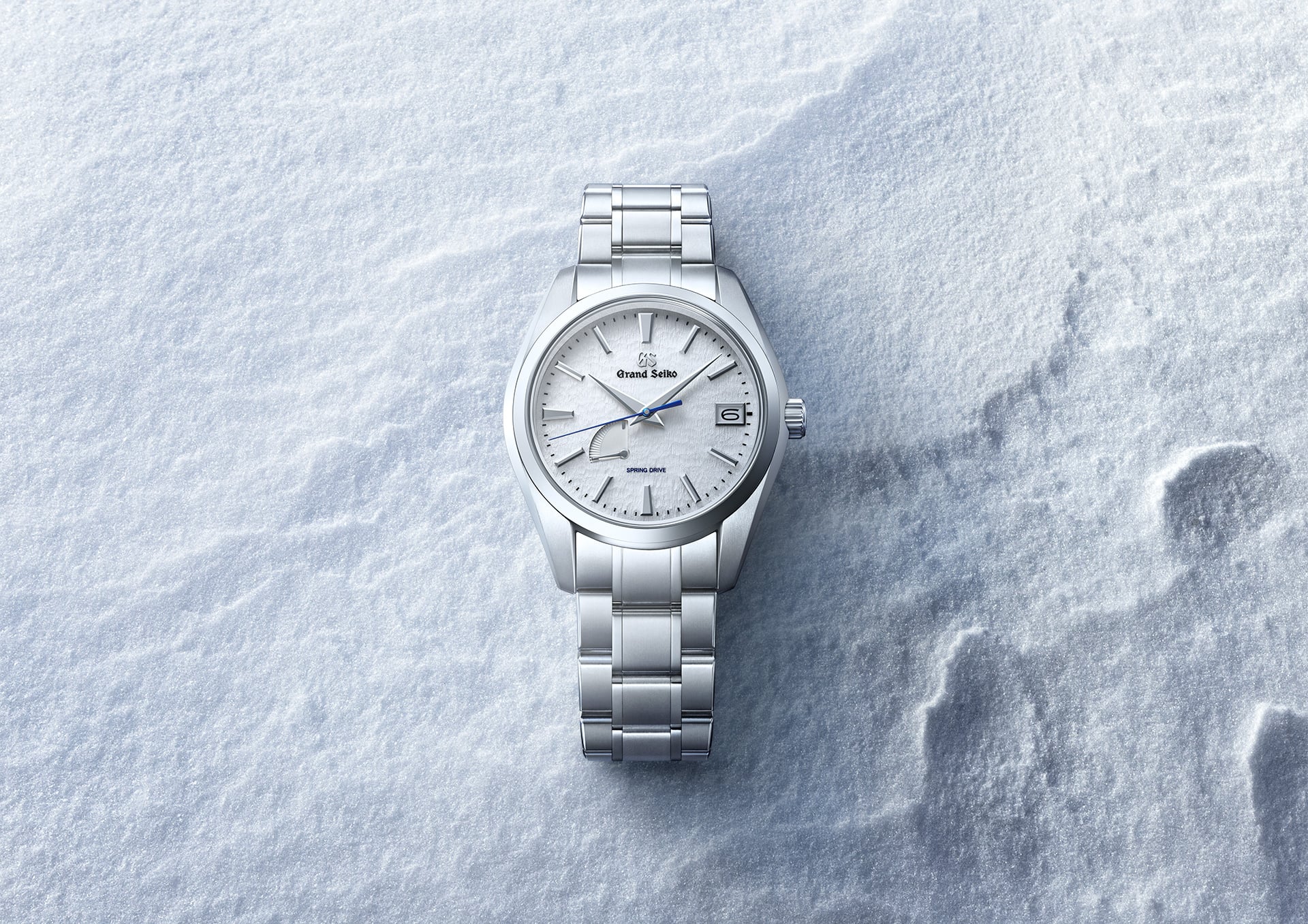
The SBGA429 occupies a precise coordinate within Grand Seiko's Spring Drive lineage — a dress-adjacent proposition built upon the caliber 9R65, the Tri-synchro regulated movement that resolves the mechanical-quartz dichotomy through a glide spring governing the escapement's rotational energy release. Vis-à-vis conventional automatic movements of comparable price positioning, the 9R65 achieves a stated accuracy of plus or minus one second per day, a specification that renders the movement paradigmatically competitive in its category. The dial, as you undoubtedly gather, is the axis upon which this reference's reputation principally rests. The Shizukuishi atelier's Snowflake-adjacent textural vocabulary — here rendered with characteristic Zaratsu-polished hands cutting across a diffuse, layered surface — exemplifies what Grand Seiko's predecessors in the Suwa and Shinshu workshops established as the brand's irreducible differentiator from Swiss contemporaries. The 39mm case diameter represents a considered restraint; concordantly, the 12.3mm profile does not exceed the threshold at which a dress watch begins to compromise its primary function beneath a cuff. The bracelet executes its role adequately without ascending to the dial's standard of craft distinction. The value proposition is not without friction — the SBGA429's market positioning demands that the prospective acquirer accept a premium for manufacture philosophy over complication density, a trade the probability of which resolving favorably increases in direct proportion to one's tolerance for Japanese horological restraint.
The SBGA413 occupies a precise coordinate within Grand Seiko's Spring Drive lineage — the 9R65 caliber representing a mature iteration of the glide-spring mechanism first commercialized in the late 1990s, wherein a tri-synchro regulator replaces the traditional lever escapement with electromagnetic braking. The accuracy envelope this produces, ±1 second per day, places the movement in a category its mechanical predecessors cannot logically access. Concordantly, the dial — executed in Grand Seiko's characteristic Shizukuishi-pattern surface treatment, evoking the textural vocabulary of the Shinshu highlands — achieves a degree of depth and luminous variation that photography systematically fails to document. This is not an aesthetic accident but the product of decades of Zaratsu-polishing methodology applied to indices and hands whose geometry reflects light along precisely calculated vectors. The titanium case, at 40mm and 12.8mm thickness, presents proportions consistent with wearability across contexts from professional to formal. As you undoubtedly gather, the value calculus is the axis of greatest tension: $7,200 positions the SBGA413 against Swiss alternatives of demonstrably lesser movement sophistication, yet the Grand Seiko designation still navigates a secondary market less liquid than its Swiss contemporaries. The probability that this reference achieves equivalent resale velocity to comparable Swiss luxury iterations remains, for the present cycle, below parity.
The SBGA415 occupies a precise coordinate within Grand Seiko's Spring Drive lineage — a titanium-cased iteration of the 9R65 platform, introduced in 2022 as an extension of the Heritage collection's dialogue between natural landscape and horological surface. The dial, as you undoubtedly gather, is the primary argument this reference makes for its own existence. Its textured, snowflake-derived surface exhibits the kind of light diffusion that Zaim dial artisans have refined across successive iterations to near-paradigmatic levels — a result that renders photography an inadequate instrument for its evaluation. The Spring Drive movement, concordantly, remains one of the more formally interesting solutions in contemporary horology: a mechanical oscillator regulated by electromagnetic braking rather than a traditional escapement, achieving chronometric accuracy that most mechanical predecessors cannot approach. Vis-à-vis the steel variants within the same caliber family, the titanium case introduces a wearability dividend — 12.8mm of thickness remains acceptable at 40mm diameter, though not invisible. The bracelet executes its function adequately without achieving the articulation refinement that the case design implies. Ergo, the value calculus at $7,200 USD is neither punishing nor self-evident; the probability of satisfaction is high for the buyer who weighs dial craft and movement philosophy above brand nomenclature alone.
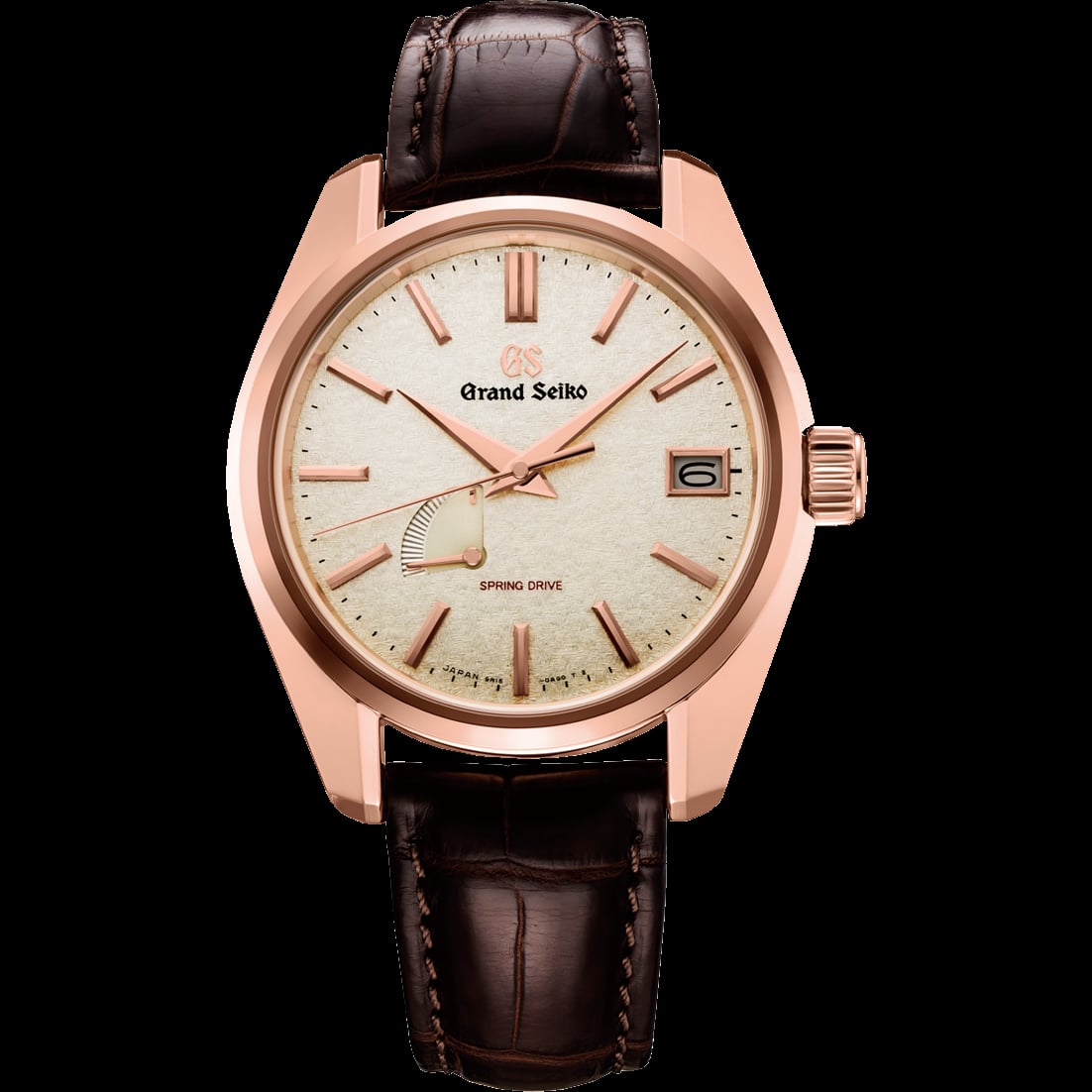
The SBGA384 represents Grand Seiko's application of its Spring Drive architecture — caliber 9R15, a movement of genuine distinction — to a rose gold case of forty millimeters, positioning this iteration at the intersection of Seiko's luxury ambitions and its horological engineering legacy. The dial, finished in the manner characteristic of the Shinshu atelier, demonstrates the Zaratsu-polished case surfaces and textured dial work that distinguish Grand Seiko's predecessors in the 9R lineage from Swiss contemporaries operating at equivalent price coordinates. Concordantly, the Spring Drive's glide wheel mechanism produces a seconds hand of near-continuous motion, a visual phenomenon that separates caliber 9R15 from conventional lever-escapement iterations with measurable effect. The case design, while competently proportioned at twelve-and-a-half millimeters of thickness, does not resolve the inherent tension between sport-classification water resistance and the formality demanded by precious metal construction. Ergo, the wearability calculation becomes complicated: rose gold at this diameter occupies an uncertain register, neither fully disciplined dress watch nor credible sport instrument. The value axis presents the most critical analysis. The probability that a consumer finds equivalent movement technology at this price point within the Swiss ecosystem approaches zero — yet the rose gold premium applied to the SBGA384's retail position demands scrutiny that the broader market has not uniformly resolved in Grand Seiko's favor.
The SBGA385 represents a particular inflection point within Grand Seiko's Spring Drive lineage — a moment at which the Shinshu atelier elected to encasethe 9R15 caliber not in the expected titanium or steel of its Snowflake predecessors, but in platinum, producing an object whose categorical identity becomes genuinely ambiguous across dress, luxury, and sport registers. The dial, a textured rendition of the Shinshu highland snowscape, achieves what its predecessors in lesser metals only approximate: a surface in which the play of incident light against the powder-finish achieves something approaching formal completeness. Concordantly, the case design at forty millimeters and 12.5 millimeters of depth demonstrates appropriate discipline for the material, though the probability that platinum's density produces a wearability compromise remains high — and indeed, that compromise materializes on the wrist. The 9R15 Spring Drive movement, while a genuinely notable piece of engineering that occupies an anomalous position vis-à-vis both mechanical and quartz categorizations, is not in itself the caliber that defines the Spring Drive's ceiling; that distinction belongs to later iterations. The value axis presents the most consequential analytical problem. Platinum procurement costs are non-trivial and the execution is defensible, yet the price bracket occupied by this reference invites comparison with Swiss competitors of substantially greater horological legacy, a confrontation from which Grand Seiko does not emerge unambiguously.
Grand Seiko dials are in a league of their own, and the SBGA427 is a perfect example of why. That textured dial - inspired by the Japanese snowflake season - is something you genuinely cannot stop staring at. The 9R65 Spring Drive movement is one of the most fascinating calibers in watchmaking: it's a mechanical movement that uses a quartz oscillator to regulate itself, resulting in accuracy that embarrasses most Swiss competitors. The Zaratsu-polished case is razor-sharp. My only hesitation is value - Grand Seiko commands a premium, and not everyone is convinced. But if you appreciate dial artistry and movement innovation above all else, the SBGA427 is close to unmissable. Buy this if craft matters more to you than a logo.
The SBGA427 occupies a precise coordinate within Grand Seiko's Spring Drive lineage — the caliber 9R65 representing the Shinshu manufacture's mature articulation of its tri-synchro regulator architecture, wherein mechanical energy governs a quartz oscillator to produce a glide seconds motion that no purely mechanical predecessor could replicate. The dial, characteristically derived from the Shinshu highland landscape, exhibits the Zaratsu-polished case surfaces and textured dial face that constitute Grand Seiko's defensible claim to finishing superiority over Swiss contemporaries at equivalent price points. Concordantly, the 39mm case diameter demonstrates unusual discipline in an era wherein case inflation has become the industry's default posture. The 12.3mm thickness presents a minor tension between the dress category classification and practical wearability beneath a cuff, though not an irreconcilable one. The bracelet, while executed with characteristic precision, lacks the tactile distinction of the dial and case — a recurring pattern across iterations in this reference family. As you undoubtedly gather, the value axis presents complexity: the SBGA427 competes against Swiss manufacture offerings at similar retail positioning, and the probability that uninitiated consumers will assign it equivalent prestige remains lower than its objective specification warrants. The inevitability is that market perception lags demonstrable quality by a measurable interval.
The SBGA481 occupies a precise coordinate within Grand Seiko's sport lineage — a titanium-cased iteration of the 44.5-millimeter dive proposition, descended from the Zaratsu-polished discipline that has defined the manufacture's aesthetic grammar since its formal separation from Seiko's broader catalog. The dial execution merits particular attention: the characteristic textural topography, referencing natural formations in the Shinshu region, produces a light-diffusion behavior that no Swiss contemporary has elected to replicate with equivalent fidelity. This is not accidental. It is the product of hand-finishing protocols that predecessor references established and that this iteration perpetuates without compromise. Concordantly, the Spring Drive caliber 9R65 — a movement architecture that exists at no other address in horology — delivers a glide-wheel regulation mechanism achieving approximately one second per day accuracy, a figure that situates it categorically above conventional automatic competitors. The probability that any Swiss movement at equivalent price achieves comparable regulation without electronic assistance approaches negligible. Where the analysis becomes more discriminating is wearability. Forty-four and a half millimeters in titanium remains geometrically substantial, and the 14.3-millimeter thickness resists concealment beneath a cuff with mathematical certainty. Ergo, the value calculus is complicated: exceptional movement technology and surface craft are present, but the pricing tier demands that the wearer accept proportions that predecessors in this lineage handled with greater restraint.
The SBGA491 occupies a precise coordinate within Grand Seiko's Spring Drive lineage — a reference that deploys the caliber 9R65 movement against a dial treatment derived from the Shinshu highland seasonal aesthetic. The dial, as you undoubtedly gather, is not merely decorative in the conventional horological sense; its textured surface operates as a primary design element, demonstrating a surface treatment discipline that Swiss contemporaries have historically struggled to replicate at equivalent price strata. Concordantly, the handset — executed in Zaratsu-polished steel — achieves a sharpness of reflection that functions almost as a calibration instrument for the eye. The case diameter of forty millimeters represents a considered geometric choice: neither the aggressive expansion of sport watches nor the contraction of strict dress category predecessors. At 12.5mm thickness, the profile is acceptable rather than laudable for its category. The 9R65 caliber, a tri-synchro regulated movement achieving plus or minus one second per day, stands as a defensible mechanical argument against both conventional automatic and quartz alternatives. The bracelet executes its function with refinement, though its clasp mechanism remains perceptibly below the standard established by the dial and movement. Vis-à-vis the value proposition, the probability that this reference delivers competitive specification-per-currency-unit at its retail position is high, though the secondary market trajectory remains subject to the broader volatility of the luxury segment.
The SBGA507 occupies a precise coordinate within Grand Seiko's Spring Drive lineage — a reference descended from the 9R65 caliber's introduction and the broader Shizukuishi aesthetic program that has defined the maison's contemporary identity. The dial, presumed to reference one of the studio's seasonal landscape interpretations, demonstrates the Zaratsu-polishing discipline and textural depth that distinguish Grand Seiko's finishing from the categorical mean. Concordantly, the handset exhibits the knife-edged geometry that predecessors established as a house standard, with lacquer and surface coherence that approach the theoretical limit of mechanical dial production. The 9R65 caliber warrants particular attention: the Spring Drive mechanism, which regulates the mainspring's release via a tri-synchro regulator rather than a conventional lever escapement, produces an accuracy envelope of plus or minus one second per day — a figure that renders the chronometer certification of its competitors a less meaningful benchmark. As you undoubtedly gather, the case at forty millimeters and twelve-and-a-half millimeters of thickness represents a deliberate proportion, though the latter dimension introduces marginal tension under a dress shirt cuff. The value axis presents the inevitable complication: Grand Seiko's pricing, having escalated materially across successive iterations, now positions the SBGA507 in direct confrontation with Swiss alternatives of considerable pedigree. The probability that this reference justifies its market position rests entirely on the primacy one assigns to finishing quality over provenance.
The SBGA509 occupies a precise coordinate within Grand Seiko's Spring Drive lineage — a caliber 9R65 iteration clothed in the seasonal aesthetic vocabulary that Shinshu Atelier has refined across numerous predecessors. Concordantly, the dial represents the axis upon which this reference's entire argument rests. The textured surface, derived from the Shinshu highland landscape, achieves a depth of visual complexity that mechanical printing cannot replicate; light across its plane behaves as a variable, not a constant. As you undoubtedly gather, this places the SBGA509 within an exceptional category of dial execution that few contemporaries at equivalent price points can contest. The 9R65 movement beneath warrants its own consideration. Spring Drive's tri-synchro regulator — neither purely mechanical nor purely quartz — produces a glide-second motion and an accuracy specification that sits at approximately one second per day, a figure its purely mechanical competitors do not consistently achieve. The case, at forty millimeters and twelve-and-a-half millimeters of thickness, represents a proportional restraint that sustains wearability across dress and casual contexts without full commitment to either. The bracelet, while competently finished with characteristic Zaratsu-polished surfaces, lacks the structural refinement of the case it serves. The value axis introduces complexity: the probability that a buyer finds this reference underpriced vis-à-vis its technical and aesthetic specification is high, yet the Grand Seiko secondary market remains less predictable than its Swiss counterparts of comparable positioning.
The SBGA493 occupies a considered position within Grand Seiko's Spring Drive lineage, deploying the caliber 9R65 — a movement that represents the synthesis of mechanical energy and quartz-regulated escapement discipline. Vis-à-vis the brand's purely mechanical predecessors, the Spring Drive complication introduces a glide-wheel architecture that eliminates the conventional lever escapement entirely, producing a seconds hand of demonstrably continuous sweep. The probability that this technical distinction registers with casual observers approaches low, yet it remains the defining logic of the reference. The dial, consistent with Grand Seiko's Shizukuishi atelier traditions, exhibits the Zaratsu-polished case surfaces that produce the optical contrast distinguishing this manufacturer from European contemporaries at equivalent price strata. Concordantly, the 40-millimeter diameter and 12.5-millimeter thickness represent a proportion that sits at the boundary between dress utility and sporting ambition — a deliberate positioning that serves the reference's categorical breadth. The bracelet executes adequately without achieving the visual drama of the case itself. As you undoubtedly gather, the value calculus is complicated by the Spring Drive premium, which positions the SBGA493 against Swiss mechanical instruments of considerably more established market heritage. There exists a certainty that the movement's technical legitimacy is underappreciated relative to its pricing. The inevitability of Grand Seiko's continued market expansion suggests this gap will narrow.
The SBGA439 occupies a considered position within Grand Seiko's Spring Drive lineage, inheriting caliber 9R65 — a movement whose mechanical-quartz hybridization represents one of the more consequential technical decisions in late-twentieth-century horology. Vis-à-vis the brand's conventional automatic predecessors, the 9R65 introduces the tri-synchro regulator, which constrains the glide wheel's rotation via electromagnetic braking, producing the characteristic continuous sweep that defines Spring Drive's visual identity and its ±1 second per day accuracy specification. The dial, executed in the Shizukuishi atelier tradition, employs textural surface work that rewards proximity — a design philosophy oriented around the hand rather than the photograph. Concordantly, the case proportions reflect disciplined restraint: forty millimeters at 12.3 millimeters depth, a geometry that achieves wrist presence without the dimensional excess that afflicts numerous sport-dress crossover iterations from competing manufacturers. The bracelet executes its function competently without ascending to the standard set by the dial's refinement. As you undoubtedly gather, the value calculus here is neither simple nor unfavorable — Spring Drive technology at this price tier represents a demonstrably differentiated proposition. The probability that a buyer of sufficient patience finds this reference wanting on technical grounds approaches negligible.
The SBGA437 occupies a precise coordinate within Grand Seiko's Spring Drive lineage — a dress-sport proposition built upon the 9R65 caliber, which itself represents the mechanically regulated iteration of the Spring Drive architecture prior to the higher-frequency 9R66 displacement. The dial, rendered in Grand Seiko's characteristic Shizukuishi workshop tradition, exhibits the textural articulation and light behavior that define the marque's design philosophy at its most disciplined. Concordantly, the handset maintains the blade-finished precision that has become the studio's most identifiable contribution to horological aesthetics. The case, at forty millimeters and 12.3 millimeters of thickness, achieves a proportion that does not impose itself upon the wrist with undue presence — a result of dimensional restraint that predecessors of the Steel Sport line did not consistently observe. The Trisynchro Regulator mechanism within the 9R65, governing the glide wheel to an accuracy of plus or minus ten seconds per day, situates this movement at a threshold between purely mechanical and electromechanical precision. The bracelet executes its function with competence, though its articulation lacks the refinement one encounters at comparably priced Swiss alternatives. As you undoubtedly gather, the value proposition is contingent upon accepting the Spring Drive's categorical ambiguity. There exists a certainty that the market prices this ambiguity at a discount relative to equivalent Swiss manufacture — which, depending on the observer's framework, constitutes either inefficiency or opportunity.
The SBGA407 occupies a specific coordinate within Grand Seiko's Sport Collection lineage — a line that has, across successive iterations, demonstrated the Shinshu Atelier's capacity to transform regional topography into dial vocabulary. This particular reference renders the surface texture of the Shinshu highlands with a precision that approaches geological documentation. The Zaratsu-polished case, at 40.2 millimeters and 12.8 millimeters of thickness, presents a proportion that is defensible without being exemplary; there exists a certainty that the case volume, vis-à-vis the brand's thinner dress iterations such as the SBGW series, reflects a concession to the 100-meter water resistance specification. Concordantly, the caliber 9R65 Spring Drive — a movement that operates outside the conventional mechanical and quartz taxonomies — achieves a stated accuracy of plus or minus one second per day, a specification that positions it above the ordinary automatic category with demonstrable mathematical justification. The bracelet execution is considered without achieving the extraordinary. As you undoubtedly gather, the value calculation at this reference's price point demands comparison not only against Grand Seiko's predecessors but against Swiss contemporaries at equivalent pricing, where the Spring Drive's singular engineering proposition provides the primary differentiating argument. Ergo, the probability that this reference underperforms its category is low; the probability that it transcends it remains conditional upon the observer's weighting of craft over convention.
The SBGA465 occupies a precise coordinate within Grand Seiko's Snowflake lineage — that series of dials produced through a hand-applied textured process intended to replicate the diffuse light behavior of accumulated snowfall, a phenomenon native to the Shinshu region proximate to the Shizukuishi atelier. Vis-à-vis its Spring Drive predecessors, the SBGA465 deploys Caliber 9R65, a movement whose glide-spring regulation mechanism occupies an ontological position between mechanical and quartz disciplines, achieving ±1 second per day accuracy that conventional lever-escapement iterations cannot approach at comparable price coordinates. The dial texture, achieved through a process its predecessors defined and this reference inherits without compromise, represents one of the more defensible aesthetic achievements in contemporary horology. Concordantly, the case architecture — Zaratsu-polished surfaces alternating with brushed planes — demonstrates the inevitability of disciplined manufacture: at 40mm diameter and 12.3mm thickness, proportions remain contained without demanding wrist real estate beyond reason. The bracelet executes its function with adequate refinement, though it does not exceed the standard its movement and dial establish. As you undoubtedly gather, value analysis here is complicated by category ambiguity: the SBGA465 occupies dress, sport, and luxury registers simultaneously, pricing itself against competitors with more singular purpose. The probability that a buyer of considered taste finds this reference objectionable approaches negligible.
The SBGA489 occupies a precise coordinate within Grand Seiko's Spring Drive lineage — a reference defined by the Shinshu Michinoku dial, its texture drawn from the surface of snow-covered terrain rendered in a blue-grey gradation that no photographic reproduction adequately resolves. Predecessors within the Spring Drive dress category established the vocabulary: Zaratsu-polished surfaces alternating with brushed planes, the pursuit of an edge geometry that approaches the theoretical limit of case finishing. Concordantly, the SBGA489 executes this vocabulary at a level that places it among the defensible best-in-class outcomes for its tier. The caliber 9R65, a tri-synchro regulated movement utilizing a magnetic braking mechanism in place of a conventional lever escapement, achieves an accuracy specification of plus or minus one second per day — a figure that, as you undoubtedly gather, renders the Spring Drive neither purely mechanical nor electronic, but a category unto itself. At forty millimeters and twelve-point-five millimeters of thickness, the case proportion represents a considered discipline that permits genuine wrist versatility across formal and casual contexts. The bracelet, while competently finished, introduces the only structural concession in the system — its clasp mechanism lacks the tactile resolution one would anticipate at this price stratum. The value axis reflects the inevitability of premium positioning against Swiss sport-dress competitors of equivalent specification, a comparison the SBGA489 survives on technical merit, if not on brand recognition within Western markets.
The SBGA293 occupies a precise coordinate within Grand Seiko's Elegance Collection lineage — a body of work descended from the 1960 original and refined across successive decades toward an increasingly disciplined formalism. The dial, finished in what the manufacture designates a seasonal motif, demonstrates the Zaratsu-polished case architecture that differentiates Grand Seiko's metalworking from the broader Swiss luxury category. Vis-à-vis conventional dress watch construction, the simultaneous application of mirror-polished and brushed surfaces at acute angles represents a manufacturing threshold that few contemporaries approach. Concordantly, the Spring Drive caliber 9R65 warrants particular attention. The tri-synchro regulator — governing the glide wheel through electromagnetic braking rather than mechanical escapement — produces a theoretical accuracy of plus or minus one second per day, a specification that positions this movement at the boundary between mechanical and electronic timekeeping paradigms. There exists a certainty that no purely mechanical movement at this price stratum matches that specification. The crocodile strap, however, introduces a categorical tension: paired with 100 meters of water resistance, it represents an engineering proposition at odds with itself. At 12.8mm thickness, wearability under a dress cuff is compromised relative to thinner Elegance predecessors. The value calculus, ergo, resolves favorably — $5,200 USD secures movement architecture and finishing that Swiss equivalents price measurably higher.
Just got this and I'm genuinely blown away by the finishing. The dial texture in person is unreal - pictures do not do it justice. Spring Drive seconds hand is hypnotic. The bracelet is my only minor gripe, it doesn't quite match the case-and-dial level. But for the money? Nothing else at this price is doing what GS does.
The dial. THE DIAL. I have never seen anything like it. Every time I look at my wrist I discover something new. Spring Drive is magical - that smooth sweep is unlike any other movement I've encountered. I'm still relatively new to watches but this feels like a piece that'll stay with me forever.
The Snowflake dial has to be seen in person - pictures don't do it justice. The texture, the way it catches light, the subtle blued seconds hand sweeping smoothly across it thanks to Spring Drive - Grand Seiko is doing things no one else in the industry is doing at this price point. Zaratsu polishing on the case gives it a mirror finish that feels almost otherworldly. The bracelet is my one small critique - it's not quite at the level of the case and dial finishing. But overall this is one of the most quietly incredible watches you can buy today.
OK look, Grand Seiko is normally not my scene, man. Too fancy. But this dial? This Snowflake thing? Whatever, man. It's kinda beautiful. I saw one at some Japanese steakhouse and I sat there staring at it for like twenty minutes. That's a compliment.
The SBGA211, introduced in 2010 as an expression of the Shinshu region's winter landscape, represents one of the more consequential dial-surface decisions in contemporary horology. The textured dial — produced via a vapor-deposition process that replicates the irregular geometry of accumulated snowfall — is not merely decorative. It is a structural argument that a dial surface may function as a primary design element rather than a substrate for indices. Vis-à-vis its predecessors in the Grand Seiko Sport Collection, the Snowflake does not achieve its position through mechanical escalation but through the disciplined application of Zaratsu-polished titanium against a dial that rejects conventional finishing entirely. Concordantly, the Spring Drive movement — caliber 9R65 — occupies a singular position within the taxonomy of timekeeping mechanisms, synthesizing mechanical energy generation with electronic regulation to achieve a deviation of plus or minus one second per day. This is not a trivial accomplishment. The probability that a purely mechanical movement at this price category matches such precision approaches negligible. The titanium case, at 41 millimeters and 12.5 millimeters of thickness, presents a wearability profile that is as you undoubtedly gather, deliberately balanced. The bracelet, while competently integrated, lacks the tactile refinement of the case it serves. The value equation, ergo, resolves favorably: few iterations at this price point deliver equivalent dial artistry, movement innovation, and material restraint within a single reference.