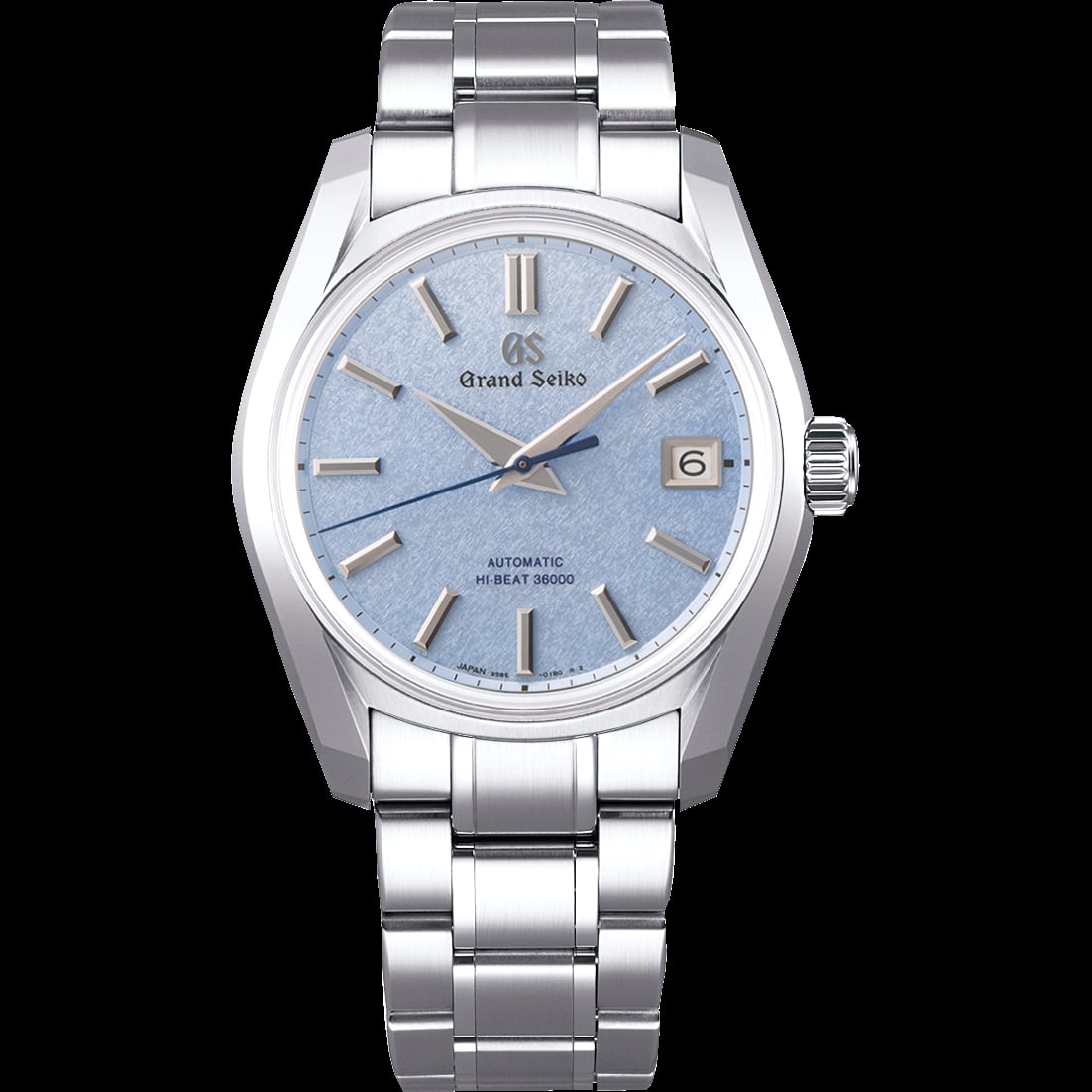
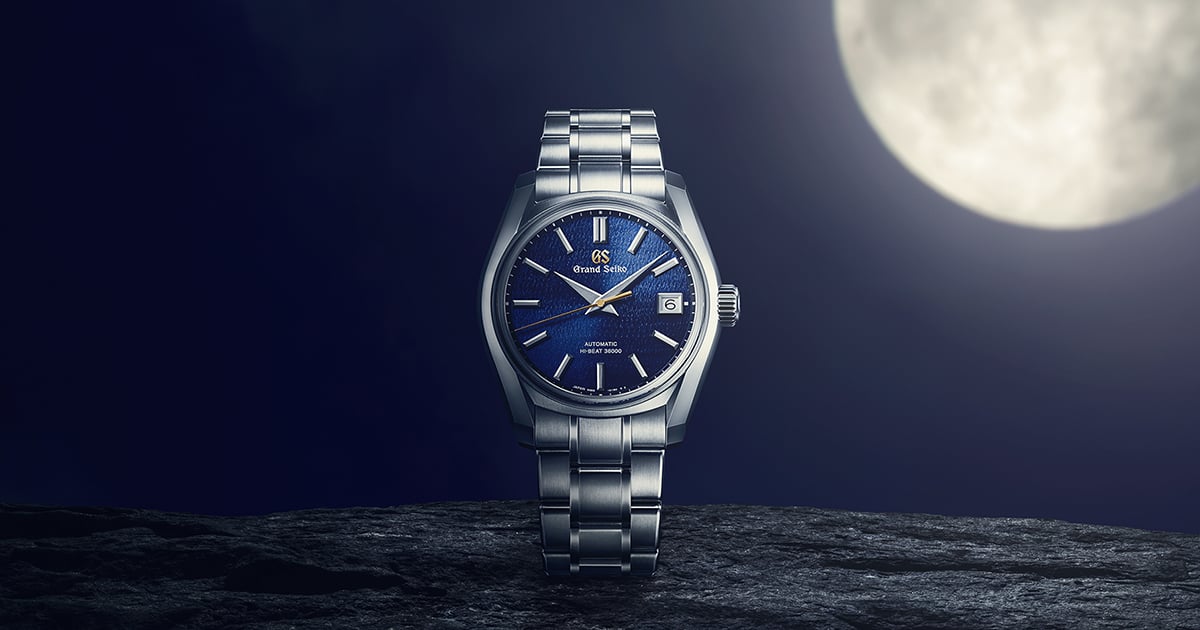
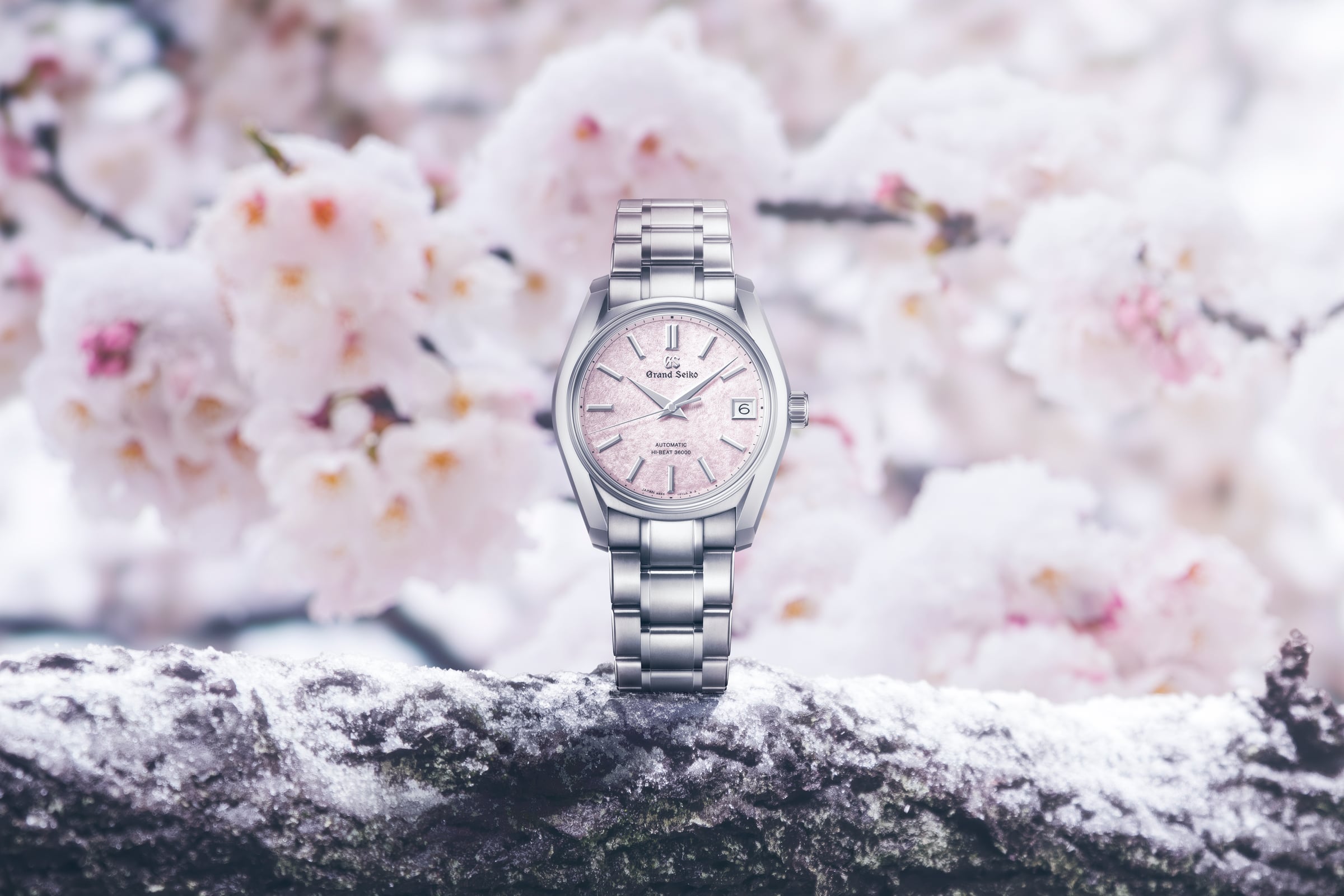
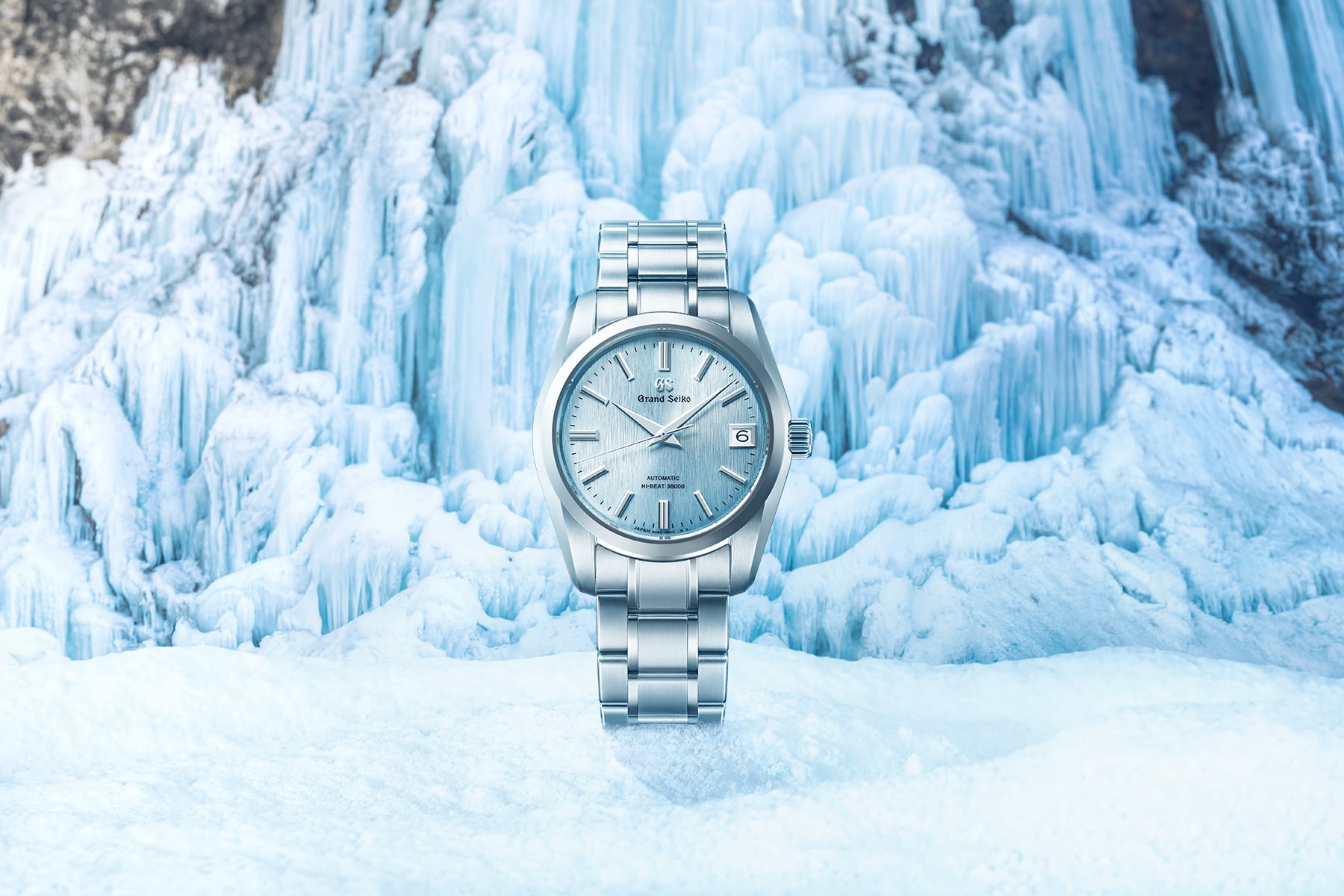
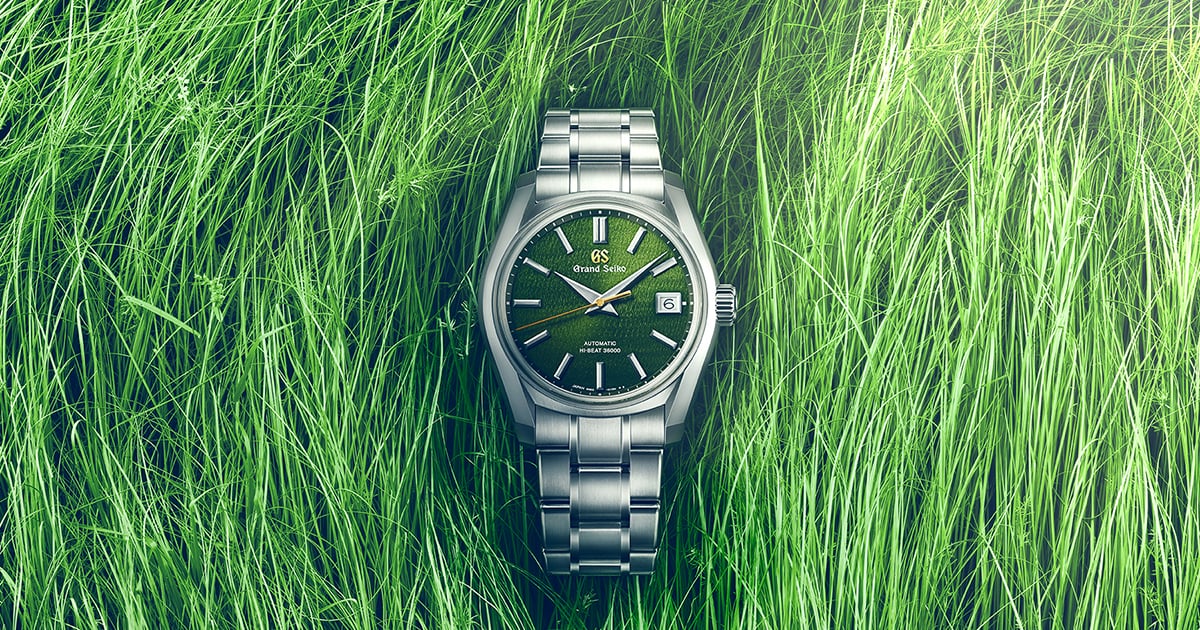
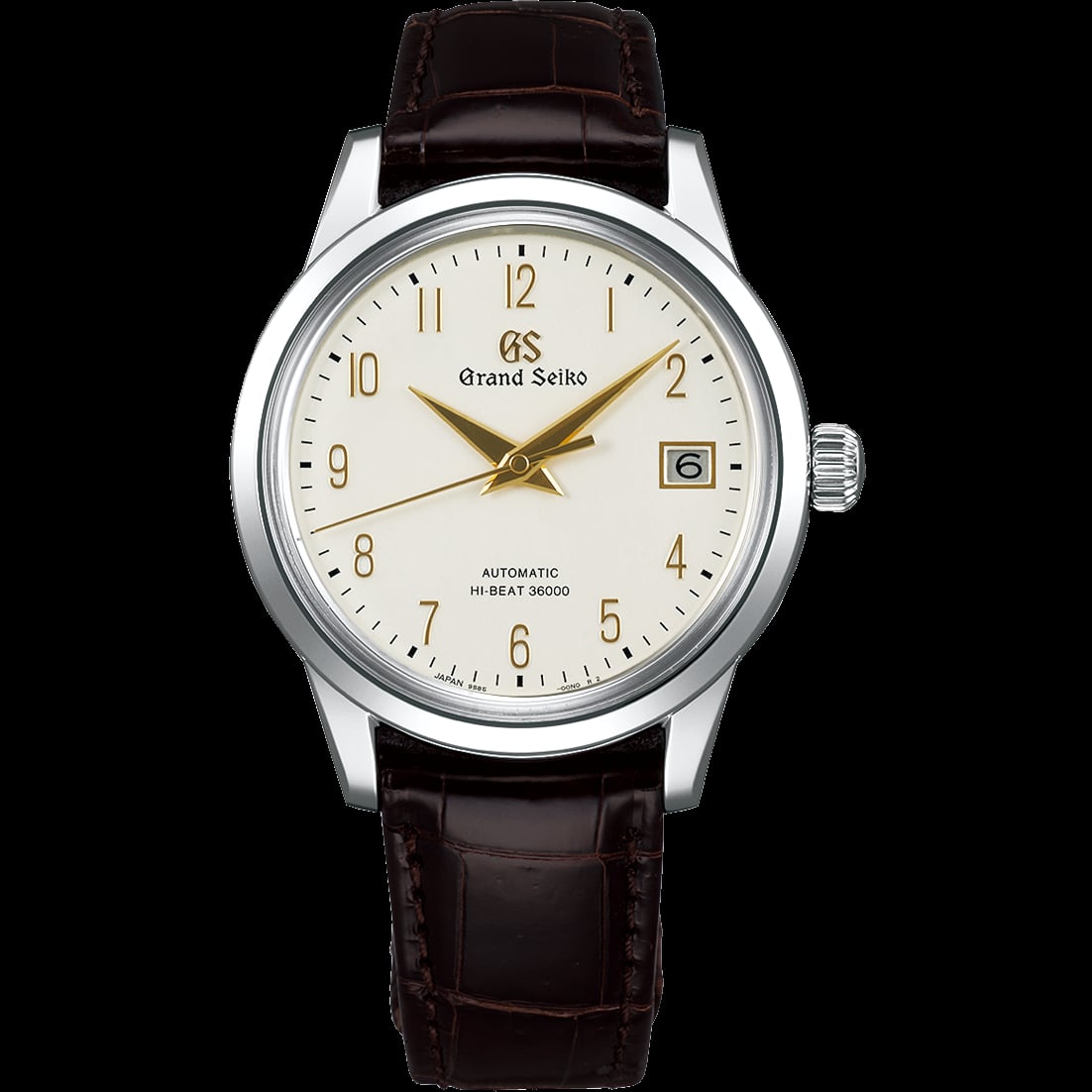
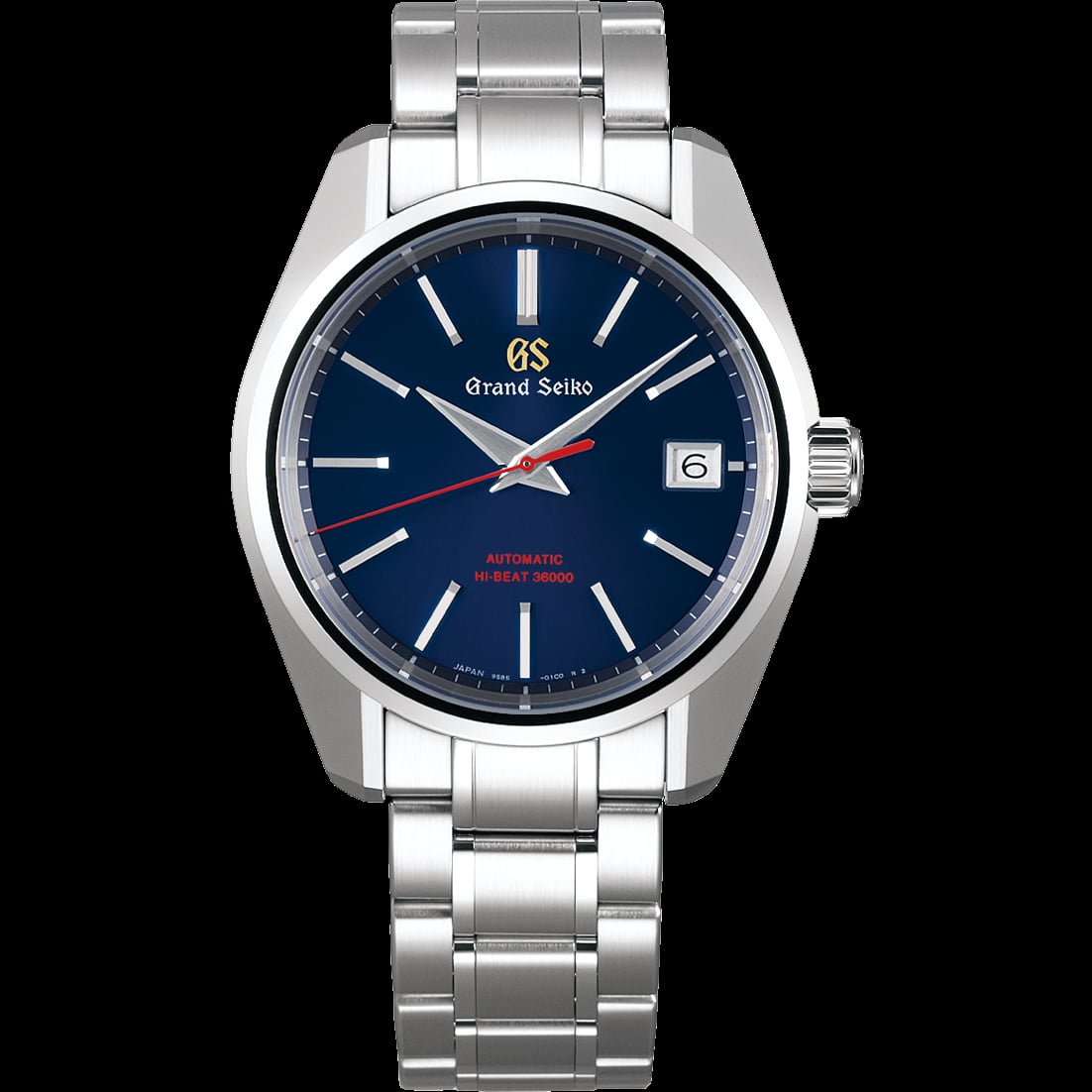
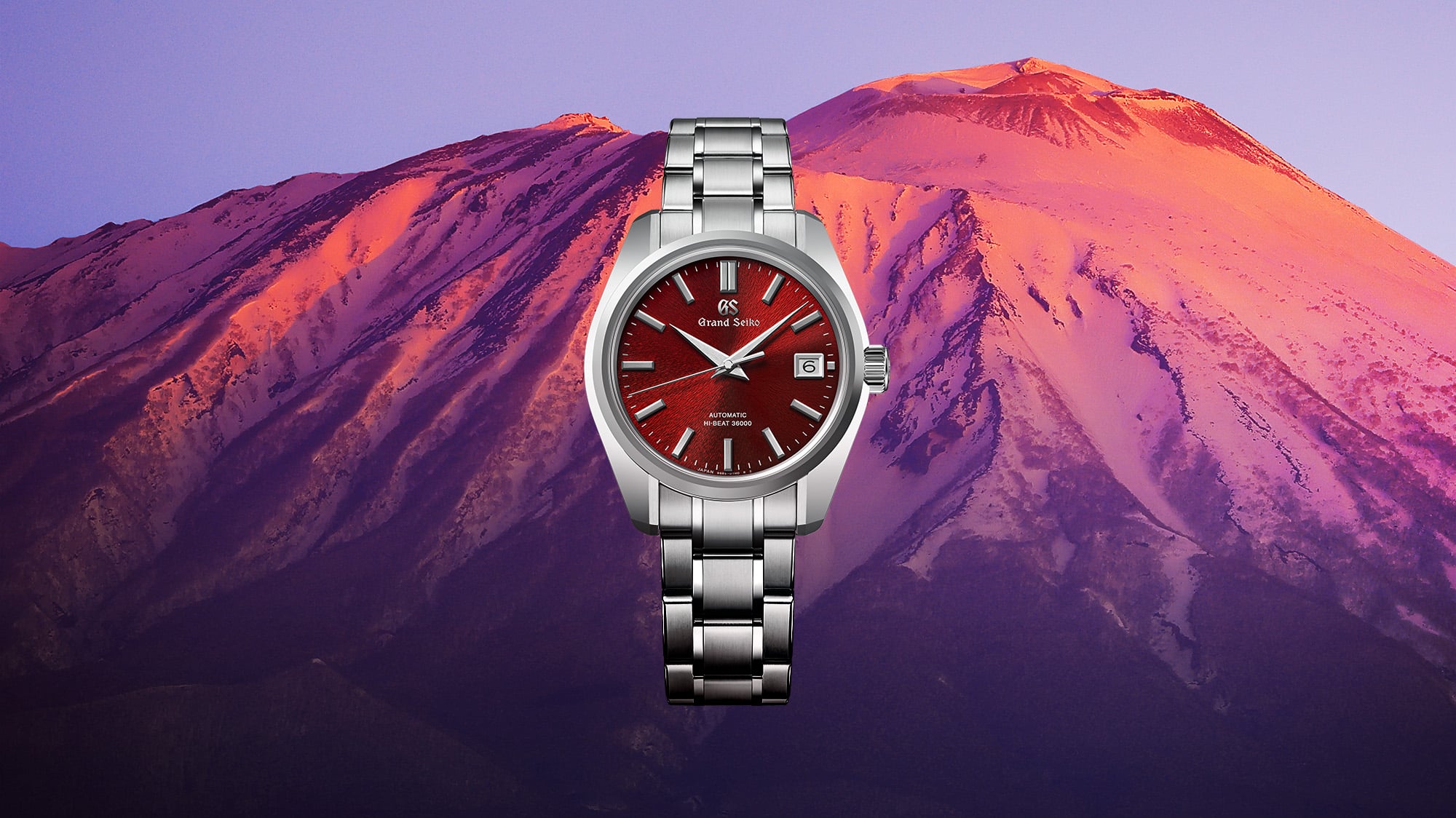
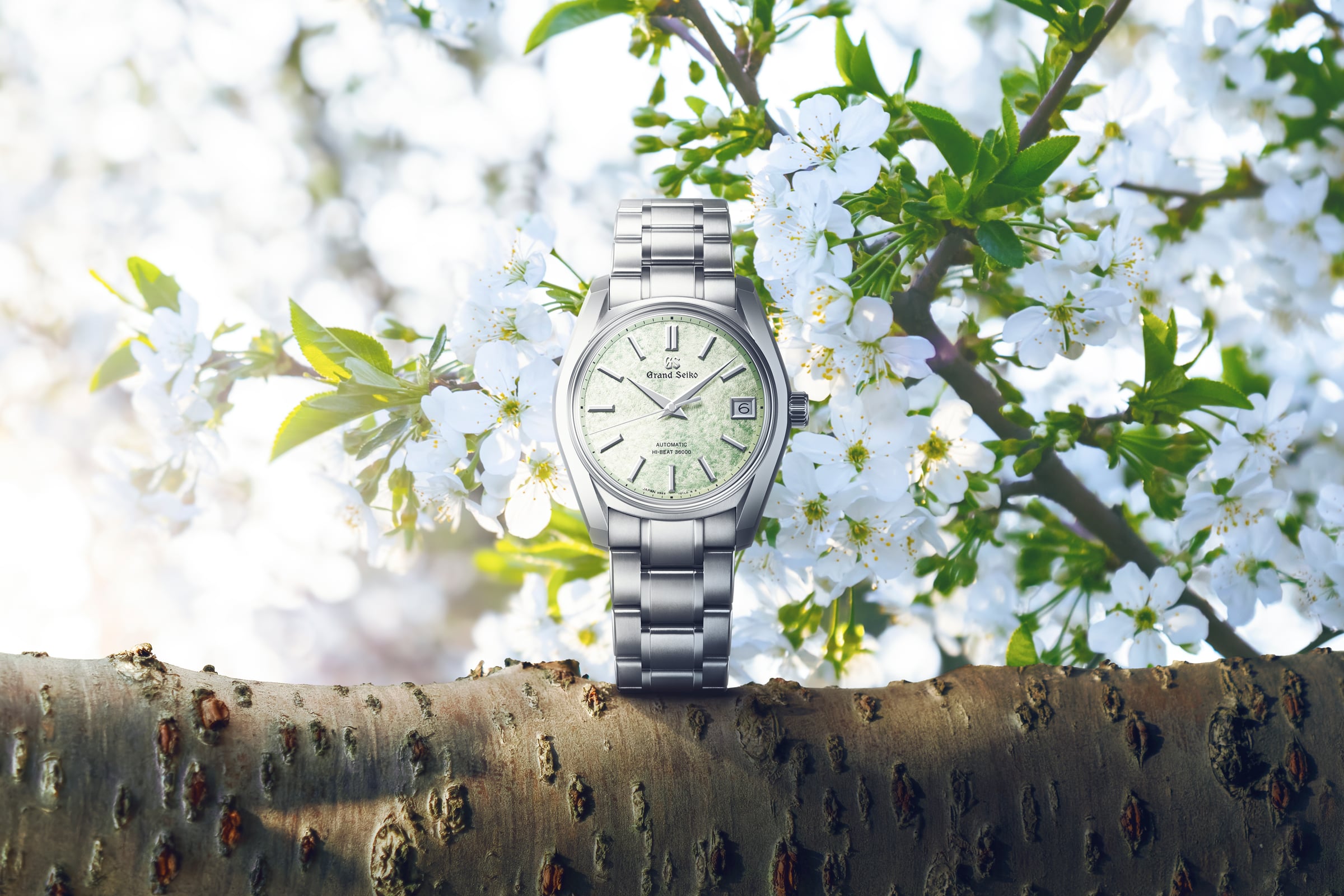
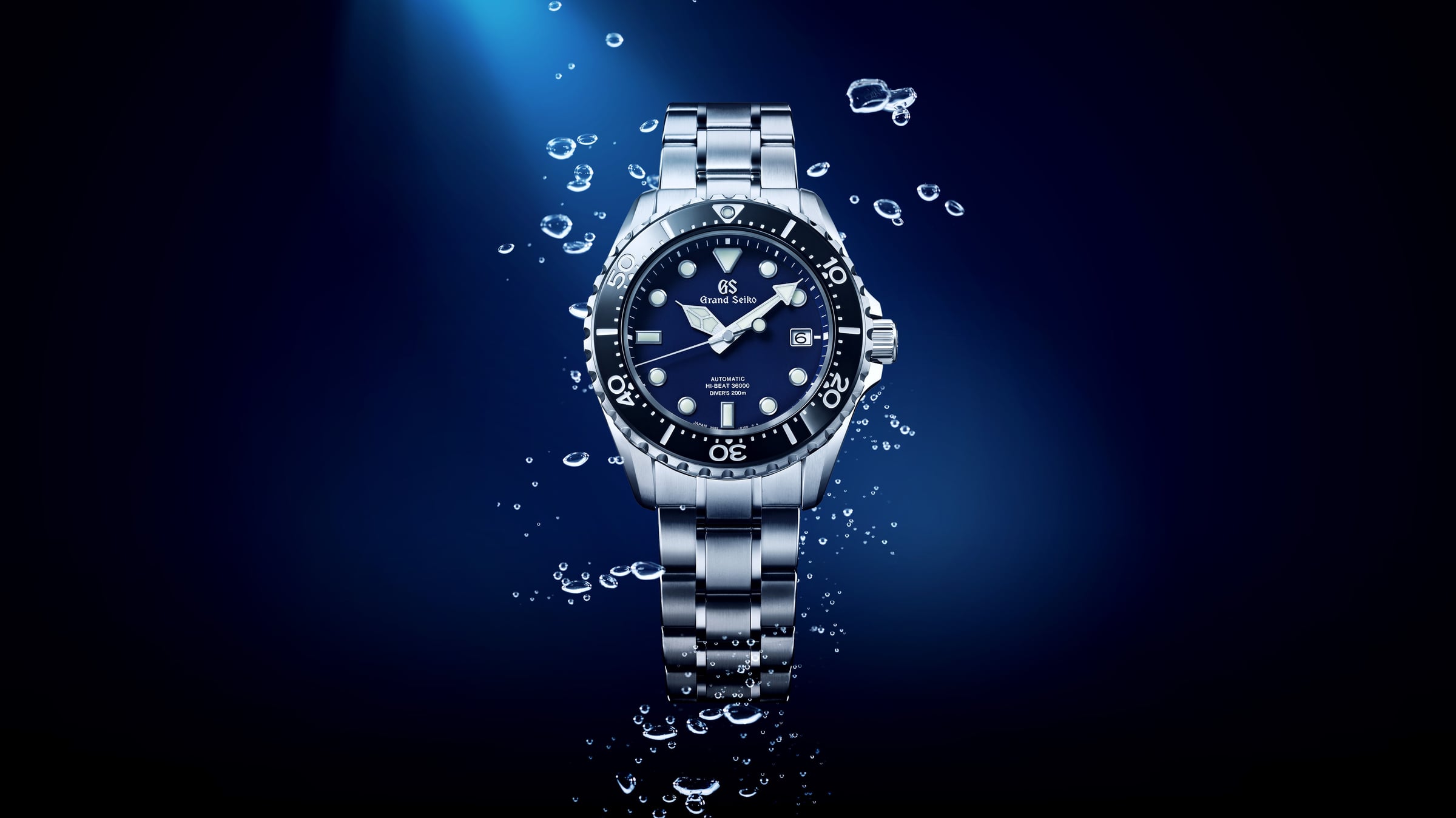
The SBGH299 occupies a deliberate position within Grand Seiko's sport-luxury matrix — a proposition that its predecessors in the Heritage Collection did not fully resolve, and which this reference approaches with considerably greater discipline. The dial, executed in the Shinshu workshop's characteristic textured finish, replicates the visual grammar of seasonal landscape in a manner that most dial programs cannot replicate through applied decoration alone. The handset, luminous and geometrically precise, functions with the exactitude one expects from a manufacturer for whom finishing is a doctrine rather than a marketing claim. Concordantly, the Caliber 9S85 — operating at 36,000 vibrations per hour with a declared accuracy of plus four to minus two seconds daily — represents a paradigm-defining achievement in high-frequency automatic horology. Few Swiss contemporaries at this price stratum demonstrate equivalent precision with equivalent decoration. The case, at forty millimeters and 13.3 millimeters of thickness, introduces a compromise: the profile is not ideal for dressed contexts, and the sport category it inhabits demands comparison against instruments of greater water resistance. Ergo, the value calculus is not self-evident. The probability that a prospective acquirer recognizes the movement's technical superiority vis-à-vis equivalent Swiss pricing is, in most markets, lower than the specification warrants. The bracelet executes its function adequately without distinction.
The SBGH349 represents a considered iteration within Grand Seiko's Sport collection, deploying titanium as its primary material in direct service of wearability — a decision that aligns with the brand's longstanding prioritization of quotidian function over purely aesthetic signaling. Vis-à-vis its steel-cased Sport predecessors, the weight reduction is not incidental; it constitutes a systematic recalibration of the wearer's relationship with the object across extended durations. The dial, executed in Grand Seiko's characteristic textured finish drawing from natural landscape reference, achieves a depth of surface treatment that competitors at equivalent price points do not reliably produce. Concordantly, the Zaratsu-polished case geometry — with its sharp transitions between brushed and mirrored planes — demonstrates a manufacturing discipline that remains among the most defensible arguments for the brand's positioning. The caliber 9S85, beating at 36,000 vibrations per hour, represents a paradigm-level achievement in high-frequency automatic execution, with a declared accuracy of plus or minus one second daily that few mechanical movements sustain in practice with comparable consistency. The bracelet, while refined, exhibits a degree of integration conservatism relative to the case sophistication. As you undoubtedly gather, the value proposition is coherent: the probability of finding equivalent movement finishing, dial craft, and material specification at this price tier from European manufacture approaches negligible.
The SBGH301 represents Grand Seiko's Sport collection operating at the intersection of horological precision and the Shinshu Tokei studio's characteristic surface treatment philosophy. Its predecessors within the 9S-series lineage established a trajectory of incremental mechanical refinement; the caliber 9S85 constitutes the culmination of that iteration, producing a beat rate of 36,000 vibrations per hour with a declared accuracy of plus or minus two seconds per day — a specification that positions it in direct confrontation with the Swiss lever escapement's conventional tolerances. Concordantly, the dial's textured execution, referencing the snow-covered terrain of the Shinshu highlands, achieves a depth of visual complexity that the majority of Swiss contemporaries do not approximate through comparable price-point manufacturing. The case geometry, at forty millimeters and 13.3 millimeters of thickness, sits at the outer boundary of disciplined proportionality for a sport reference. Wearability is consequentially adequate rather than exceptional — the thickness imposes itself beneath a cuff. The bracelet, while competently finished with the characteristic alternating brushed and polished link construction, lacks the mechanical sophistication one might expect given the movement it houses. The value proposition exists within a probability of correctness: the 9S85 movement, vis-à-vis Swiss mechanical equivalents at this price stratum, constitutes a defensible best-in-class mechanical outcome.
The SBGH295 represents a mature iteration within Grand Seiko's sport-adjacent lineage, deploying the caliber 9S85 — a movement whose provenance traces to the Seiko Instruments Shinshu Watch Studio and whose stated accuracy of plus or minus 0.5 seconds per day operates at a threshold that renders the COSC benchmark, vis-à-vis this specification, a comparatively lenient standard. The dial, executed in Grand Seiko's characteristic Zaratsu-finished case architecture and textured surface treatment, demonstrates the Shizukuishi atelier's studied commitment to what the manufacturer terms 'the beauty of nature' — a philosophy that predecessor references established and this reference continues without meaningful deviation from form. Concordantly, the 40mm case diameter and 12.9mm thickness position the SBGH295 within a wearable envelope, though the latter dimension introduces a modest stack that prevents the watch from disappearing beneath a cuff. The bracelet exhibits considered finishing — alternating brushed and polished surfaces that extend the dial's visual language — yet the integrated link adjustment system, while functional, lacks the mechanical refinement of certain Swiss counterparts at equivalent price positioning. Ergo, the value proposition is structurally sound: the probability that a buyer of equivalent budget secures comparable movement accuracy, finishing discipline, and horological lineage from a competing manufacturer approaches low certainty. The SBGH295 does not demand attention; it accumulates it through precision.
The SBGH353 occupies a precise coordinate within Grand Seiko's sport-luxury matrix — a 40mm stainless steel case housing the caliber 9S85, itself a high-beat automatic movement operating at 36,000 vibrations per hour with a power reserve of 55 hours. Vis-à-vis the broader Seiko mechanical lineage, the 9S85 represents decades of accumulated precision doctrine; its stated accuracy envelope of plus or minus 0.5 seconds per day positions it as an adversarial proposition to Swiss movements of considerably greater commercial ambition. The dial, characteristic of Grand Seiko's Shizukuishi and Shinshu atelier traditions, deploys Zaratsu-polished indices against a textured field — surfaces that do not merely reflect light but negotiate with it. Concordantly, the handset demonstrates the same lapidary discipline. The case geometry at 12.9mm thickness is not architecturally invisible, though at 40mm diameter it preserves a proportion that many contemporaries in the sport category have abandoned in favor of larger statements. The bracelet executes adequately without the finishing virtuosity present on the dial. As you undoubtedly gather, the value calculus here is not straightforward: the SBGH353 exists in a price register where Swiss competitors offer movement credentialing of greater marketing legibility, yet the probability that any such competitor matches the finishing standard of this reference at equivalent cost approaches near zero.
The SBGH289 represents Grand Seiko's systematic application of its Sport collection architecture to the dive category — an iteration that applies the Zaratsu-polished vocabulary of the brand's aesthetic lineage to a discipline historically governed by utilitarian legibility. The dial exhibits the textural depth characteristic of Grand Seiko's seasonal series predecessors, and the handset executes the brand's signature sword-style geometry with a precision that reflects caliber-level discipline translated to decorative surface. Concordantly, the movement merits particular notation: the 9S85, oscillating at 36,000 vibrations per hour with a demonstrated mean daily rate variance that rivals certified chronometer thresholds, represents a paradigm-defining achievement within the automatic segment. It is, as you undoubtedly gather, the axis upon which this reference's defensibility rests. The case, however, presents a more equivocal outcome. At 43.8 millimeters diameter and 14.7 millimeters of thickness, the proportional equation produces a wearability score constrained by the inevitability of its own geometry — the watch imposes itself upon a broad distribution of wrist architectures in ways its predecessors at more disciplined dimensions did not. The value proposition occupies contested territory: the movement justifies a significant premium, yet the probability that a buyer at this price point considers the full competitive landscape — including Swiss manufacture equivalents — before committing approaches certainty. Ergo, the SBGH289 is a mechanically exceptional iteration housed in a case that tests the limits of disciplined restraint.
The SBGH351 occupies a specific coordinate within Grand Seiko's sport lineage — a 40mm stainless steel expression of the caliber 9S85, which itself represents the apex of the manufacture's mechanical oscillator development. That movement, a high-beat automatic producing 36,000 vibrations per hour with a declared accuracy of plus or minus two seconds per day, positions the SBGH351 vis-à-vis Swiss chronometer certification as a functionally superior proposition. There exists a certainty that the 9S85 outperforms the majority of its Swiss counterparts at equivalent price coordinates, and this remains the watch's most defensible attribute. The dial, characteristic of Grand Seiko's Shizukuishi atelier tradition, applies the Zaratsu-polished indices and textured surface work that the manufacture's predecessors established as a design grammar in the 1960s. Concordantly, the case presents that same bi-directional polishing philosophy across its lugs and flanks — a labor-intensive process that no contemporary Swiss manufacturer at this price tier replicates with equivalent discipline. The bracelet, while competently executed, does not achieve the same precision at its clasp as the case warrants. Wearability at 12.9mm of thickness is measured rather than ideal for daily rotation. The value proposition is notable without being exceptional: the probability of equivalent mechanical performance at lower cost is, within this category, negligible.
The SBGH263 occupies a precise coordinate within Grand Seiko's Sport collection lineage — a reference that consolidates the manufacturer's dual commitments to mechanical precision and the aesthetic philosophy known internally as Shizukuishi craftsmanship. Vis-à-vis its Hi-Beat Sport predecessors, this iteration retains the 9S85 caliber's 36,000 vph oscillation frequency, a specification that produces the characteristic sweep accuracy placing Grand Seiko in empirical proximity to COSC-certified Swiss contemporaries, and by several measurable tolerances, beyond them. The probability that any informed observer disputes the 9S85's status as a paradigm-level movement within its automatic category is negligible. The dial — a textured surface derived from natural landscape observation — represents the category of Grand Seiko design most resistant to quantification, yet most immediately legible as exceptional. Concordantly, the Zaratsu-polished case presents alternating surfaces of near-geometric precision, a manufacturing discipline that contemporaries of comparable price rarely match. At 39.5 millimeters and 13.1 millimeters of thickness, wearability remains disciplined, though the case profile does not wholly disappear beneath a standard shirt cuff. The bracelet executes its function adequately without achieving the same distinction as the case surfaces it terminates. The value axis presents the expected tension: the SBGH263 commands a price that reflects its genuine mechanical superiority, yet that price point introduces competitive pressure from Swiss sport references with more established secondary market trajectories.
The SBGH343 represents Grand Seiko's application of the Shinshu studio's Snowflake dial language to a thirty-eight millimeter titanium case — a proportional decision that positions this iteration in deliberate contrast to the size inflation endemic to its Swiss contemporaries. The dial texture, produced via a process of controlled etching intended to evoke accumulated winter precipitation, achieves a depth of light diffusion that its predecessors in the Heritage collection established as the standard by which the manufacturer's aesthetic identity is now measured. Concordantly, the 9S85 caliber — a Hi-Beat movement oscillating at 36,000 vibrations per hour with a COSC-adjacent accuracy specification of plus-or-minus 0.5 seconds daily — represents a serious mechanical proposition at this price stratum. The inevitability of titanium as a case material here is sound: it suppresses mass without sacrificing structural coherence, and at 12.9 millimeters of thickness the profile remains defensible for its movement architecture. The bracelet executes its function adequately without achieving distinction. As you undoubtedly gather, the value calculation is the axis under greatest pressure — $7,900 USD secures a movement of genuine pedigree and a dial of verifiable craft, yet positions the SBGH343 at a threshold where Swiss alternatives of comparable specification begin their own arguments.
The SBGH341 represents a studied iteration within Grand Seiko's Heritage collection — specifically, a deployment of the 9S85 caliber within a titanium case whose Shizukuishi workshop origins are legible in every surface treatment. The dial, almost certainly a Shiromonogatari-influenced snowflake variant, demonstrates the Zaratsu-polished handset that defines Grand Seiko's contribution to applied finishing methodology. Vis-à-vis its steel predecessors in the Heritage line, the titanium construction produces a case that presents identically at distance but registers as categorically different in wrist contact — a subtraction of mass that the 38mm diameter and 12.9mm profile make conspicuous by its absence. Concordantly, the 9S85 caliber, beating at 36,000 vibrations per hour, achieves a COSC-adjacent accuracy specification through Grand Seiko's internal standards, which the probability of verification places among the more rigorously tested movements at this price stratum. The titanium bracelet, while adequately finished, represents the sole axis where the execution remains functional rather than exceptional — articulation and end-link tolerance, in documented examples, fall marginally short of the dial's authority. At $7,900, the value equation is complicated by the inevitability of comparison to Swiss contemporaries at equivalent price points, where movement heritage carries greater secondary market leverage. Ergo, this reference rewards those whose calculus favors finishing discipline over brand coefficient.
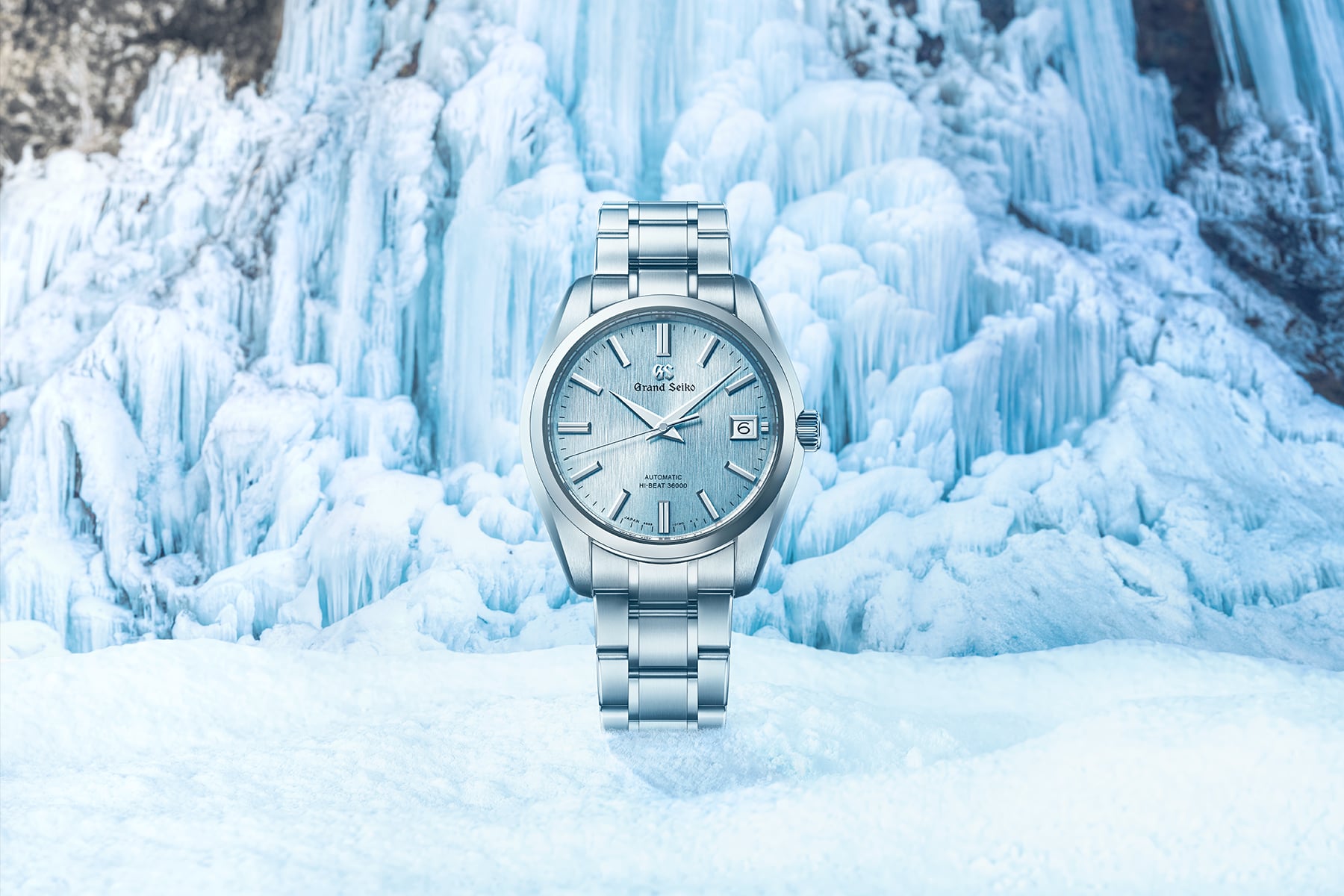
The SBGH281 occupies a specific coordinate within Grand Seiko's sport-luxury matrix, representing the application of the caliber 9S85 — a movement of paradigm-adjacent precision — to a case architecture that draws from the Zaratsu-polished tradition established across decades of Suwa and Shizukuoka production. Vis-à-vis its contemporaries at comparable price coordinates, the dial achieves a textural resolution that most Swiss sport iterations at equivalent specification fail to approximate. The snowflake handset and applied indices, products of a finishing philosophy that treats light as a design material, reflect a lineage of craft decisions that predecessors in Grand Seiko's own catalog established and this reference faithfully extends. Concordantly, the 9S85 caliber — operating at 36,000 vibrations per hour with a demonstrated rate accuracy approaching chronometer-adjacent tolerances — constitutes the analytical center of this iteration's value proposition. The case thickness of 13.3 millimeters represents a non-trivial figure for a 40mm sport case and introduces a wearability constraint that narrower wrists will register. The bracelet executes its function without distinction, though its articulation remains adequate rather than exceptional. The probability that this reference underperforms its value equation against Swiss sport-luxury competitors of equivalent specification approaches near zero; the certainty of its underappreciation in certain markets, however, remains structurally persistent.
The SBGH347 represents a considered iteration within Grand Seiko's Heritage collection, drawing its aesthetic vocabulary from the Shizukuishi atelier's ongoing interrogation of light as a design material. The dial — a textured surface evoking the birch forests of Iwate Prefecture in winter — demonstrates the Zaratsu-polished handset to exceptional effect. Vis-à-vis its predecessors in the 9S8x caliber lineage, the 9S85 constitutes a mature refinement: 36,000 vibrations per hour, a 55-hour power reserve, and a COSC-adjacent accuracy specification of plus or minus one second per day. This is not theoretical precision; there exists a certainty that the movement will outperform the stated figure under normal conditions. The Ever-Brilliant steel bracelet — a proprietary alloy resisting scratching with notable success — integrates with the 37-millimeter case in proportional alignment that earlier, larger Heritage references surrendered in their pursuit of presence. Concordantly, the case thickness of 13.3 millimeters introduces the sole structural tension in the analysis: for a dress-adjacent instrument, the profile demands concession under a cuffed sleeve. The value axis warrants scrutiny. At $7,300 USD, the SBGH347 occupies a stratum where Swiss contemporaries offer comparable finishing credentials. The probability that this reference converts an uninitiated buyer on specification alone is moderate; the inevitability is that proximity to the physical object resolves the question with finality.
The SBGH345 occupies a precise coordinate within Grand Seiko's Sport collection lineage, descending from the formal articulation of the 44GS case architecture while absorbing the textural vocabulary that Shinshu Atelier's craftsmen have systematically refined across successive sport iterations. The dial — a Shiraito-inspired surface evoking cascading water — represents the Zaratsu-polished handset deployed against a field of demonstrable visual complexity. This is not decoration for its own sake; there exists a certainty that the textural hierarchy between dial surface and applied indices constitutes considered optical engineering. The caliber 9S85, vis-à-vis competing Swiss haute horlogerie movements at analogous price points, presents a mechanically disciplined argument: a beat rate of 36,000 vibrations per hour with a deviation specification of plus or minus five seconds daily, a figure that predecessors within the Grand Seiko caliber lineage achieved only incrementally. Concordantly, 55 hours of power reserve situates the movement within practical daily parameters. The case thickness of 13.3mm across a 40mm diameter produces a proportion that wearability data would classify as adequate for a sport reference, though not without some compromise under tailored cuffs. The bracelet executes its function without the distinction the dial warrants. As you undoubtedly gather, the value proposition is contextual: against Swiss alternatives of equivalent movement specification, the SBGH345 presents a defensible, if not dominant, equation.