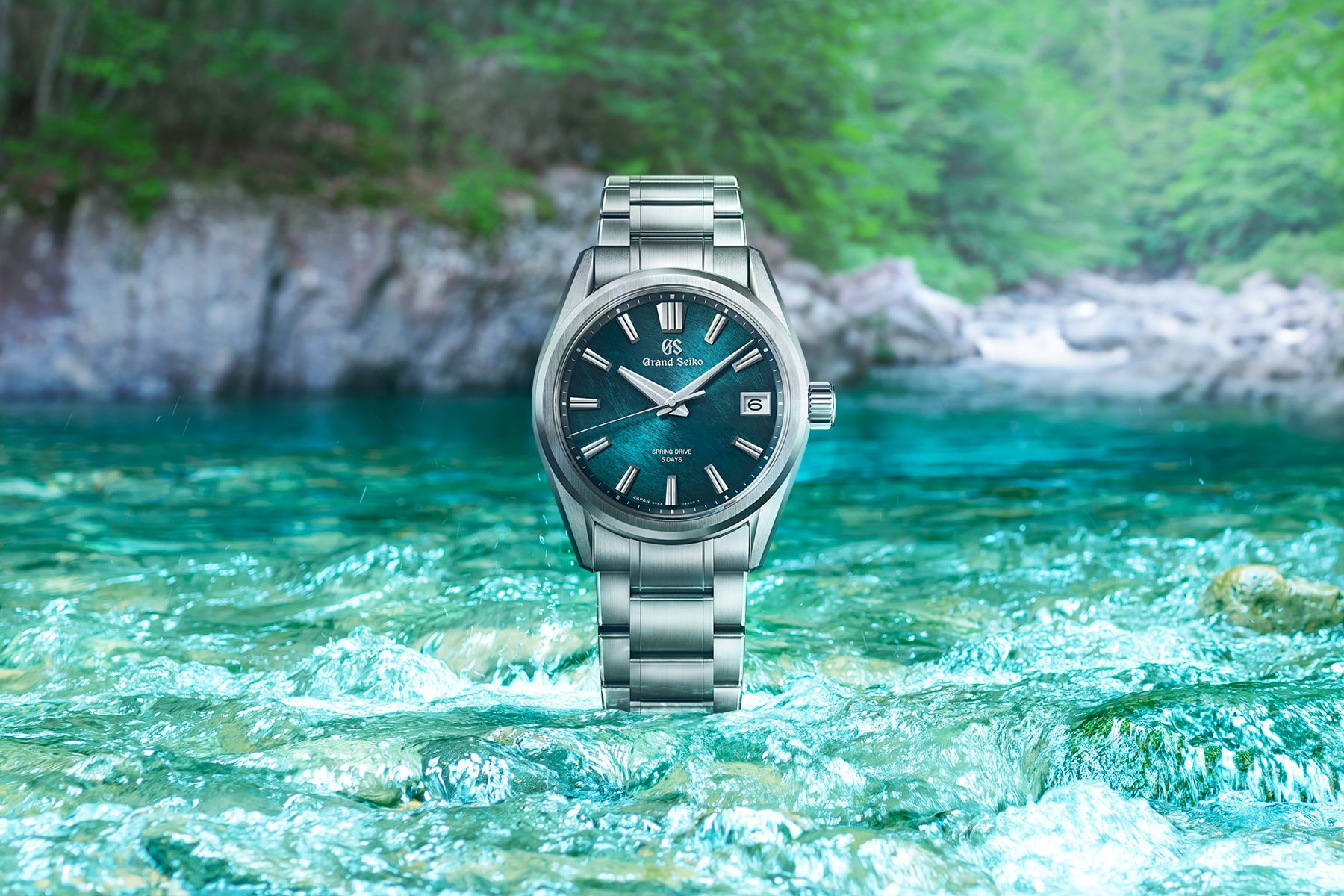
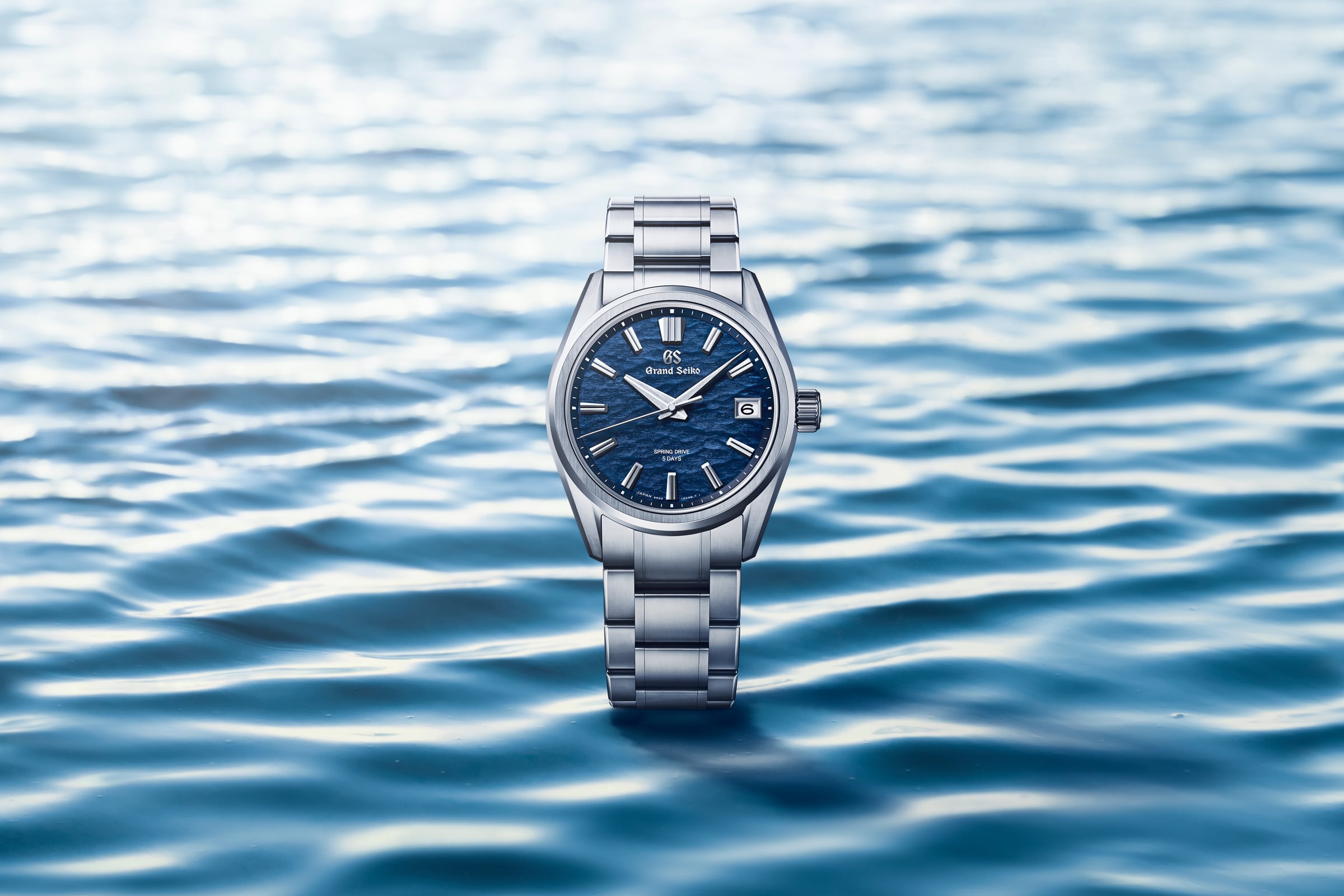
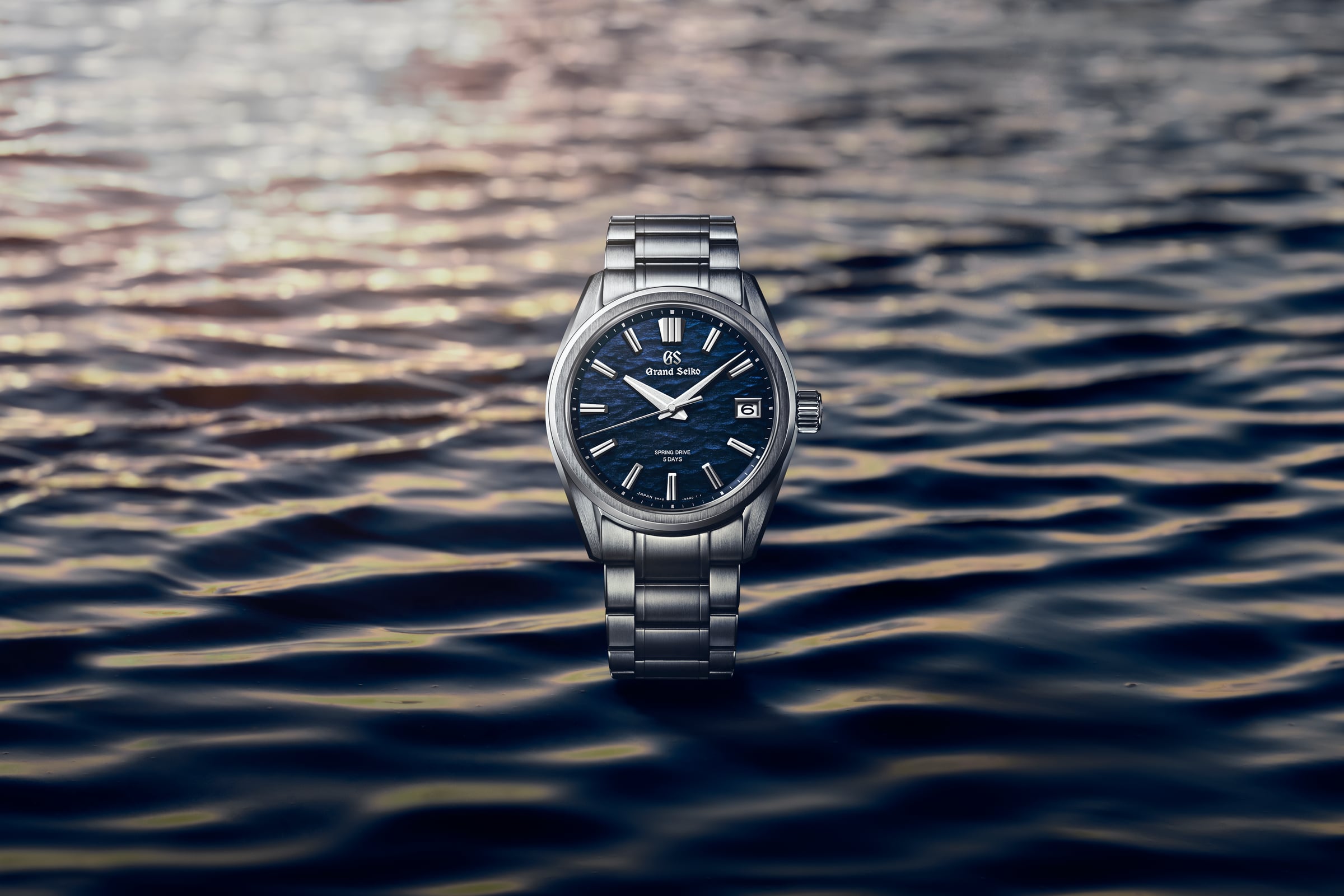
The SLGA021 represents Grand Seiko's deployment of the Evolution 9 architecture — a case language introduced to expand the lineage beyond the Snowflake archetype that had defined the brand's modern identity for the preceding decade. Vis-à-vis its predecessors, the Evolution 9 case introduces a more aggressive geometric angularity, the Zaratsu-polished flanks producing contrast planes that interact with ambient light with a precision that Swiss contemporaries at this price stratum seldom approach. The dial, rendered in a textured seasonal motif, continues Grand Seiko's practice of translating Japanese natural phenomena into surface treatment — a methodology that produces results of genuine aesthetic distinction rather than mere ornamentation. Concordantly, the movement demands particular attention. Caliber 9RA2 is a Spring Drive variant of defensible consequence: 120 hours of power reserve, a tri-synchro regulator achieving approximately one-second-per-day accuracy, and the inherent mechanical elegance of a glide wheel operating without the electromagnetic compromise of a conventional escapement. The probability that any Swiss movement at this price achieves equivalent isochronal precision is low. The bracelet, while competently finished, represents the axis of relative underperformance — its integration with the Evolution 9 case lacks the seamless continuity one observes in the bracelet-to-case relationship of Rolex's Sport references. Ergo, at $9,800, the value proposition holds with certainty: the movement technology and dial craft are simply not reproducible by competitors at equivalent cost.
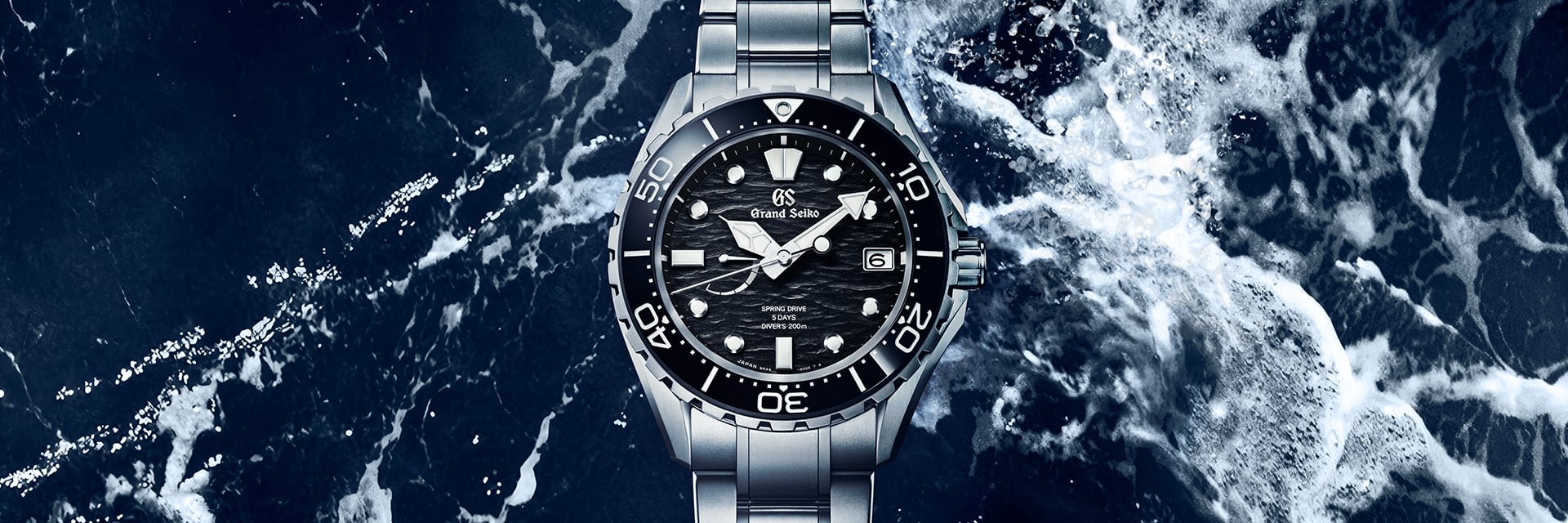
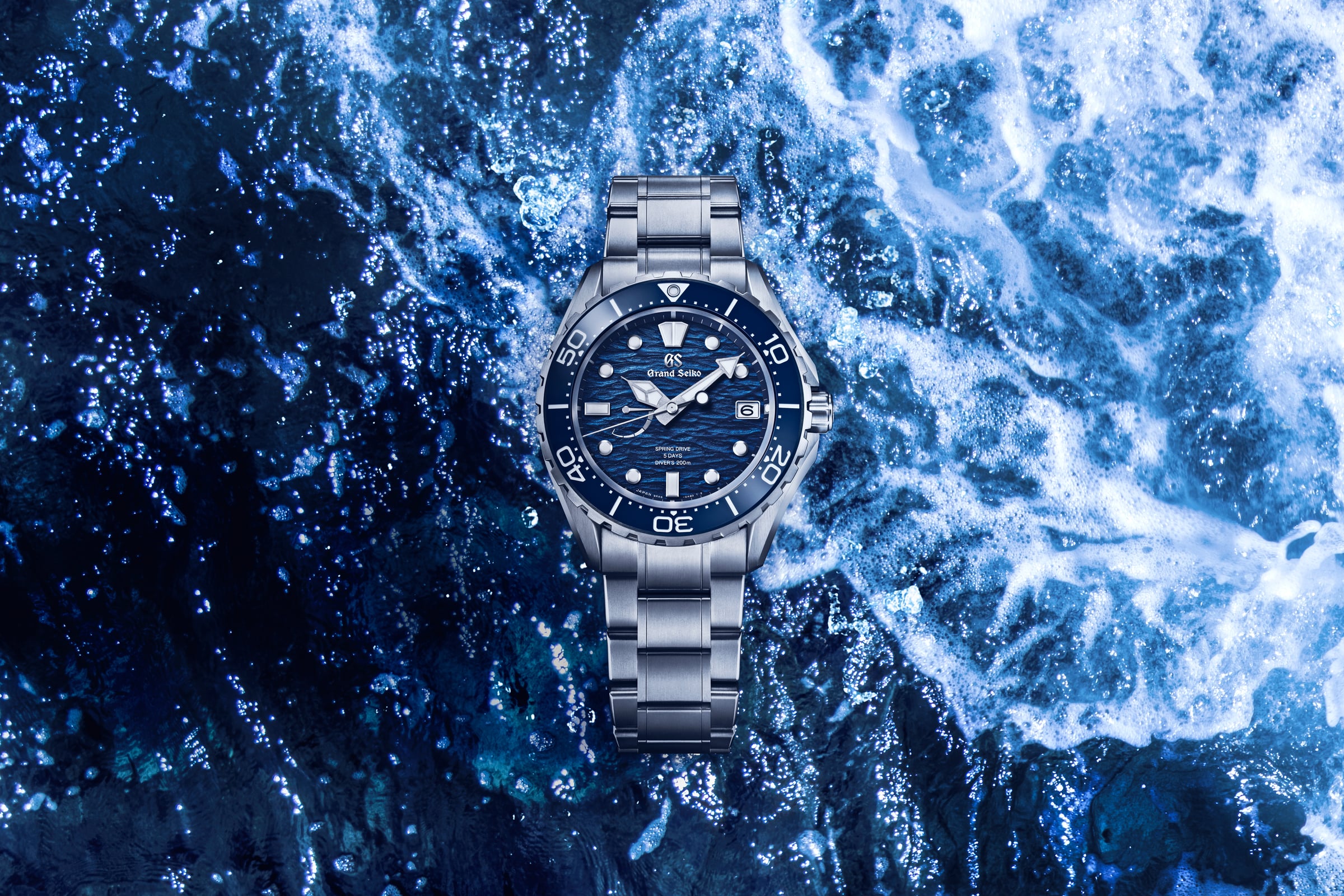
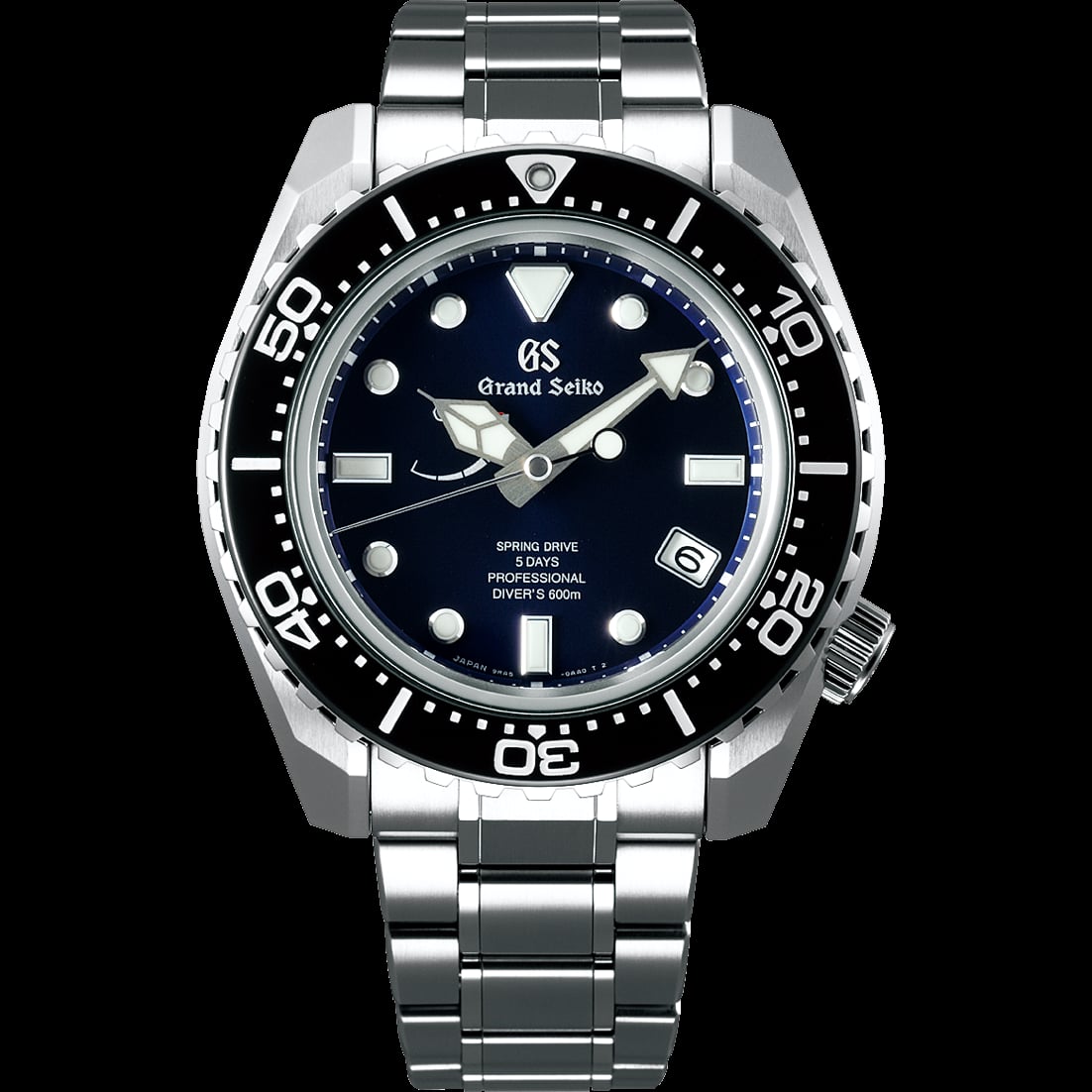
The SLGA001 represents Grand Seiko's most technically ambitious incursion into professional dive instrument territory, a category the manufacture had not previously inhabited with such conviction. Its caliber 9RA5 — a spring drive movement producing a power reserve of one hundred twenty hours alongside a timekeeping deviation of plus or minus fifteen seconds per month — constitutes a paradigm-defining achievement within the automatic-adjacent category, one that renders the traditional escapement debate largely academic. The probability that any Swiss counterpart at comparable pricing matches this specification approaches negligibility. The dial and handset conform to the Zaratsu-polished visual discipline one expects from the Shizukuishi atelier, and in this context the execution is exceptional rather than merely expected. Concordantly, the case design presents a more complicated proposition. At forty-six point nine millimeters in diameter and sixteen millimeters in depth, the geometry is a function of its six-hundred-meter water resistance mandate — a structural inevitability rather than an aesthetic preference. Titanium mitigates the mass penalty, yet wearability remains genuinely deficient for any wrist below the upper quartile of human proportion. The bracelet demonstrates considered finishing for the category without transcending it. Ergo, the value calculus is complicated: a movement of near-paradigmatic quality housed within dimensions that restrict its audience substantially, priced accordingly in the upper registers of its competitive set.
The SLGA025 represents a convergence of Grand Seiko's two most consequential internal programs: the Zaratsu-polished case architecture inherited from the Elegance collection and the high-torque spring drive mechanism that defines the Sport line's technical ambitions. Caliber 9RA2 is not merely an incremental iteration of the 9R series — it constitutes a structural revision, delivering 120 hours of power reserve through a twin-barrel configuration while maintaining the glide-wheel accuracy that separates spring drive from conventional automatic predecessors. The probability that any competing movement at this price stratum achieves equivalent energy density approaches negligible. The dial, textured in reference to the Shinshu highland terrain, achieves a depth and surface variation that photographic reproduction cannot adequately transmit; vis-à-vis the standardized printed dials of Swiss sport contemporaries, the distinction is categorical. The titanium case at forty millimeters and 11.8mm thickness produces a wearability profile of genuine discipline — a proportion the broader sport-watch category has systematically abandoned. Concordantly, the bracelet, while technically competent, exhibits a finishing hierarchy that does not fully resolve against the case's Zaratsu surfaces. The value axis remains the inevitability of complication: the SLGA025 occupies pricing territory where legitimate objections to the Grand Seiko premium are still formulable, though the movement specification alone renders those objections increasingly difficult to sustain.
The SLGA009 represents a convergence of Grand Seiko's dual mandates — horological precision and the philosophically distinct aesthetic doctrine of Shizukuishi — rendered through the Spring Drive mechanism in its high-beat 9RA2 iteration. Vis-à-vis its predecessors in the SLGA lineage, this reference introduces a dial that requires specific examination: the textured surface, derived from the Shinshu forest's seasonal transformations, achieves a depth of light interaction that mechanical printing cannot approximate. The probability that a competing manufacturer produces a dial of equivalent optical complexity at this price tier approaches negligible. Concordantly, the 9RA2 caliber — delivering a 120-hour power reserve at ±0.5 seconds per day — represents a paradigm-defining achievement within the Spring Drive subfamily; it is, as you undoubtedly gather, a mechanical oscillator whose glide wheel regulation produces a sweep of theoretical completeness. The case geometry, while disciplined at 40 millimeters and 11.8 millimeters of thickness, reflects the inevitability of compromises made in housing such a movement volume. The bracelet executes its function without distinction, though its finishing consistency with the case surface remains acceptable. The value axis presents the primary friction: the SLGA009 occupies a pricing tier where competitors with lesser mechanical credentials nonetheless exert significant commercial pressure, rendering the equation adequate rather than exceptional.
The SLGA015 represents Grand Seiko's systematic application of its Shinshu Micro Artist Studio's Spring Drive architecture to the professional dive category — a convergence of the brand's two most technically distinguished lineages. Caliber 9RA5, the high-beat Spring Drive variant producing 36,000 vibrations per hour with a 120-hour power reserve, constitutes the analytical center of this reference. The probability that any mechanical movement competitor within this price corridor matches that combination of rate accuracy and autonomy approaches effectively zero. Concordantly, the dial — interpreting the surface texture of the Shinshu mountain snowfields — functions not as decoration but as a formal design argument: that legibility and material expression need not be mutually exclusive propositions. The titanium case at 43.8 millimeters presents a more complex calculation. Vis-à-vis the brand's more restrained sport predecessors, this diameter registers as an expansion that tests the discipline of the original proposition. Wearability is partially recovered by the case material's mass reduction, though 13.8 millimeters of thickness introduces a stacking problem beneath any cuff. The bracelet executes its functional obligations without producing distinction. Ergo, the value axis produces the review's only unresolved tension: the SLGA015 commands pricing that its movement unambiguously justifies, yet its market positioning against Swiss sport-dive alternatives of comparable specification remains a negotiation the consumer must resolve individually.
The SLGA023 occupies a peculiar position within Grand Seiko's Sport lineage — a reference that deploys the Caliber 9RA5 Spring Drive movement beneath a dial architecture derived from the natural topographies of the Shinshu highlands. The dial execution merits careful attention: the textured surface, rendered through a process that Grand Seiko's Shojiro Yamazaki atelier has refined across successive Sport iterations, achieves a chromatic depth that mechanical printing cannot replicate. This is not decorative embellishment but a structural commitment to the Zaratsu-adjacent philosophy of surface as meaning. Concordantly, the 9RA5 movement represents a defensible paradigm shift within its category — 120 hours of power reserve combined with Spring Drive's tri-synchro regulator accuracy produces a specification that renders most contemporaries technically subordinate. The probability that a competing automatic achieves equivalent isochronal discipline approaches negligible. The titanium case at 43.8 millimeters presents the inevitable tension: a case of such diameter and 13.8mm thickness demands wrist real estate that not all wearers possess. Vis-à-vis its predecessors in the SBGA series, the SLGA023 represents dimensional expansion without proportional aesthetic penalty, though the wearability coefficient remains constrained. The value axis proves the most contested. The price positioning — substantially above Swiss sport equivalents of lesser movement specification — reflects Grand Seiko's growing market confidence, yet the secondary market has not yet confirmed the inevitability of that premium's permanence.
The SLGA019 represents a studied convergence of Grand Seiko's Shinshu atelier aesthetics with the mechanical ambitions of the 9RA2 caliber — a movement that, vis-à-vis the brand's prior automatic offerings, constitutes a substantive departure. The 120-hour power reserve, delivered through a twin-barrel architecture and the proprietary Duofix hairspring, positions this iteration against Swiss sport automatics of considerably greater expense. There exists a certainty that the 9RA2's ±10 seconds per day tolerance — within the declared specification — understates its realized performance in controlled observation. The dial, textured in the manner of the Shinshu highlands from which it derives its conceptual lineage, demonstrates the studio's capacity for surface work that predecessors in the sport category rarely attempted. Concordantly, the titanium case at 40 millimeters and 11.8 millimeters of thickness achieves proportional discipline that many contemporaries in the sport segment have abandoned in pursuit of specification theater. The bracelet executes its function adequately without matching the refinement of the dial and case surfaces — a persistent asymmetry across the SLGA lineage. Value analysis is complicated by the probability that the 9RA2's mechanical specification is structurally underpriced relative to Swiss equivalents, while the brand premium remains below its objective ceiling. Ergo, the acquisition calculus favors the informed buyer operating outside brand-loyalty heuristics.