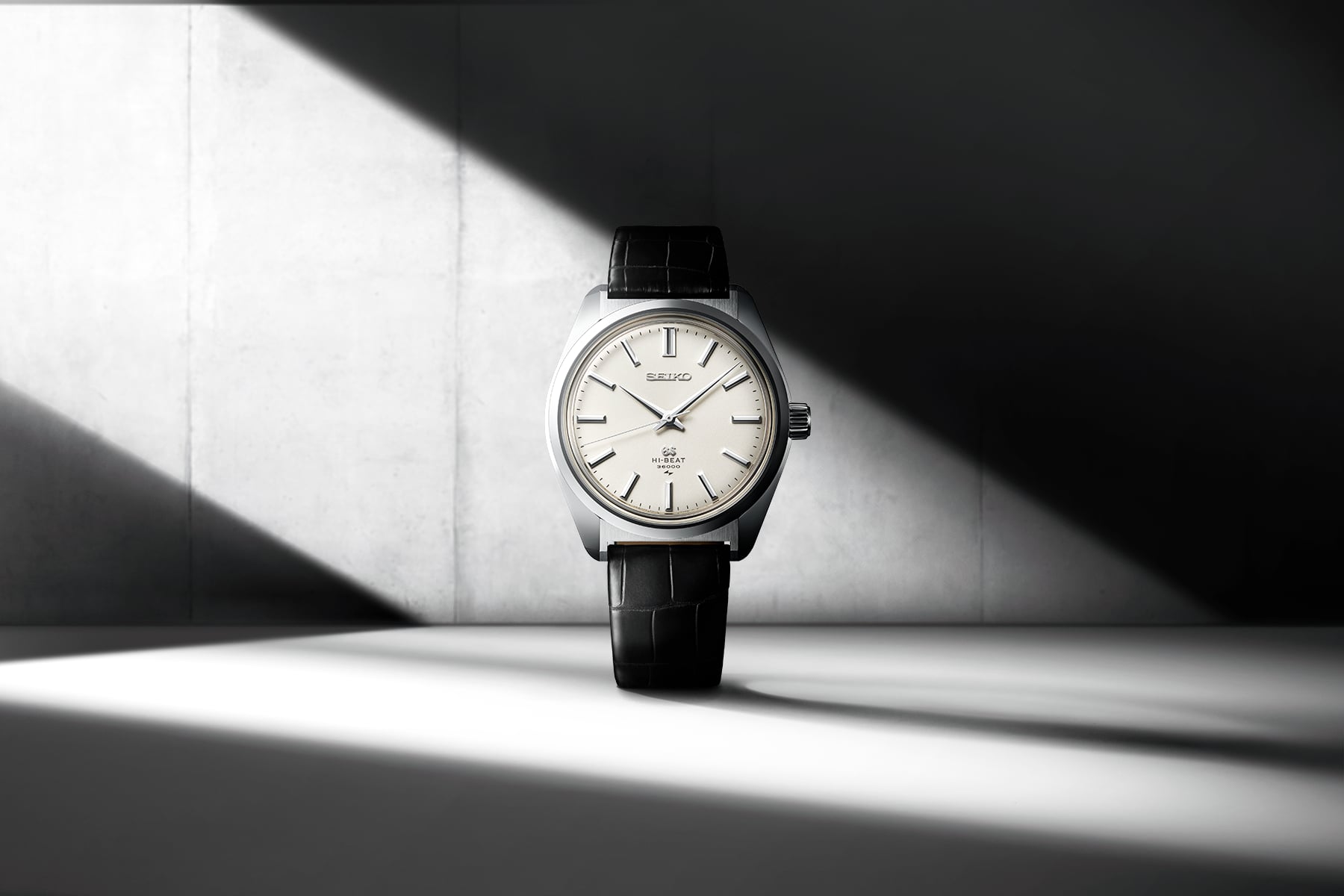
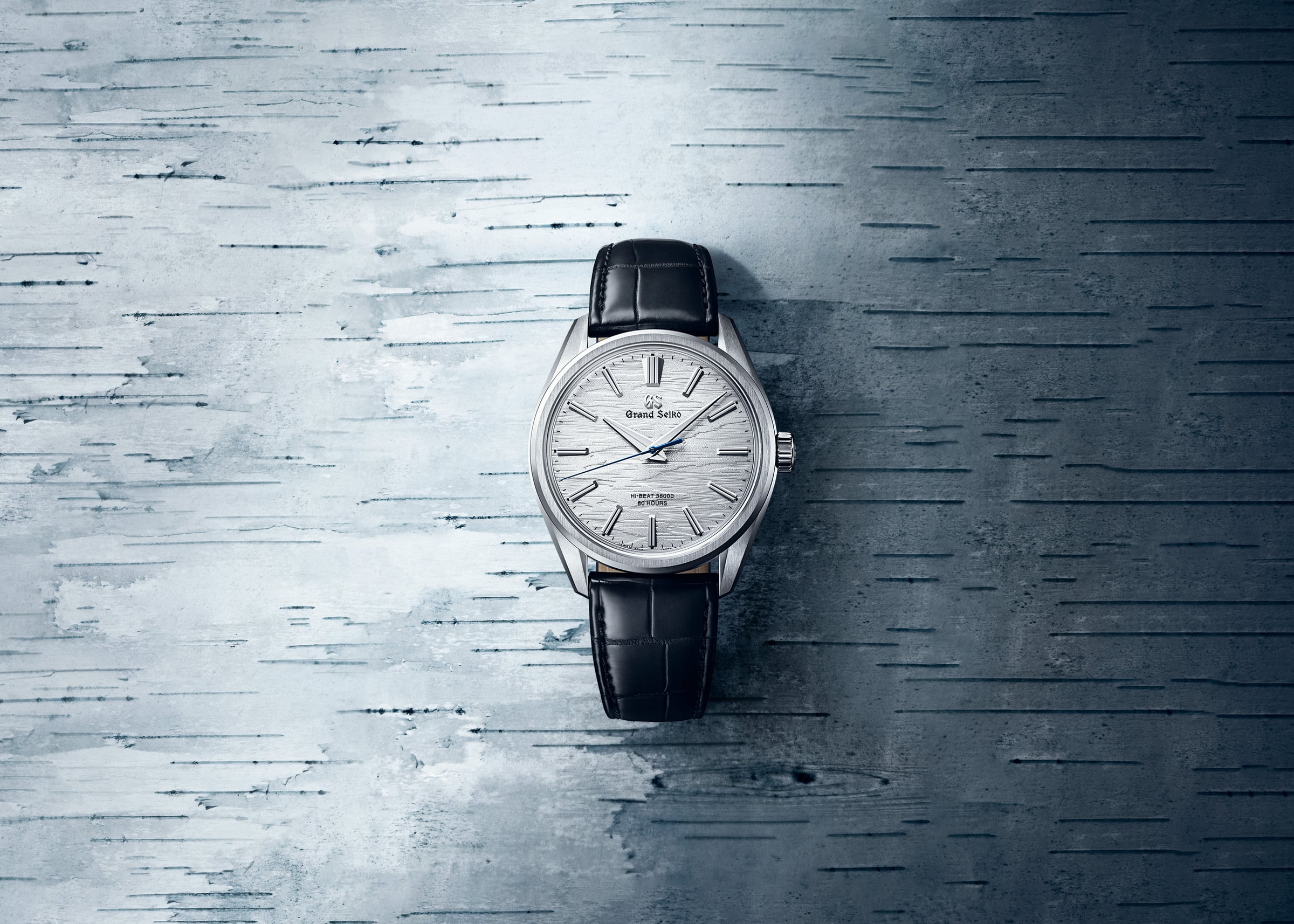
The SLGW007 is a watch for someone who's done their homework and arrived somewhere very considered. The 9SA4 movement - Grand Seiko's dual impulse escapement - is genuinely groundbreaking engineering, and the Shizukuishi dial texture is as close to wearable art as watchmaking gets. It's a substantial wear at this size, so this one's for open collars and heavier cloth rather than slim lapels. The price is a conversation, no question, but what you're getting is hand-finishing at a level that most Swiss houses simply don't match. Not an everyday purchase, but for the collector building a wardrobe of serious pieces, this belongs in the rotation.
The SLGW007 occupies a precise coordinate within Grand Seiko's formal dress lineage — a vehicle for the caliber 9SA4, itself a significant departure from the marque's prior spring drive and hi-beat mechanical architecture. The 9SA4 introduces a dual-impulse escapement of Shizukuishi's own design, constituting a genuine mechanical proposition rather than an incremental refinement of predecessors. Concordantly, the movement's 80-hour reserve and 36,000 vph beat rate represent a performance envelope that complicates any casual dismissal of Japanese mechanical output vis-à-vis its Swiss contemporaries. The dial, finished with characteristic Zaratsu-polished case surfaces and a restrained textural treatment consistent with the Snowflake design philosophy, achieves a luminous depth that photographic reproduction systematically fails to capture — a condition unique to this tier of Japanese finishing. At 38.6 millimeters and 9.95 millimeters of thickness, the case proportions are disciplined to a degree that current Swiss dress watch production has largely abandoned. The bracelet execution reflects the same surface-finishing standard as the case, which is an outcome not achieved uniformly across the category. The probability that the value proposition satisfies a buyer of purely rational disposition is low; the premium commanded places this reference at a threshold where Swiss alternatives of equivalent movement complexity present competing claims. There exists, nonetheless, a certainty that the finishing standard here has no direct peer at the price.
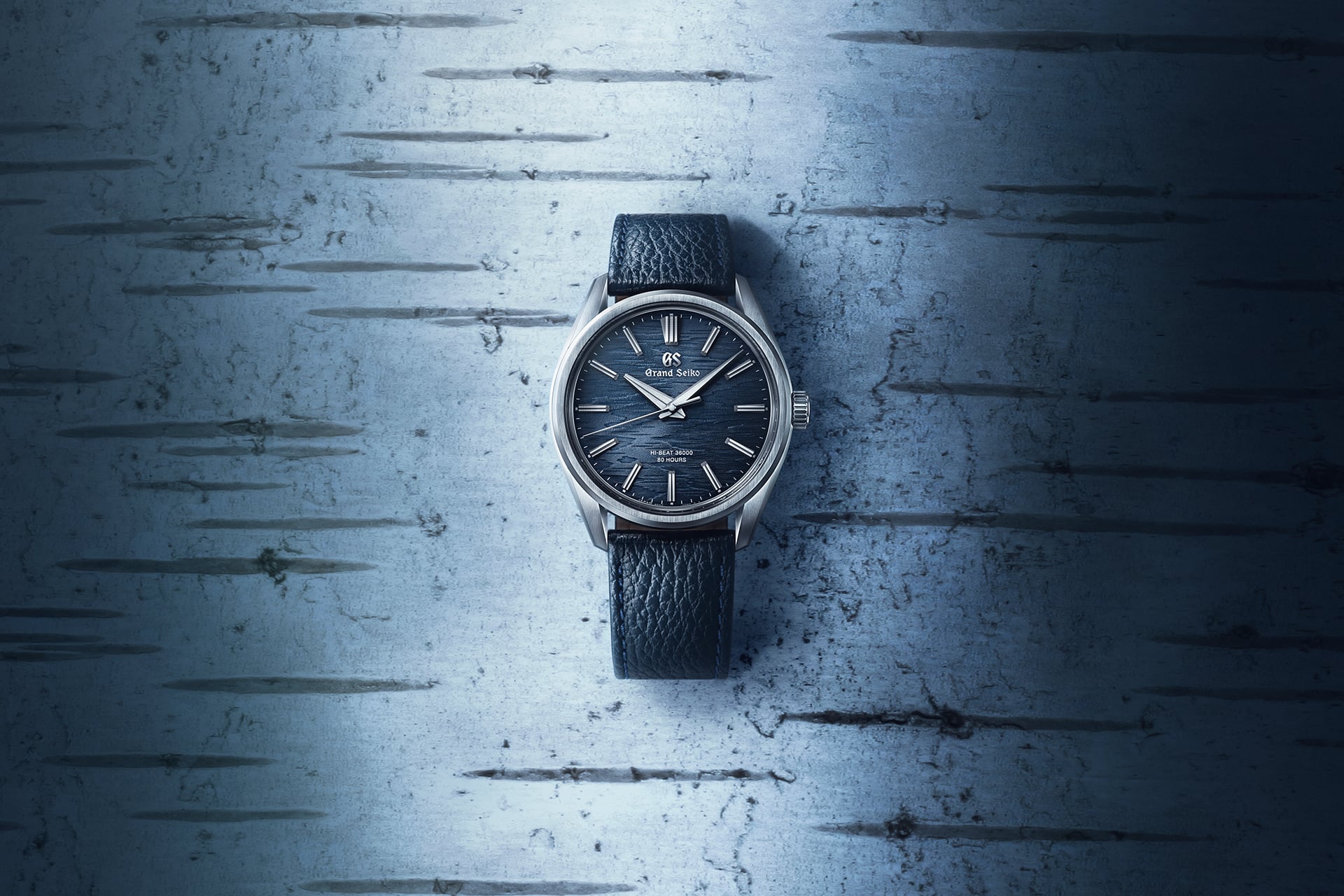
The SLGW005 occupies a precise coordinate within Grand Seiko's ongoing formalization of its Elegance Collection — a lineage descended from the 1960 original that established the proportional grammar still observable in this iteration. The caliber 9SA4 represents the manufacture's most consequential movement development in recent decades: a dual-impulse escapement of proprietary geometry, departing from the Swiss lever architecture that has governed mechanical watchmaking as a near-universal assumption. Concordantly, the 80-hour power reserve and 36,000 vph operating frequency are not incidental specifications but structural consequences of that escapement's design logic. The dial, executed in the Shizukuishi atelier's characteristic Zaratsu-polished case planes, achieves a surface quality that the probability of replication at comparable price points approaches negligible. At 38.8 millimeters and 10.4 millimeters of thickness, the case proportions reflect a discipline that contemporaries in this segment have progressively abandoned. The bracelet finishing sustains the same alternating polish-and-brushed methodology evident across the case, a coherence that predecessors in the 1960s could only approximate given the tooling of their era. The value axis is where the analysis becomes complex — the SLGW005 commands a premium that its movement specification justifies technically, yet the 30-meter water resistance figure represents a limitation that, vis-à-vis its pricing tier, invites scrutiny.
The SLGW003 represents one of the more consequential iterations in Grand Seiko's ongoing Masterpiece Collection — a line that functions as the brand's declaration of technical and aesthetic ambition, operating in deliberate competition with Swiss haute horlogerie rather than its domestic predecessors. The dial, produced through the Byakko-inspired Shirotsuna textural process, achieves a surface that resists simple categorization: light behaves across it with the statistical variability of a physical phenomenon rather than a designed effect. Concordantly, the applied indices and hands achieve a finishing standard that, vis-à-vis the broader field of watches at this price stratum, positions the reference near the upper boundary of what manual craft can produce at volume. The caliber 9SA4 is of particular analytical interest — Grand Seiko's dual-impulse constant-force escapement represents a genuine engineering departure from the lever escapement orthodoxy that has governed mechanical horology for over two centuries. The probability that this development is a mere cosmetic distinction approaches zero. The titanium case, at 38.6 millimeters, produces a wearability coefficient that the contemporary market has largely abandoned in favor of larger propositions. The value axis is where the analysis becomes complicated: there exists a certainty that the SLGW003's specification is defensible at its retail positioning, yet the pricing demands a level of brand conviction from the buyer that the market has not yet uniformly extended to Grand Seiko.