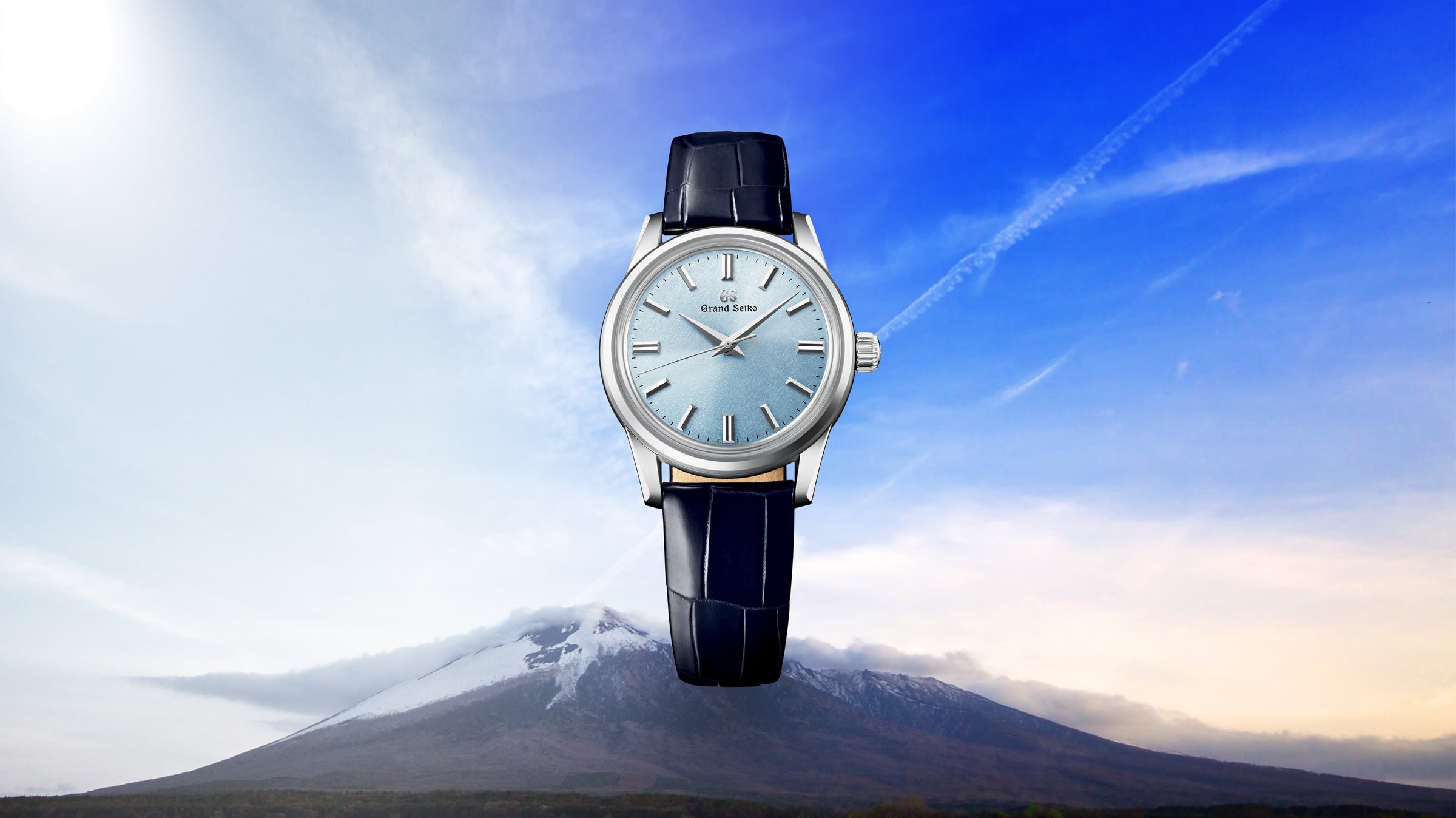
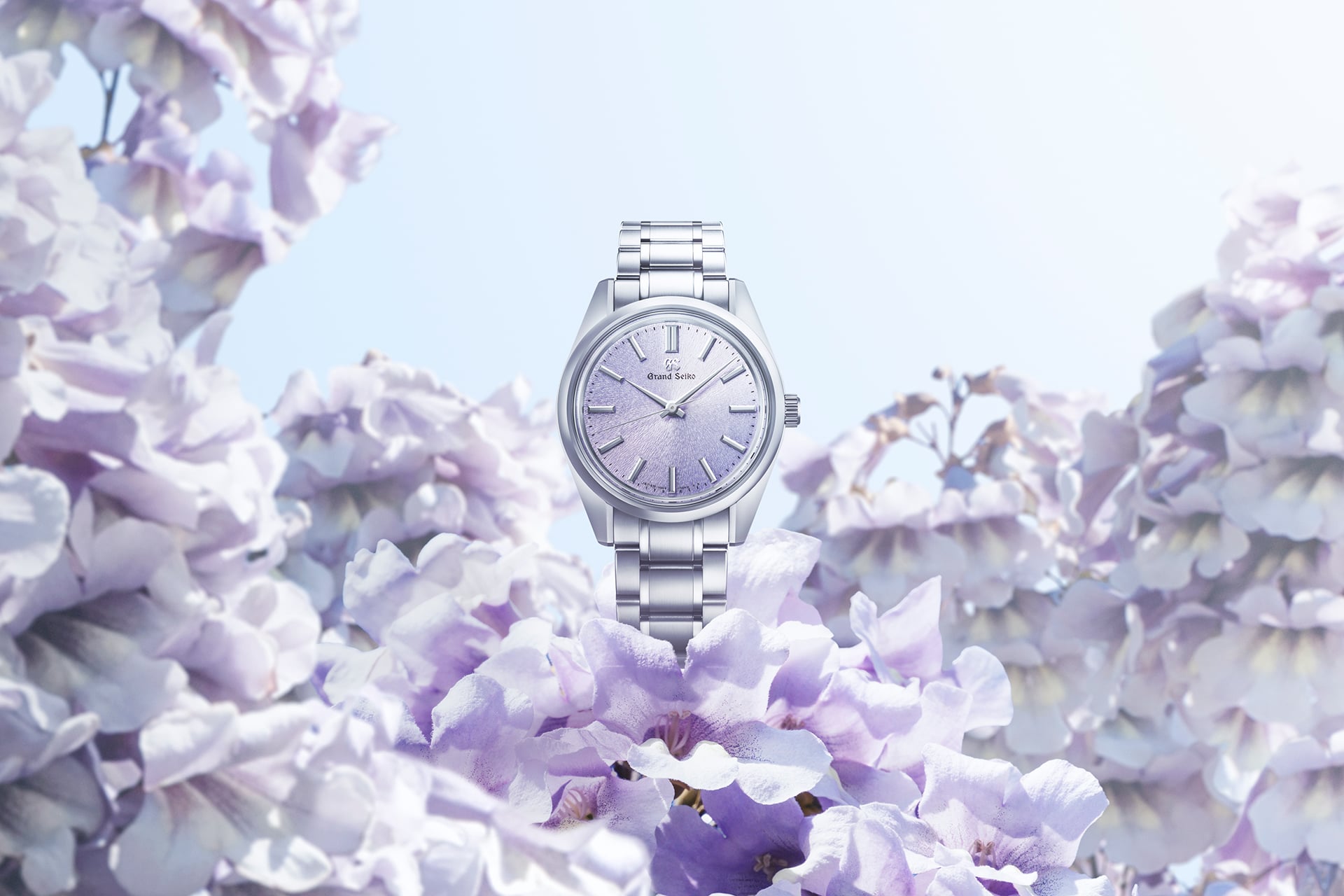
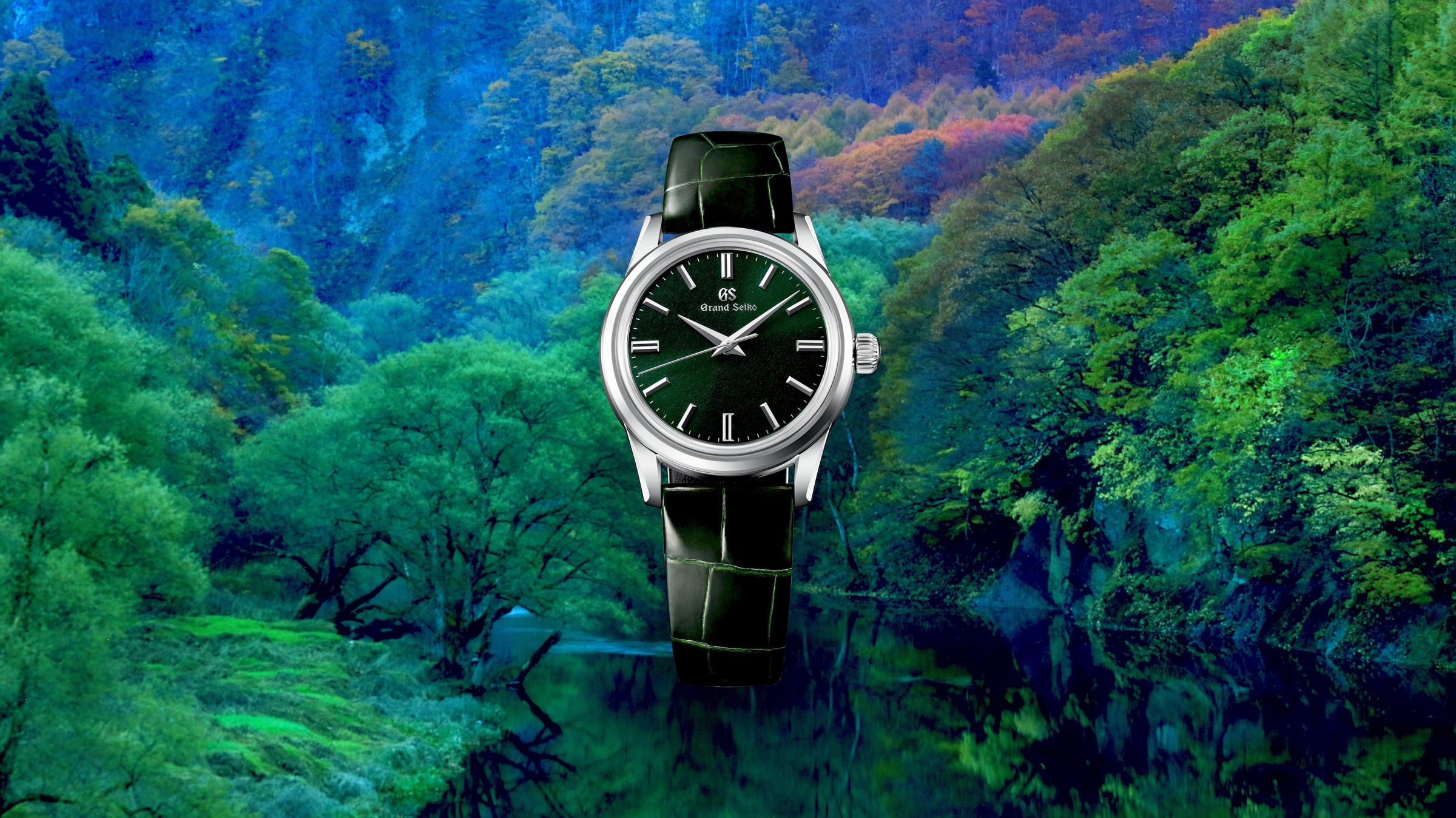
The SBGW291 represents a precise coordinate within Grand Seiko's manual-winding dress lineage — a category the manufacture has occupied with increasing confidence since the 44GS of 1967 established the formal grammar that subsequent iterations have not deviated from so much as refined. The caliber 9S64 is a disciplined movement: seventy-two hours of power reserve at manual winding, a beat rate of 28,800 vph, and finishing standards that the Shizukuishi atelier applies with a consistency that Swiss dress-tier competitors rarely match at equivalent price points. The case, at 36.5 millimeters, adheres to a proportion that the contemporary market has largely abandoned in favor of excess — a choice that reads here as conviction rather than limitation. Zaratsu-polished surfaces and the interplay of brushed and mirrored facets on both case and handset are the SBGW291's definitive arguments for its own existence. The bracelet, concordantly, is the axis on which the overall composition loses some of its authority — adequate in construction, but without the tactile distinction the dial and case establish. As you undoubtedly gather, value is where the calculus grows complicated: the SBGW291 commands a premium that its movement specification alone cannot arithmetically justify against comparable Swiss dress references, though the finishing differential partially closes that gap. The probability that this reference satisfies a technically demanding buyer remains meaningful; the probability that it satisfies one fixated on movement prestige is considerably lower.
The SBGW287 occupies a deliberate position within Grand Seiko's manual-winding lineage — a category the manufacture has pursued with uncommon seriousness since the original 1960 Grand Seiko established the proposition that Japanese horology could compete on purely technical grounds with Swiss dress-watch orthodoxy. The caliber 9S64, beating beneath a case of 37.3 millimeters, represents a considered regression toward classical proportion at a moment when the broader industry defaults reflexively toward expansion. Concordantly, the Zaratsu-polished surfaces function not as decoration but as argumentation: each facet demonstrating the inevitability of the Shinshu Takumi atelier's commitment to surface geometry as primary design language. The dial, as you undoubtedly gather, is the primary exhibit — its texture and light-diffusion properties placing it among the more accomplished iterations in the current dress category. The 11.7-millimeter thickness presents a defensible trade-off vis-à-vis the movement's 72-hour power reserve and the structural demands of the case architecture, though it situates the watch at the outer boundary of what formal attire tolerates without compromise. The bracelet executes competently without advancing any particular thesis. The value proposition is where the analysis encounters friction: at its market price point, the SBGW287 competes against established Swiss references whose secondary-market liquidity remains substantially more predictable. The probability of that asymmetry correcting meaningfully in the near term is not negligible, but it has not yet corrected.
The SBGW323 represents a disciplined iteration within Grand Seiko's manual-winding dress lineage, its caliber 9S64 descending from a movement architecture that prioritizes finishing integrity over complication. The probability that any contemporary mechanical movement at this price tier matches the 9S64's decorative execution — its Zaratsu-polished components and Geneva-stripe variants — approaches vanishingly small. Concordantly, the dial exhibits the studio's characteristic interaction with light and surface geometry, a design philosophy traceable through predecessors extending to the Suwa atelier's earliest dress references. The case, at 36.5mm, is a considered dimensional choice that resists the proportional inflation afflicting much of the contemporary luxury dress category. Its 11.6mm thickness, however, represents a compromise — not catastrophic, yet discernible beneath a formal cuff, where a movement of this finishing caliber deserves less intrusion. The bracelet, vis-à-vis the dial and case, functions adequately without distinction; leather configurations of equivalent specification would arguably serve the reference's formal ambitions with greater coherence. As you undoubtedly gather, the value calculus is where the inevitability of the Grand Seiko premium meets friction. The 9S64 justifies its engineering cost; whether the surrounding assembly justifies the market's full asking price remains a matter of category expectation rather than objective deficiency.
The SBGW305 occupies a precise coordinate within Grand Seiko's dress lineage: a manual-wind iteration deploying the 9S64 caliber, itself a refinement of the mechanical discipline that Shinshu Watch Studio has cultivated across successive generations of the 9S family. Concordantly, the case diameter of 37.3 millimeters represents a considered regression toward classical proportion — a deliberate countermovement against the industry's progressive inflation of wrist presence. The Zaratsu-polished surfaces and their alternating satin planes function as the primary aesthetic thesis of this reference, and they execute that thesis with a rigor that approaches, without fully achieving, paradigmatic status. The dial, understood within the Snowflake tradition, exhibits textural topography that rewards proximate examination; the handset maintains the lacquer-bright finishing expected of this tier. The movement, while mechanically distinguished, does not expose itself through any exhibition architecture, representing a philosophical stance that privileges surface over transparency. Wearability is a function of the case's compressed diameter and moderate thickness — 11.7 millimeters presents no meaningful conflict beneath a cuff. The value proposition, however, remains the axis of productive tension: at its market price, the SBGW305 inhabits a category where Swiss predecessors impose formidable comparative pressure, and the probability of its price-to-specification ratio satisfying all potential acquirers exists well below certainty.
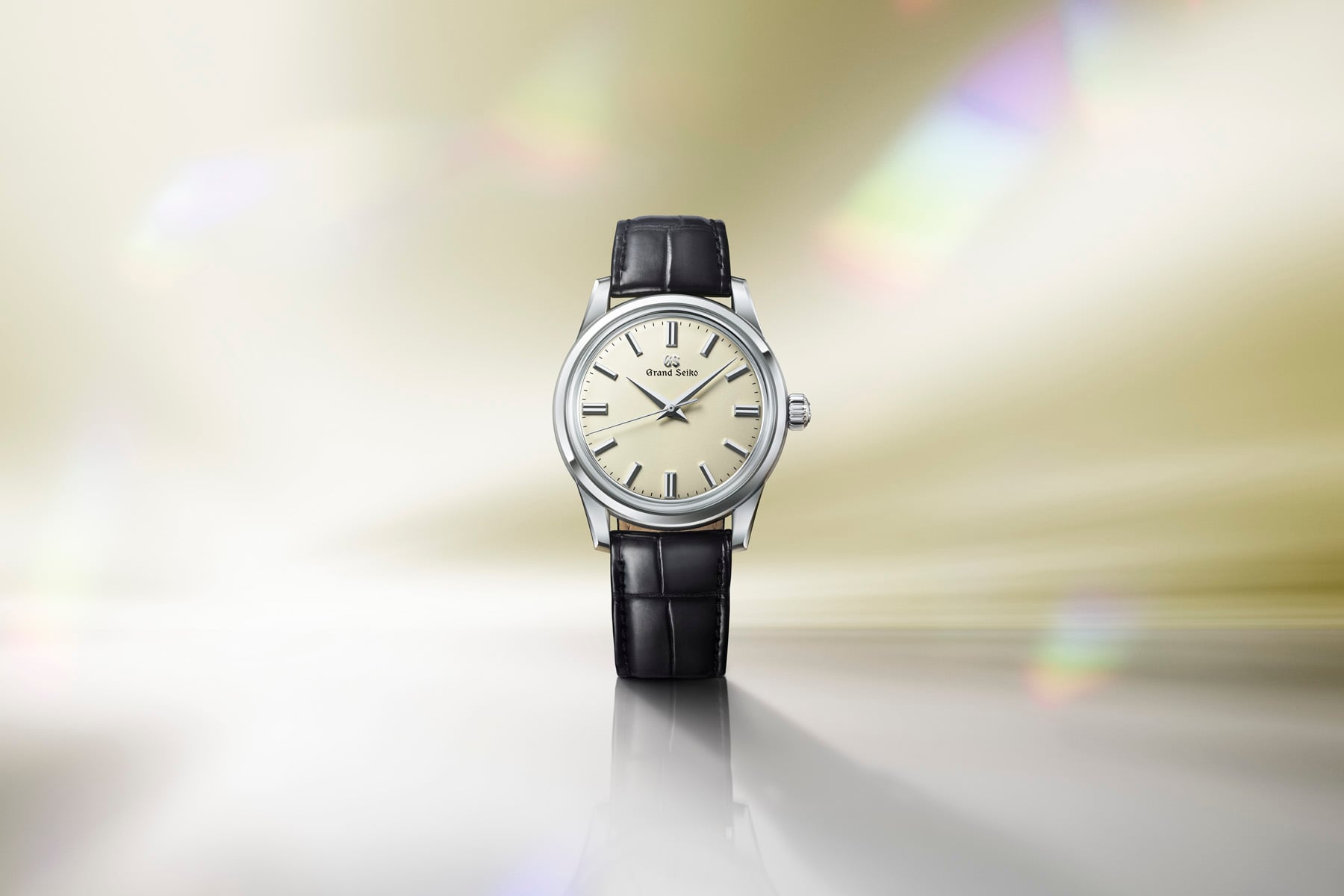
The SBGW299 represents a sustained iteration within Grand Seiko's manual-winding dress lineage, a category the Shizukuishi atelier has refined across successive references since the reintroduction of the 9S-series calibers. Vis-à-vis its predecessors, the SBGW299 inherits the Zaratsu-polished case architecture that remains the defining formal proposition of the line — flat planes intersecting at geometrically precise edges, producing the light-scattering behavior that has become Grand Seiko's most legible design signature. The dial, as you undoubtedly gather, is where the reference asserts its most defensible claim to distinction: a textured surface whose depth and luminosity under directional light represents considered craft executed at a level few contemporaries approach within this price stratum. Concordantly, the 9S64 caliber performs with mechanical regularity appropriate to its category, though its specification does not alter the movement landscape in any meaningful dimension. The case diameter of 36.5 millimeters reflects a disciplined restraint that the broader market has progressively abandoned, producing wearability suited to a narrower demographic. The inevitability of Grand Seiko's pricing trajectory — accelerating upward across the past decade — places the value equation under measurable strain. Ergo, the probability that this reference justifies its ask depends almost entirely upon the wearer's weighting of surface craft over complication, which is a legitimate but narrowly held position.
The SBGW301 represents a disciplined continuation of Grand Seiko's Elegance Collection — a lineage rooted in the articulation of Zaratsu-polished geometry as a primary design language, predating any material concession to complication. Vis-à-vis its predecessors in the manual-wind Elegance series, this iteration refines rather than redefines: the dial surface, reported to evoke the texture of birch forest snow, demonstrates the atelier's sustained commitment to natural phenomenology as aesthetic doctrine. The handset and indices occupy that dial with a precision that the probability of achieving through industrial volume production approaches negligible. Concordantly, the caliber 9S64 is a movement of considered specification — seventy-two hours of power reserve within a manual architecture being a defensible engineering choice, though it does not, as you undoubtedly gather, alter the trajectory of what a dress caliber is understood to be. The case diameter of 37.3 millimeters and thickness of 11.7 millimeters reflect the proportional discipline that Elegance Collection iterations have maintained, though the thickness introduces a minor tension against the wrist profile of a strict dress context. The crocodile strap is adequate to category expectation without distinction. At five thousand United States dollars, the value proposition is real but conditional — contingent entirely on the wearer's capacity to assign weight to finishing craft over complication hierarchy, which represents a narrower audience than Grand Seiko's broader positioning might suggest.
The SBGW283 occupies a specific coordinates within Grand Seiko's manual-winding lineage — a direct descendant of the dress philosophy codified in the original 1960 Grand Seiko, now executed through the 9S64 caliber, itself a refinement of the 9S6x series that has defined the Shinshu atelier's manual output across successive iterations. The dial, produced under the Shizukuishi methodology, exhibits the Zaratsu-adjacent finishing and textural articulation that positions Grand Seiko as a legitimate peer to established Swiss dress watch producers rather than a peripheral challenger. Concordantly, the case proportions at 37.3 millimeters represent a considered restraint — a diameter that predecessors in the Grand Seiko catalog established as canonical for formal wear and that contemporary iterations have wisely declined to expand beyond discipline. The case thickness at 11.7 millimeters remains within acceptable parameters for a movement of this architecture, though it precludes the absolute slimness that Swiss dress house competitors deploy as primary distinction. The leather strap option, absent a purpose-built integrated bracelet, functions adequately without contributing materially to the overall proposition. The value axis presents the central tension: as you undoubtedly gather, the SBGW283 enters a price stratum where Swiss alternatives of considerable heritage compete directly. The probability that this reference commands irrational secondary market premiums remains low; its merit is intrinsic rather than speculative.
The SBGW285 occupies a position within Grand Seiko's manual-winding lineage that demands contextualization against its predecessors — the earlier 9S6x caliber family represents the Shizukuishi facility's sustained argument that hand-wound movements retain a philosophical legitimacy that automatic counterparts cannot fully replicate. Concordantly, the caliber 9S64 at the heart of this reference delivers 72 hours of power reserve at a beat rate engineered to Grand Seiko's exacting finishing tolerances, producing timekeeping performance that satisfies without requiring further defense. The dial and handset represent the axis upon which the SBGW285's identity resolves most convincingly — Zaratsu-polished hands and applied indices interact with the textured dial surface in ways that qualify as exceptional by any measurable standard of finishing discipline. The case, at 37.3 millimeters, reflects a proportion that contemporary market conditions have rendered almost contrarian; there exists a certainty that this restraint is deliberate rather than incidental. Wearability is consequently precise: suitable for the wrist architecture it was designed to accommodate, less negotiable for larger frames. The value axis, however, introduces meaningful friction. The pricing stratum the SBGW285 occupies places it in direct negotiation with Swiss dress alternatives of comparable finishing ambition. The probability that a dispassionate analysis concludes Grand Seiko's value proposition is self-evident at this price point approaches, but does not achieve, certainty.
The SBGW281 occupies a precise coordinate within Grand Seiko's dress watch lineage — a manual-wind iteration constructed around the 9S64 caliber, itself a refinement of the manual architecture that Seiko's Shinshu Watch Studio has developed across decades of disciplined incremental revision. Vis-à-vis its quartz and spring-drive contemporaries within the Grand Seiko catalog, the 9S64 represents a philosophical commitment to mechanical purity, delivering 72 hours of power reserve with a 28,800 beats-per-hour rate that reflects considered engineering rather than spectacle. The dial, consistent with the Zaratsu-polished vocabulary its predecessors established, achieves a surface texture that the probability of European dress watch equivalents matching remains, concordantly, low. The case diameter of 37.3mm is a disciplined proportion, though the 11.7mm thickness introduces a geometric tension that attentive wearers will detect beneath a shirt cuff — an inevitability of stacking a manual movement with the case architecture required to meet even nominal water resistance. The bracelet, as you undoubtedly gather, performs its functional role without ascending to the chromatic or finishing standard set by the dial and case surfaces. The value calculus is where the analysis grows uncomfortable: the SBGW281's positioning demands a premium that requires genuine conviction in Grand Seiko's finishing philosophy to rationalize against European competitors of equivalent complication. That conviction is defensible, though not universal.
The SBGW297 represents a studied continuation of Grand Seiko's manual-winding dress lineage, its proportions — 36.5 millimeters in diameter, 11.6 millimeters in depth — occupying a geometrically disciplined envelope that the contemporary market has largely abandoned in favor of volumetric excess. The caliber 9S64 operates at 28,800 vibrations per hour and delivers a 72-hour power reserve, a specification that positions it favorably vis-à-vis comparably priced Swiss manual movements without claiming equivalence to the house's own Spring Drive iterations. Concordantly, the dial execution adheres to the Zaratsu-polished grammar that defines the Shinshu atelier's output: alternating textures, applied indices of geometric precision, and hands exhibiting the blade-like finishing that predecessors of this reference established as the studio's primary visual argument. The bracelet, while competently integrated, does not achieve the articulation or haptic refinement of the dial and case surfaces — a persistent tension in Grand Seiko's dress segment. Ergo, the wearability calculation is straightforward: the case diameter recommends itself to a proportionate wrist without qualification, though the thickness-to-diameter ratio introduces mild cuff resistance. The value axis presents the analysis with its principal difficulty. The probability that a buyer finds this specification deficient is low; the probability that they find the asking price self-evident, rather than considered, is measurably higher.